
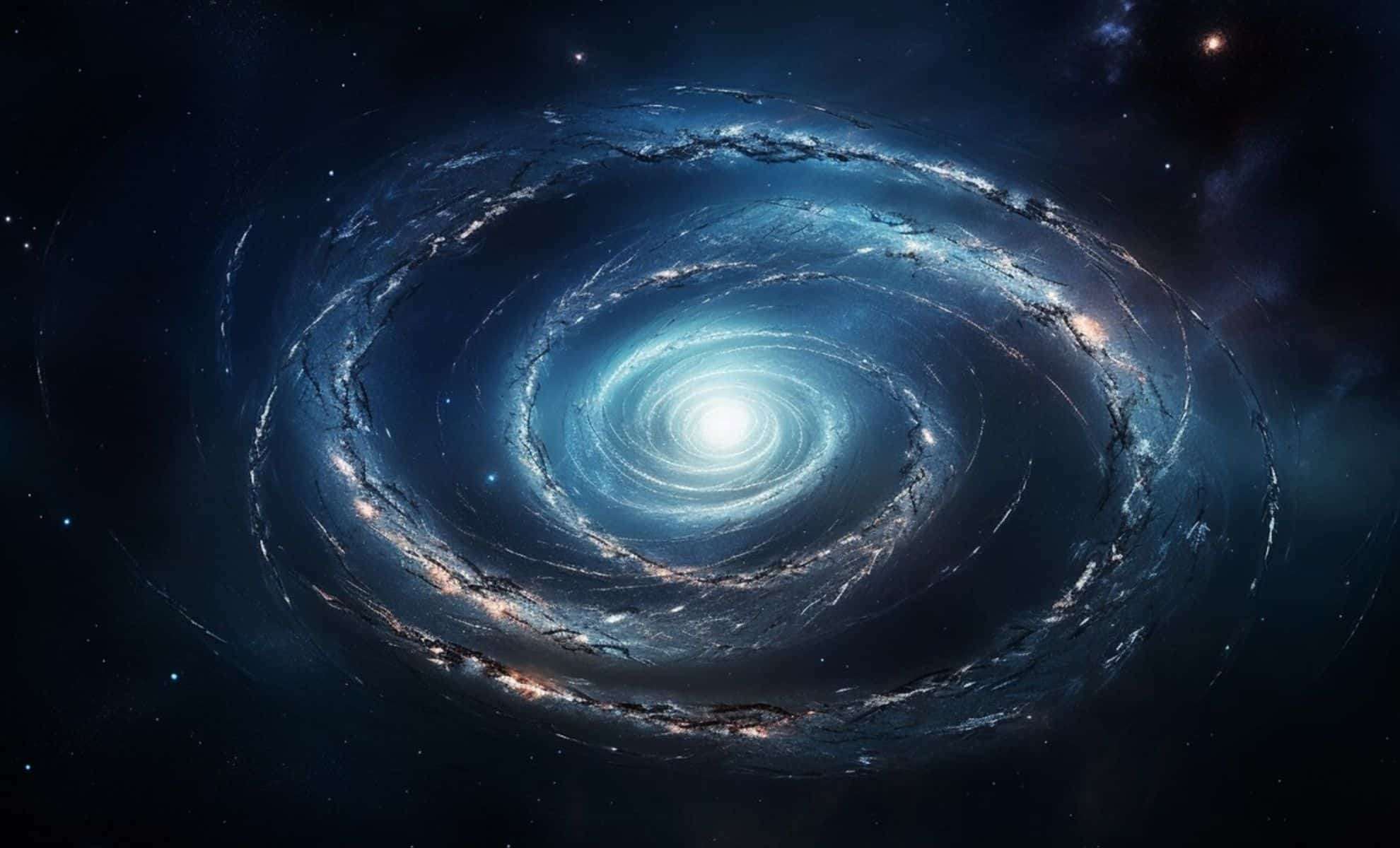
Recent findings published in The Astrophysical Journal have uncovered a massive supermassive black hole lurking within the Magellanic Clouds, which are companion galaxies orbiting the Milky Way. Weighing in at around 600,000 times the mass of our Sun, this formidable black hole appears to be progressively approaching our galaxy, prompting new discussions about the evolving dynamics of our cosmic neighborhood.
A Gigantic Black Hole Hidden in the Magellanic Clouds
The breakthrough emerged from research carried out by scientists at the Harvard & Smithsonian Center for Astrophysics. By employing gravitational analysis combined with stellar motion observations, the team detected a massive unseen object possessing a mass far surpassing that of any known star within the Magellanic Clouds, situated approximately 160,000 light-years away.
These neighboring dwarf galaxies have long been observed as prominent satellites of the Milky Way, yet none were previously shown to contain such an immense black hole. Its gravitational influence remained concealed in darkness until now.

The team identified this hidden entity through the behavior of hypervelocity stars—stars moving at extraordinary speeds—likely propelled by strong gravitational encounters with extremely dense objects. The most plausible origin for these stellar speeds is this concealed black hole in the core of one of the Magellanic Clouds.
Tracing Hypervelocity Stars to Reveal Invisible Gravity
Under the guidance of astrophysicist Jiwon Jesse Han, the group used observational data from the Gaia space telescope, which catalogs over a billion stars in and near our galaxy. Their pivotal discovery involved assessing the paths of 21 hypervelocity stars that are moving nearly tenfold faster than average stars.
Backward extrapolations of their trajectories allowed scientists to identify their points of origin. While seven stars appear to have been ejected by Sagittarius A*, the supermassive black hole at the center of the Milky Way, nine others seem to emanate from the Magellanic Clouds region.
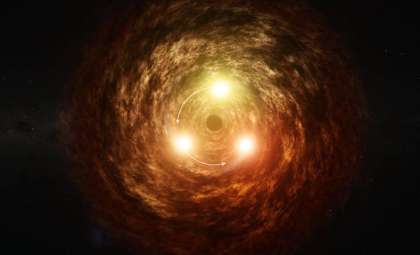
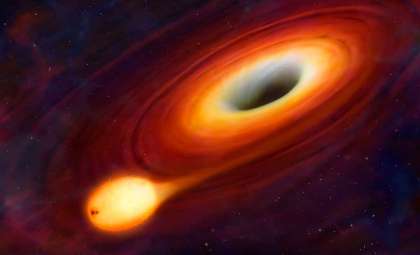
This evidence supports the Hills mechanism, where the gravitational forces of a black hole disrupt binary star systems, capturing one star and propelling the other outward at immense speed.
Although invisible in traditional telescope observations due to the absence of light emission, this indirect method strongly indicates the existence of a massive black hole within the Magellanic Clouds.
Implications for the Milky Way’s Evolution
This finding challenges current frameworks in astrophysics by revealing a supermassive black hole in a smaller companion galaxy, contrasting the typical scenario where such black holes dominate large galactic centers. This adds nuance to theories on black hole genesis and how galaxies grow and change over time.
It also illustrates how hypervelocity stars act as vital clues—like celestial breadcrumbs—pointing researchers to otherwise hidden gravitational forces in the universe. As the Gaia mission and other observatories provide more data, additional giant black holes in unexpected locations could soon be discovered.
These developments emphasize how subtle, often unseen cosmic forces continuously influence galaxy structure and motion. What we observe in the night sky today might be part of an extensive, ongoing saga of cosmic shifts and potential mergers.
- Categories:
- Space





0 comments
Sign in to Comment