
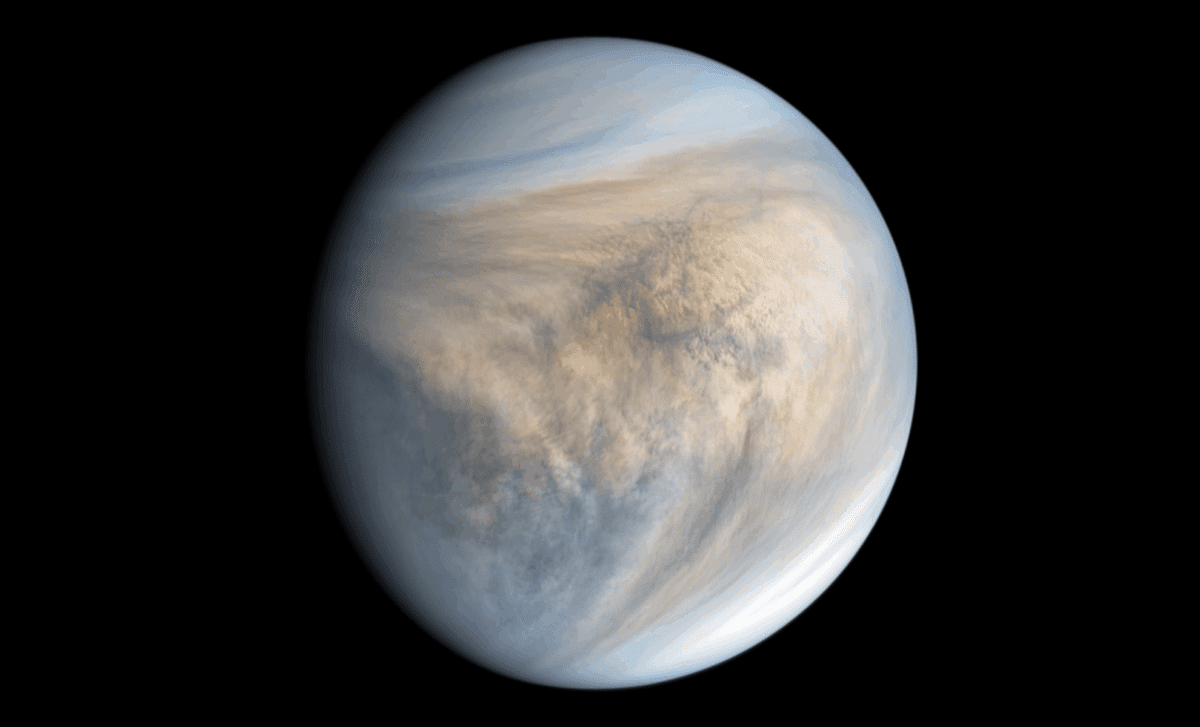
Venus captivates researchers with its scorching surface and a rapidly spinning atmosphere. Recent studies indicate that the planet's intense winds are more intricate and forceful than earlier believed. Published in Eos, these findings highlight the influence of thermal tides—atmospheric waves driven by solar heating—in generating Venus’s extreme wind speeds. Grasping these processes could enhance our understanding of planetary atmospheres across the solar system.
Decoding Venus’s Intense Wind Systems
Venus is renowned for its fierce winds, which can exceed 100 meters per second. These tempestuous gusts sweep the planet’s atmosphere, leading to a phenomenon called superrotation, in which atmospheric motion outpaces the planet's own rotation. Although various atmospheric dynamics have been proposed to explain this, the main contributors to these powerful winds have remained elusive.
Recent research from Lai et al, featured in AGU Advances and summarized in Eos, points to thermal tides generated by solar heating as a central mechanism. These diurnal thermal tides, which repeat once each Venus day, play a bigger role than once thought in accelerating the planet's atmosphere.

Understanding Thermal Tides and Their Mechanisms
Thermal tides are atmospheric oscillations triggered when sunlight heats a planet's surface, causing air to expand and circulate. On Venus, these waves help redistribute heat and apply momentum throughout the atmosphere. The heating on the planet’s sunlit side sets off atmospheric waves that influence wind patterns and contribute to the high-speed winds seen at cloud-top levels.
Two main types of thermal tides exist on Venus: diurnal tides occurring once every Venus day, and semidiurnal tides occurring twice daily. Previously, semidiurnal tides received more attention as the likely driver of atmospheric superrotation. However, this new study emphasizes the significance of diurnal tides in powering Venus’s fierce winds.
This fresh insight shifts the scientific view on Venus’s atmospheric dynamics, showing how diurnal tides transfer momentum upward and sustain some of the solar system’s fastest winds.
Momentum Transport's Central Role in Atmospheric Superrotation
The core of Venus’s atmospheric behavior lies in the movement of momentum. Despite Venus rotating sluggishly, taking 243 Earth days per rotation, its atmosphere completes a spin nearly 60 times faster, a striking instance of superrotation.
The study reveals that diurnal thermal tides act as efficient conveyors of momentum, pushing heated air toward the upper atmosphere. This process supplies energy that accelerates Venus's winds, maintaining their extreme velocity and persistent superrotation.
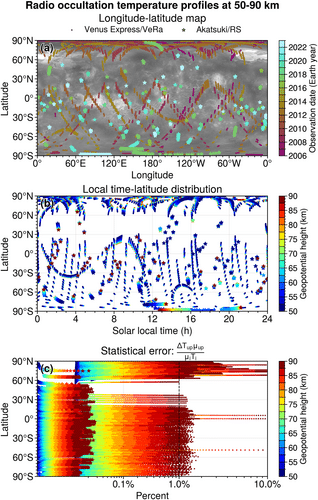
Data from the European Space Agency’s Venus Express and Japan’s Akatsuki mission were instrumental in tracking these thermal tide effects. By analyzing how radio waves bend while traversing Venus’s thick atmosphere and integrating these observations with advanced models, researchers have mapped how tides drive complex weather dynamics on Venus.
Broader Impacts on Planetary Atmospheric Studies
The implications of understanding Venus’s thermal tides stretch well beyond this planet. Similar atmospheric phenomena could influence other solar system bodies, such as Mars, which has a thinner atmosphere, or even gas giants like Jupiter, where tidal forces affect weather patterns.
Insights into how Venus sustains its superrotation may help refine models of atmospheric circulation elsewhere in the cosmos. This research underscores the interplay of planetary waves, large-scale circulation, and other forces in shaping diverse extraterrestrial climates, enriching our grasp of weather systems on distant worlds.
- Categories:
- News









0 comments
Sign in to Comment