
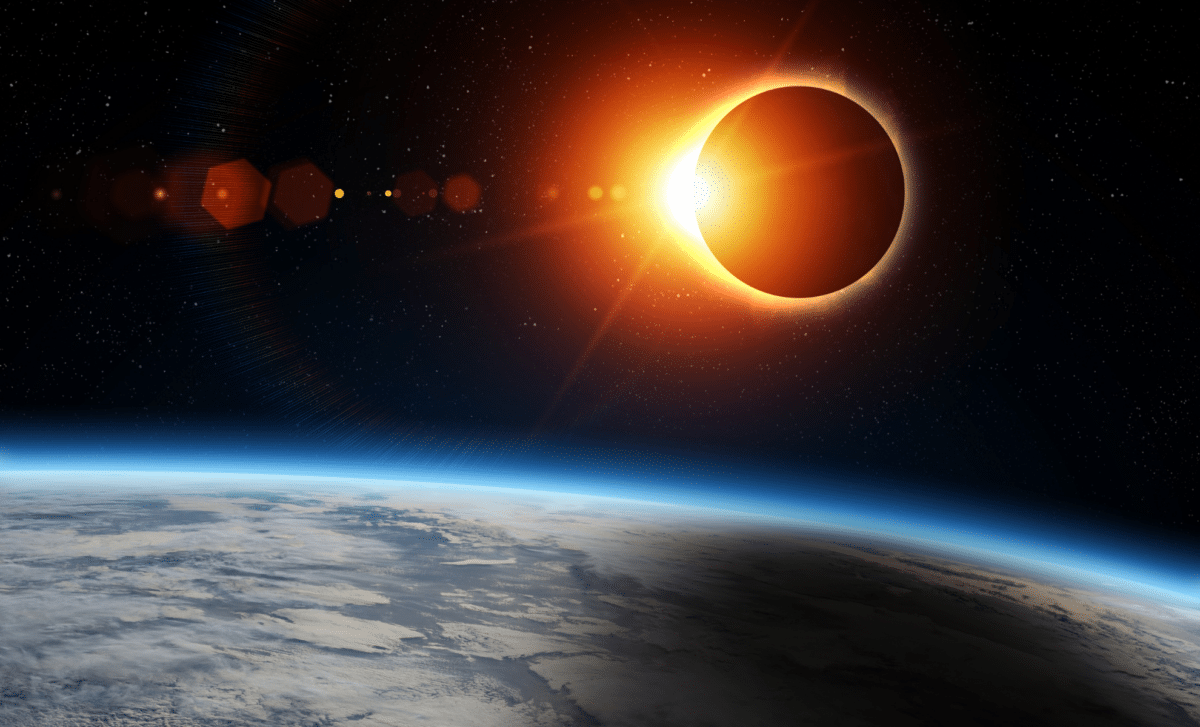
Astronomy enthusiasts around the globe are set to witness an extraordinary series of celestial occurrences in 2026, featuring three total solar eclipses, a captivating blood moon, alongside several other spectacular sky events such as planetary alignments, brilliant meteor showers, and rare lunar displays.
Triple Total Solar Eclipses in Under Two Years
The highlight of this celestial period is a rare run of three total solar eclipses taking place within just 710 days. As Forbes reports, such a sequence hasn’t occurred since the years 2008 to 2010. The first eclipse will happen on August 12, 2026, visible from Greenland, Iceland, and northern Spain, where the Moon will fully cover the Sun, plunging those regions into temporary daytime darkness.
The next total eclipse arrives on August 2, 2027, lasting up to 6 minutes and 22 seconds, crossing Luxor in Egypt and stretching over North Africa, the Middle East, and parts of southern Europe. This eclipse will be the longest total solar eclipse this century. The trilogy wraps up on July 22, 2028, with a total eclipse visible over Australia and New Zealand, reaching cities like Sydney, where such an event hasn’t occurred since 1857.

Annular “Ring of Fire” Eclipses Span Four Continents
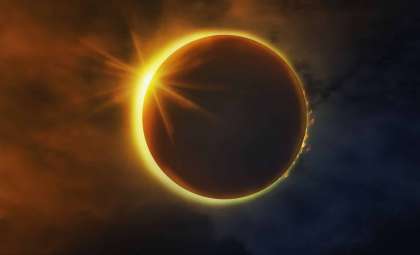
Complementing the total eclipses, 2026 will also host a series of annular solar eclipses, often called “ring of fire” eclipses. During these, the Moon’s distance prevents it from completely covering the Sun, leaving a fiery bright ring surrounding the dark lunar disk.
The first annular eclipse takes place on February 17, 2026, though it is relatively minor in scale. More dramatic events follow on February 6, 2027, visible from Chile, Argentina, and West Africa, and on January 26, 2028. The latter will produce a striking ring visible over the Galápagos Islands, Ecuador, and Brazil, finally concluding near Spain at sunset. This eclipse's duration of 10 minutes and 27 seconds makes it one of the longest recorded in recent history.
The 2026 Blood Moon’s Fiery Hue
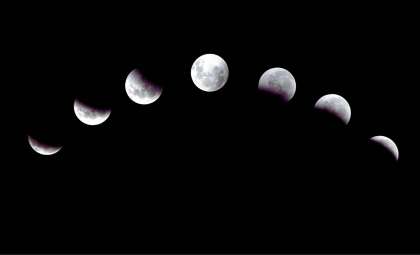
Alongside solar eclipses, the year will showcase a total lunar eclipse known as a blood moon, when Earth’s shadow causes the Moon to glow with deep red or orange colors, owing to sunlight filtering through the atmosphere. These eclipses carry significant cultural importance and are breathtaking visual phenomena.
Though the exact date remains under some regional review, astronomers expect the blood moon to be visible across North and South America, Western Europe, and parts of Africa, subject to weather conditions. The blood moon offers a stunning nighttime spectacle complementary to the solar eclipses of the year.
Planetary Alignments Offer Spectacular Views
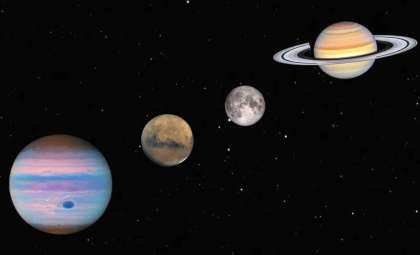
2026 will also feature remarkable planetary alignments, where planets such as Venus, Jupiter, Mars, and Saturn will cluster closely in the sky. These rare gatherings can be seen without telescopes, available for observation with the naked eye or binoculars, especially near dawn or dusk.
In mid-2026, Venus and Jupiter will appear less than a degree apart, creating a dazzling conjunction. Later in the year, skywatchers in areas with minimal light pollution may see a rare extended alignment of five visible planets stretched across the horizon, offering a stunning celestial lineup.
- Categories:
- News






0 comments
Sign in to Comment