
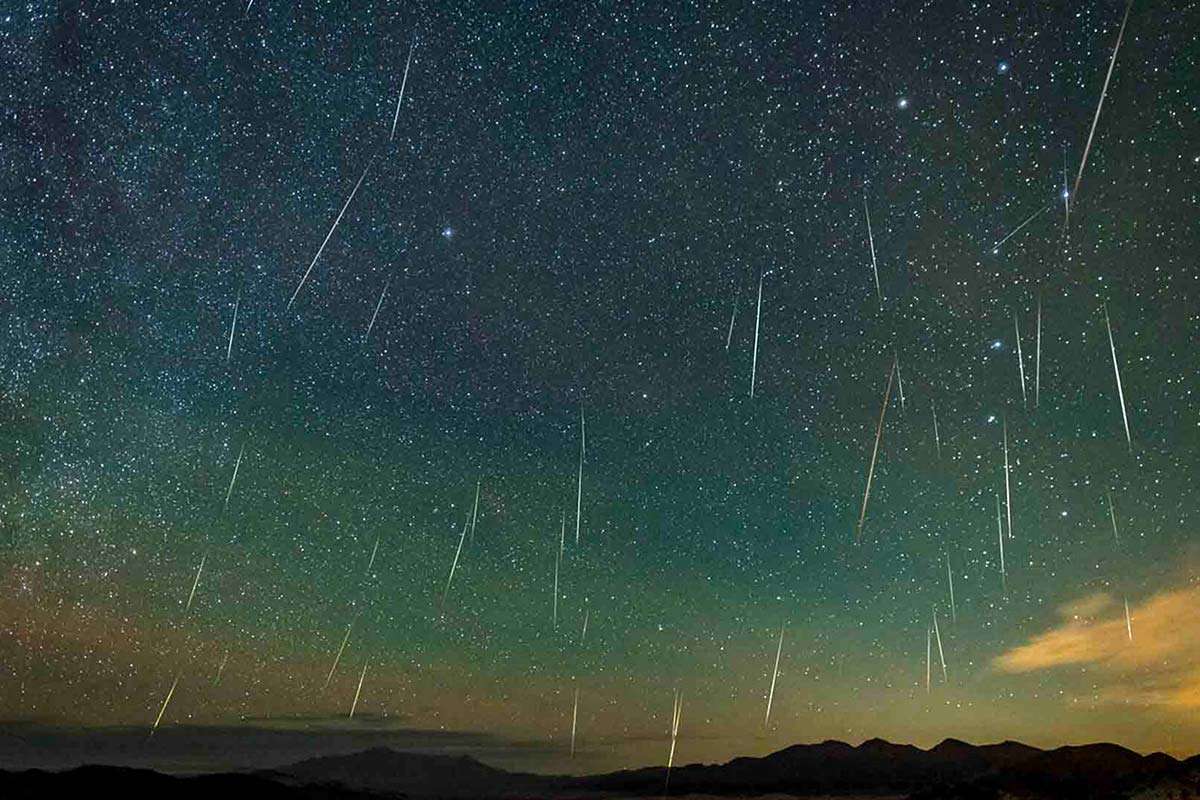
Prepare to gaze upwards—April promises some of the most spectacular celestial displays of the year, featuring two meteor showers occurring simultaneously, impressive planetary alignments, and the challenging Messier marathon illuminating the night sky.
As detailed by Gothamist, this month offers a unique mix of shooting stars, deep-sky viewing opportunities, and planet-moon conjunctions visible to both expert astronomers and casual stargazers. For viewers in the Northern Hemisphere, it’s a chance to experience some of the sky’s most photogenic and dynamic phenomena, whether through telescopes or unaided eyes.
Two Meteor Showers Illuminate the Night
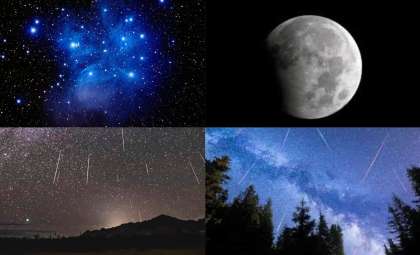
Between April 20 and 26, the night sky will be abuzz with activity as the Lyrids and Eta Aquarids meteor showers overlap, allowing observers to witness meteors from two different comets in a single week.

The Lyrids, commencing around April 17 and peaking on April 22, typically deliver up to 18 meteors hourly, speeding close to 100,000 miles per hour. Originating from debris left by Comet Thatcher, these meteors often conclude with dazzling fireballs illuminating the sky.
Meanwhile, the Eta Aquarids run from April 20 through May 21 and take center stage as the Lyrids subside. They can produce as many as 50 meteors per hour, traveling at roughly 150,000 miles per hour, sometimes leaving luminous trails lasting several seconds or minutes. These meteors stem from the dust shed by Halley’s Comet.
Astrophysicist Jackie Faherty from the American Museum of Natural History notes the six-day overlap is perfect for fireball watchers: “If you like seeing fireballs… then you’ve got a good chance.”
A Celestial Endurance Test: The Messier Marathon
April is also the time for the Messier marathon, a yearly contest among astronomy enthusiasts to observe all 110 celestial entities cataloged by 18th-century astronomer Charles Messier within a single night.
The catalog features famous deep-sky objects such as the Orion Nebula, the Pleiades, and the Andromeda Galaxy. Beginning just after sunset and continuing through the early hours, the event challenges both observational stamina and telescope proficiency.
“They call it a marathon because you’re locating all of these 110 objects within the span of a few hours,” said NASA space ambassador Kat Troche.
Striking Planet-Moon Conjunctions to Watch
Skywatchers in New York and other Northern Hemisphere locations will also have the chance to observe several close planetary alignments this month—no equipment necessary.
- April 1: The Moon passes near the Pleiades star cluster
- April 2: The Moon aligns closely with Jupiter
- April 5 and April 10–12: The Moon and Mars align, accompanied by the Gemini stars Castor and Pollux
“They’re going to form a line, and it is going to look really pretty,” Faherty said, adding that this lineup will stand out beautifully against the backdrop of Orion’s Belt.
- Categories:
- News






0 comments
Sign in to Comment