
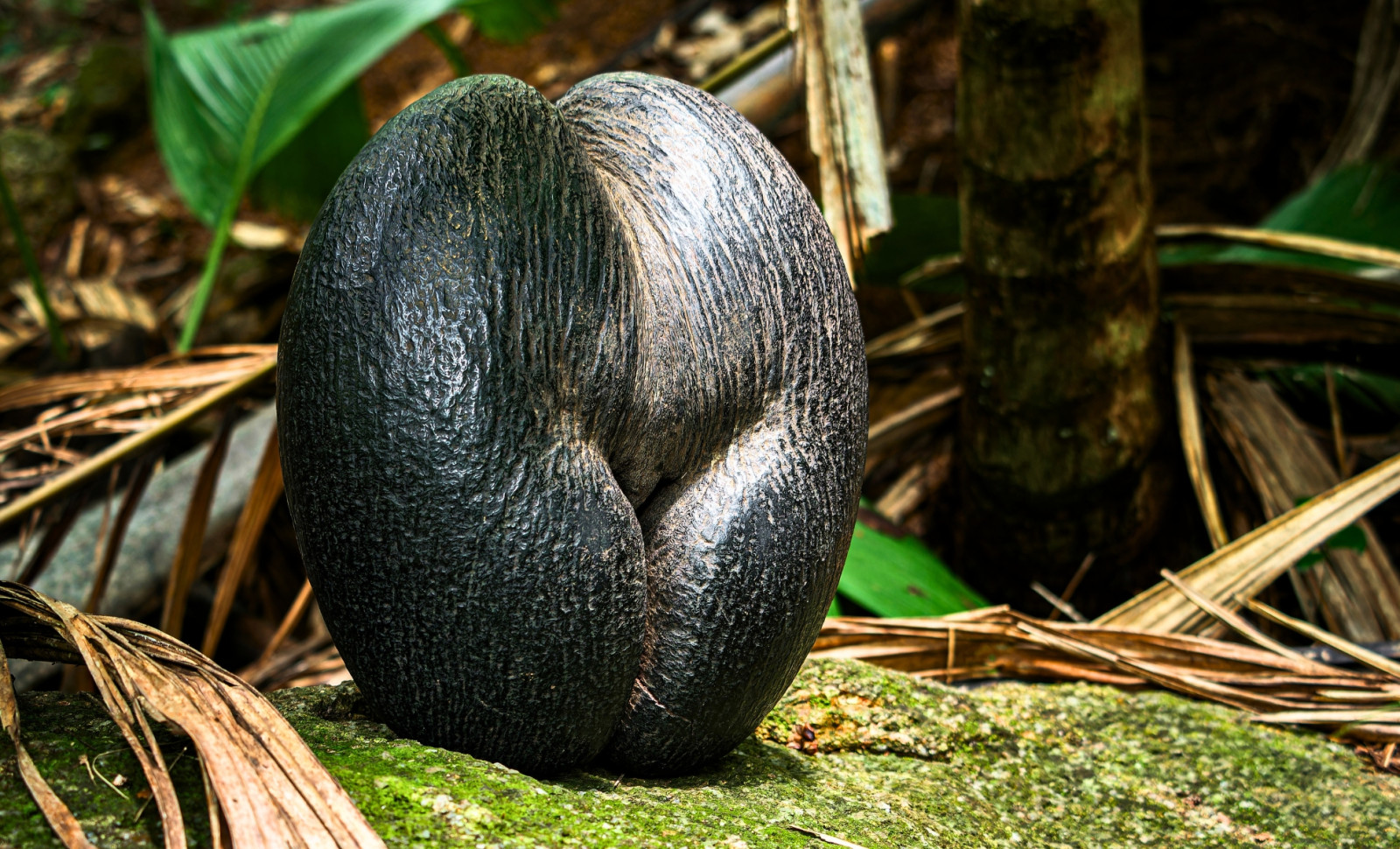
Scientists exploring the coco de mer palm have uncovered an extraordinary adaptation that explains how it thrives in the nutrient-poor soils of its island home while producing the largest and most massive seed in the plant kingdom. This palm utilizes a specialized rainwater collection mechanism where its expansive leaves channel water and nutrients directly to its root zone, nourishing its seedlings.
This ingenious system enables the Seychelles endemic, Lodoicea maldivica, to develop fruits taking up to seven years to mature, with seeds weighing as much as 18 kilograms (~40 pounds) and measuring nearly half a meter across. Published in New Phytologist, research reveals that the palm actively enriches the infertile soil around its base, allocating scarce nutrients to the exact zones where its seeds germinate.
Beyond producing record-breaking seeds, the coco de mer transforms its immediate environment, enhancing soil quality near the trunk and boosting the survival odds of its offspring within the challenging ecosystem of the Seychelles islands, particularly Praslin and Curieuse, where it once dominated the landscape.

Massive Leaves Acting as Natural Gutters
The palm’s leaves can span up to 10 square meters, serving a vital function in water management. Their rigid, fan-like shape collects and funnels rainfall down the tree’s trunk, preventing it from dispersing broadly across the ground.
As water travels downward, it gathers organic matter like fallen leaves, plant debris, animal droppings, and even leftover pollen. Christopher Kaiser-Bunbury notes, “The palm collects water along with animal and plant detritus. Even unmatched pollen gets recycled if geckos don’t consume it.”
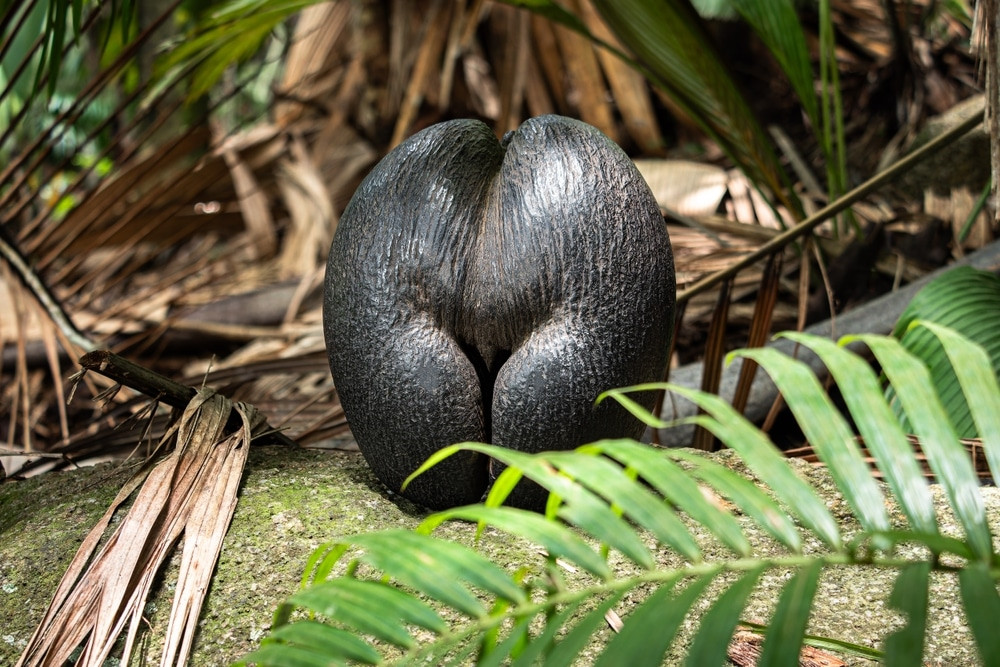
This recycling process sheds light on how the palm supports such an immense reproductive effort. Kaiser-Bunbury also highlighted the initial enigma, saying, “Allocating so much energy to produce such enormous seeds in poor soil seemed contradictory.” While most palms produce no more than ten coconuts per cycle, each coco de mer fruit represents a significant investment.
Nutrients Concentrated Where Seedlings Grow
Soil analyses revealed that nutrient levels, including phosphorus and nitrogen, are elevated by about 50 percent within 20 centimeters of the palm’s base compared to two meters away, creating a fertile microzone where seeds settle and sprout.
By localizing nutrient enrichment, the palm ensures optimal resources for its progeny’s growth. The researchers observed that this nutrient-channeling is so exact it essentially nourishes seedlings in their prime location for successful germination.
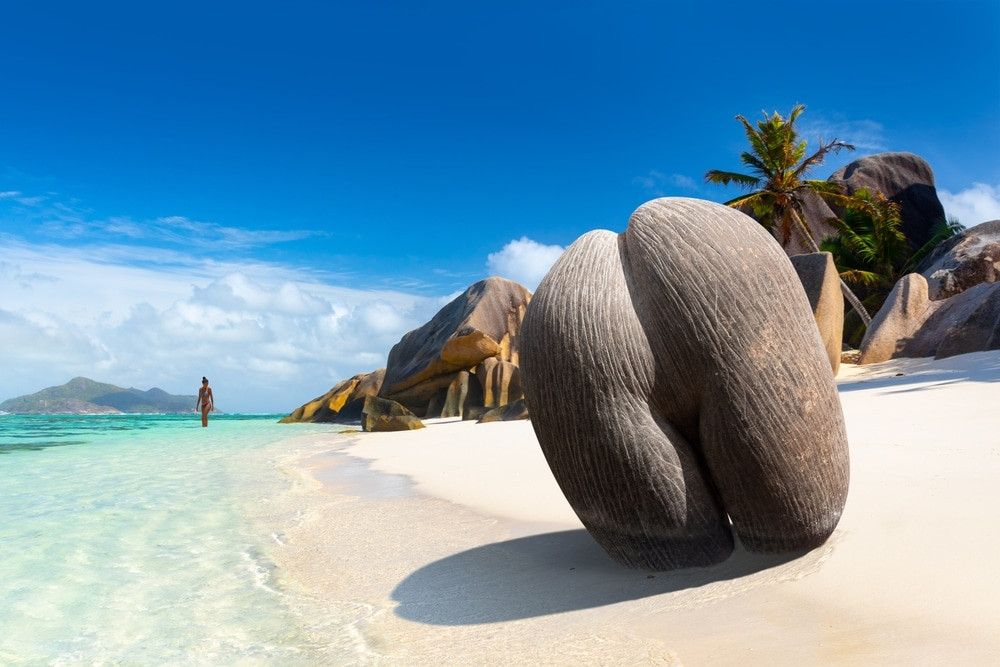
Kaiser-Bunbury remarked, “Even during heavy rainfall, walking through these palm forests can leave you surprisingly dry,” as the water is directed down trunks rather than inundating the entire ground, leaving peripheral soil drier and less hospitable for competing plants.
The Evolutionary Logic Behind Giant Seeds on Islands
Traditionally, plants spread seeds away from their parent to minimize competition, but the coco de mer’s seeds are too heavy to disperse widely. This anomaly makes sense through the lens of island evolution.
When the Seychelles separated from India roughly 65 million years ago, the palm’s ancestors lost large animal dispersers. Consequently, seeds remaining near the parent had better survival chances.
This fostered intense competition beneath the canopy, favoring larger seeds packed with more energy, enabling seedlings to better compete for light and resources in limited space.
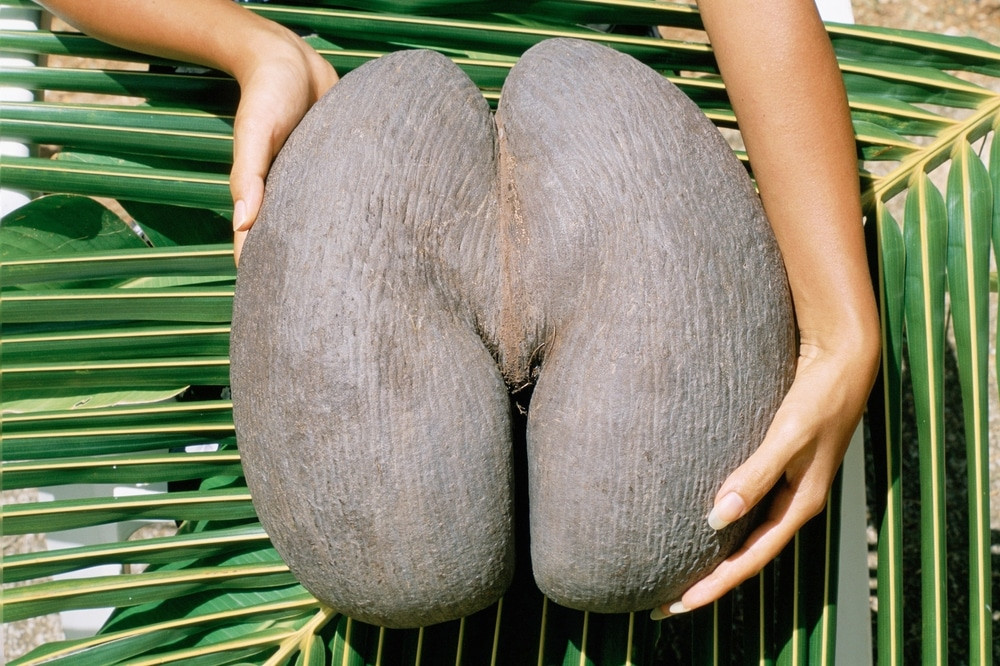
Peter Edwards described this as an internal race within the species, stating, “Competition to pass on genes fueled the evolution of bigger seeds.” Thus, the palm’s giant seed thrived partly because seedlings competed in close quarters rather than despite it.
An Island-Wide Trend for Larger Seeds
While the coco de mer’s case is remarkable, it mirrors broader island plant adaptations. A 2014 study in Proceedings of the Royal Society B analyzed paired island and mainland species near New Zealand, finding island plants consistently evolved larger seeds.
This phenomenon was consistent across various plant types and dispersal strategies. Plants relying on wind or fleshy fruits evolved seeds that tended to be larger yet less mobile, reflecting the hazards of long-distance dispersal in isolated island habitats, where many seeds fail during oceanic dispersal—referred to as “propagule mortality at sea.”
Consequently, seeds remaining near the parent plant fare better. Large seeds provide the reserves to establish successfully and outgrow competitors, a trend epitomized by the coco de mer.
A Palm That Shapes Its Ecosystem
Beyond creating massive seeds, the coco de mer engineers its environment to favor its survival. By directing rainfall-bound nutrients to the root zone, it enriches soil near the trunk and discourages other vegetation through drier surrounding areas.
As a dioecious species, it bears male and female flowers on separate trees. The mechanism of pollination remains partly mysterious, though gecko behavior suggests they may assist by feeding on pollen. The palm grows slowly and starts flowering only when its trunk reaches six to eight meters, allowing its leaves to reach sunlight above the canopy. Most trees currently standing are mature males.
This reproductive and environmental strategy once enabled the palm to form monodominant forests on Praslin and Curieuse, but habitat loss and human exploitation have diminished populations. Today, the species remains protected, and trade in its enormous nuts is controlled.
Kaiser-Bunbury emphasized that while many plants collect water, none are known to have refined the process as precisely as the coco de mer. This adaptation likely underpins why this rare, endemic tree continues to thrive despite the nutrient limitations of its Seychelles habitat.
- Categories:
- News



0 comments
Sign in to Comment