

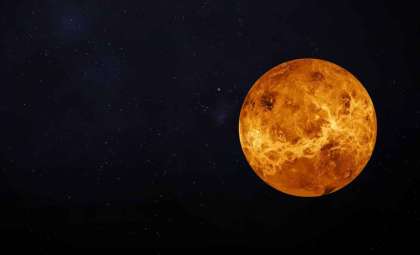
Scientists have long wondered about the curious case of Venus, Earth's closest planetary neighbor, and its puzzling lack of water. Recent findings by researchers at the University of Colorado offer a surprising explanation. A specific ion known as HCO+ plays a key role in breaking down water molecules, which then escape into space, leaving Venus arid and enigmatic.
The Power of Venus’s Electric Field
Meanwhile, NASA scientists uncovered another startling phenomenon: Venus possesses an electric field far stronger than Earth’s. This immense force acts like a cosmic siphon, driving water vapor away from the planet’s atmosphere and preventing it from coalescing into bodies of liquid water. This discovery reshapes our perspective on the conditions necessary for sustaining water and, potentially, life on other worlds.
Consequences for Life Beyond Earth
The significance of these insights extends well beyond Venus itself. Understanding how planets lose or maintain their water reservoirs helps researchers pinpoint where life might arise elsewhere in the cosmos. These breakthroughs mark important milestones in piecing together the complex puzzle of planetary habitability.

As we deepen our exploration of the solar system, it becomes clear that every discovery opens new avenues for inquiry, with each planet harboring its own unique mysteries waiting to be uncovered.
- Categories:
- Extraterrestrial life




0 comments
Sign in to Comment