
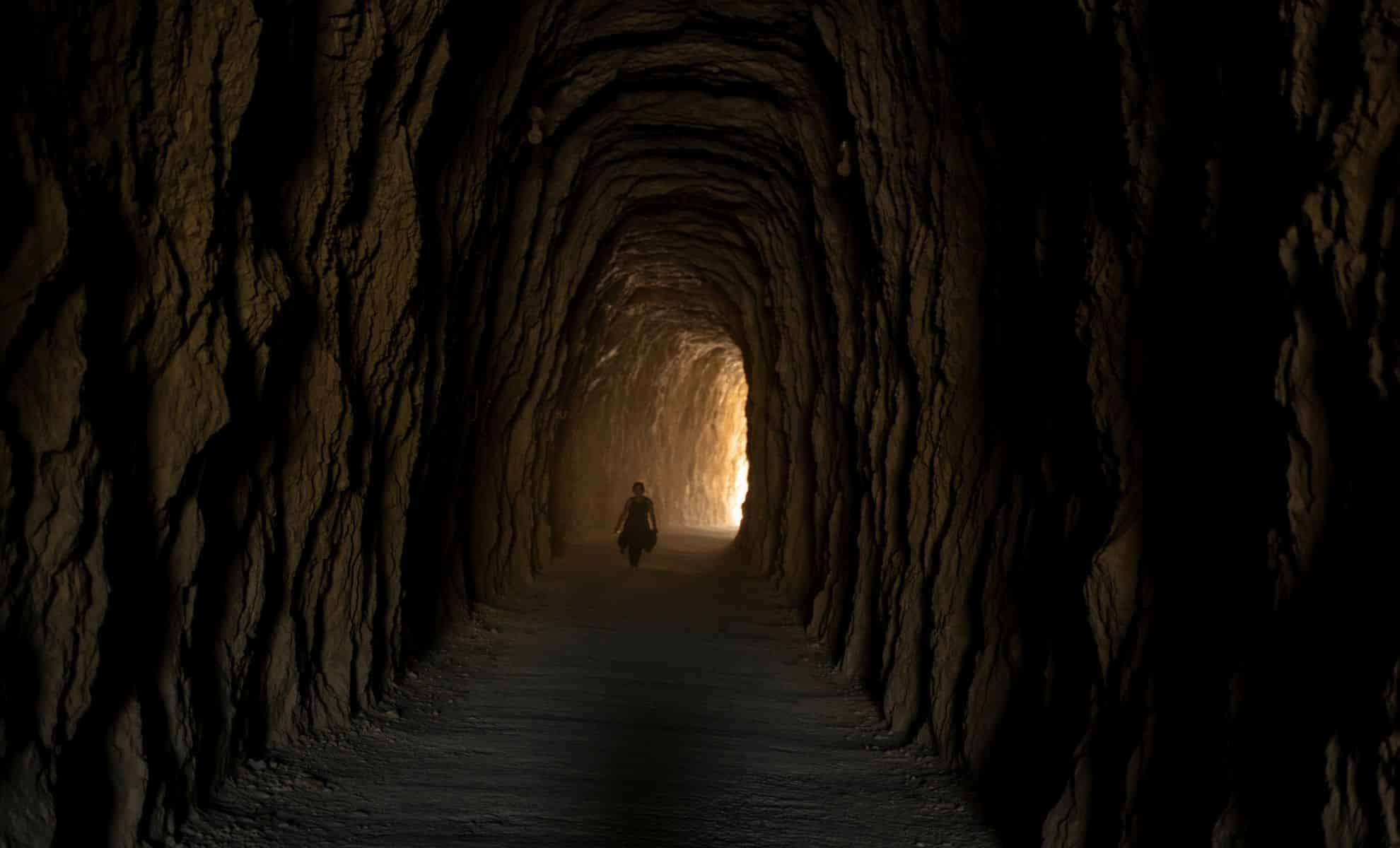
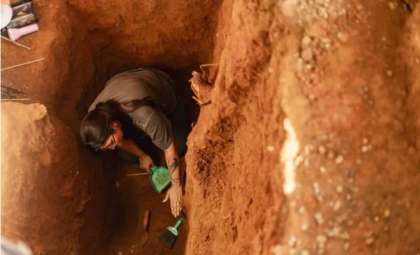
Groundbreaking research has revealed a remarkable find that reshapes our understanding of early human ancestry. A child laid to rest approximately 140,000 years ago in Skhul Cave in Israel exhibited physical characteristics of both Neanderthals and Homo sapiens. This suggests that interbreeding among early human species may have been more widespread than previously believed. Skhul Cave, known as one of the planet’s oldest burial grounds, has intrigued researchers for decades.
Finding a Unique Hybrid Child
Extensive investigations into the Skhul Cave site have shown that prehistoric humans in the Levant region began to bury their dead at least 100,000 years ago—a significant development in cognitive and societal behavior associated with Homo sapiens. Yet, the precise identities of those interred have remained debated, with some skeletons exhibiting traits of ancient Homo sapiens and others resembling Neanderthals.
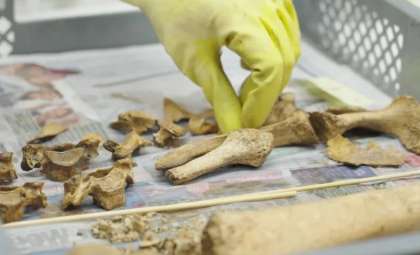
A recent analysis focused on a child estimated to have lived between ages three and five. Initially categorized as a transitional fossil between Neanderthals and modern humans, this individual was later deemed an anatomically modern human. However, further detailed examination, especially of the jawbone, revealed notable parallels to Neanderthal juveniles found in France and Spain.

These revelations prompted scientists to employ cutting-edge imaging technology to produce the first-ever 3D reconstruction of the child’s inner ear, providing deeper insight into its evolutionary lineage.
Blending Neanderthal and Modern Human Features
The back view of the child's skull closely resembled that of Homo sapiens, yet the lower jaw displayed traits typical of Neanderthals. This unusual combination convinced researchers that the child might represent a hybrid of these two human species.
Further analysis of the inner ear's bony labyrinth, crucial for sensory and cognitive functions, showed strong similarity with Homo sapiens and only a slight resemblance to Neanderthals. This suggests that the child may have shared cognitive abilities closer to modern humans.
In contrast, the child's curved dental arch and tooth alignment echoed distinct Neanderthal dental patterns, providing additional support for the hybrid hypothesis.
Diverse Human Populations in the Middle Paleolithic Levant
This finding supports the theory that during the Middle-Paleolithic era, the Levant hosted a genetically varied human population, made up of Neanderthals, Homo sapiens, and potentially other yet-unknown human groups. The researchers propose that these populations not only interacted biologically but also shared cultural practices, contributing to a complex societal landscape. The burial of this child at Skhul Cave may reflect symbolic or emotional traditions initially believed to be exclusive to Homo sapiens.
The authors of the study argue that this child should not be strictly classified as either Homo sapiens or Neanderthal. Instead, it represents a broader "paleodeme"—a mixed human population inhabiting the Levant. The difficulty in assigning a definitive species highlights how early human groups in this region were not isolated entities but rather mixed hominin communities shaping the area's cultural and genetic diversity.
Anne Dambricourt Malassé, one of the researchers involved, commented that while the discovery fills significant gaps in the fossil record, it also opens new questions: “We conclude different Homo groups interacted, but what lineages?” This points to the possibility that additional undiscovered human species existed in the area during that period.
- Categories:
- News


0 comments
Sign in to Comment