
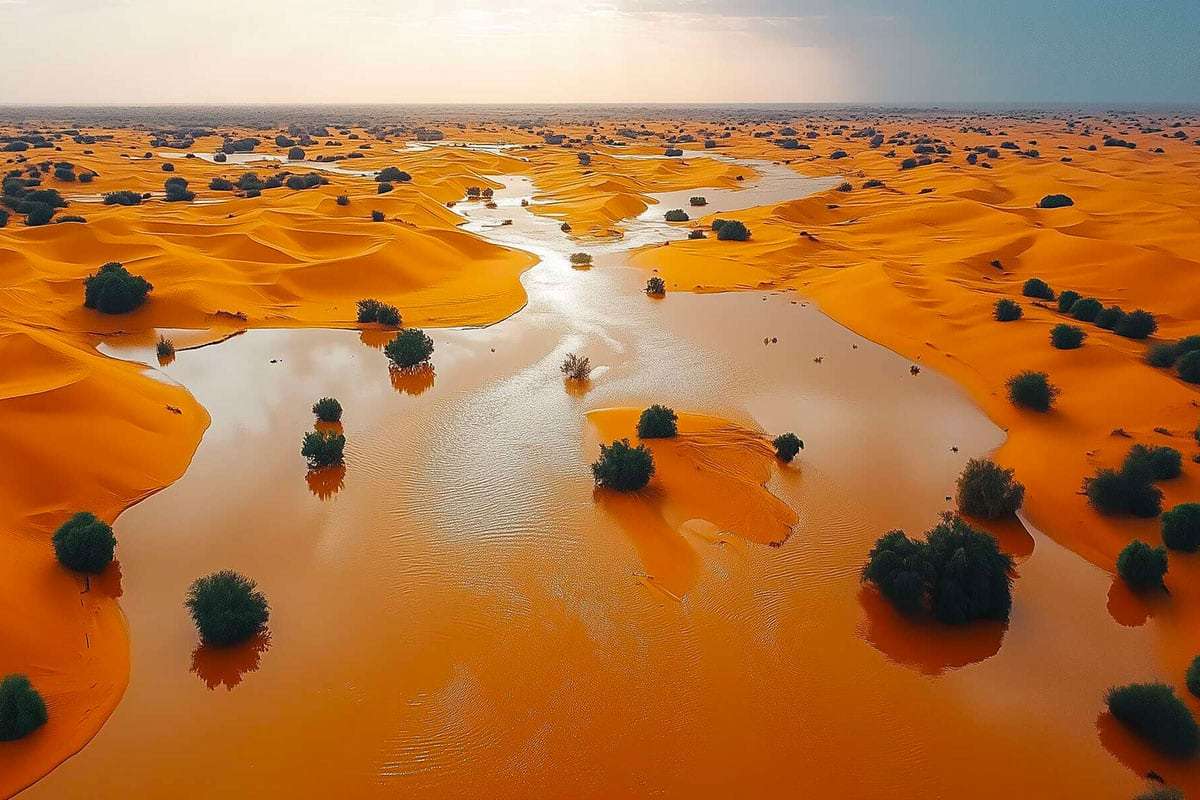
In September 2024, an extraordinary weather event brought unusually heavy rains to the Sahara Desert. Within just two days, certain locations recorded rainfall totals exceeding 200 mm—an amount often seen across an entire year. The southern Moroccan town of Tagounite experienced close to 100 mm within a single day, an astonishing volume for this characteristically dry area.
Data from Morocco’s National Meteorology Service indicates that rainfall of this intensity hasn’t been witnessed in decades, varying from 30 to 50 years depending on the location. This rare occurrence has not only altered the landscape significantly but also underlines the growing influence of climate variability on usually arid environments.
The impacts of these intense downpours encompass both remarkable and devastating outcomes:

- Creation of temporary lakes and verdant oases
- Rapid flash floods in wadis that are ordinarily dry
- Substantial shifts in the surrounding ecosystems
- Unfortunately, about 20 fatalities attributed to flood events
Striking images from the Sahara Desert show large lakes etched into rolling sand dunes after one of the most arid, barren places in the world was hit with its first floods in decades.#news pic.twitter.com/kLp0OyknOk
— Peer Community Hub, Your News Network Zone! 🇨🇦✌️ (@p_communityhub) October 16, 2024
Satellite data captures Sahara’s dramatic new landscape
Images taken by NASA’s sophisticated satellites reveal a remarkable transformation in the Sahara’s terrain. These visuals showcase a desert interspersed with newly formed water features, a striking juxtaposition against the usual endless sands. The temporary lakes reflect the sky, creating a surreal scene amid the dunes and rocky plateaus.
This phenomenon exemplifies the desert’s latent capacity to change and reflects the dynamic shifts ongoing within Earth's climatic systems. Though the Sahara is famed for its dryness, its geological record shows it has periodically undergone more humid phases.
Below is a breakdown contrasting standard yearly rainfall averages with the substantial precipitation recorded in September 2024 across different Saharan regions:
Region Typical Annual Rainfall September 2024 Rainfall Central Sahara 0-25 mm 150-200 mm Northern Sahara 25-100 mm 100-150 mm Sahel (Southern Sahara) 100-250 mm 200-250 mm
Decoding the rare weather event
The unusual rainfall patterns across the Sahara stem from a significant northward shift of the Intertropical Convergence Zone (ITCZ). This atmospheric region, known for its convergence of warm and humid air masses, moved beyond its typical boundaries, channeling moisture into the desert and triggering the heavy rains observed in September.
Climate researchers are closely analyzing this incident as it offers critical clues about:
- Long-term climatic changes in North Africa
- Prospects for increased precipitation in desert zones
- How global climate influences localized weather
- Ecological adjustments following sudden environmental shifts
Despite the temporary alteration in the desert’s complexion, the Sahara remains predominantly arid, with such rainfall events representing rare anomalies.
Effects on Sahara’s ecosystems and communities
The sudden influx of water holds significant consequences for the Sahara’s wildlife and human residents. Flora and fauna adapted to dry conditions may briefly benefit from increased moisture, yet the destructive power of flash floods threatens to damage delicate ecosystems.
For local populations, the rain brings a blend of promise and peril. Water availability may enhance agriculture and restore groundwater, but the intensity of the downpours also endangers infrastructure unprepared for such conditions. The tragic fatalities highlight a critical need for disaster planning in these arid regions.
This unprecedented event underscores nature’s unpredictability and reinforces the necessity for adaptive measures in response to extreme weather phenomena. As global climate systems continue to evolve, deserts like the Sahara may witness more frequent deviations from their historical weather patterns, prompting a reexamination of desert ecology and climate dynamics.
- Categories:
- Climate change














0 comments
Sign in to Comment