
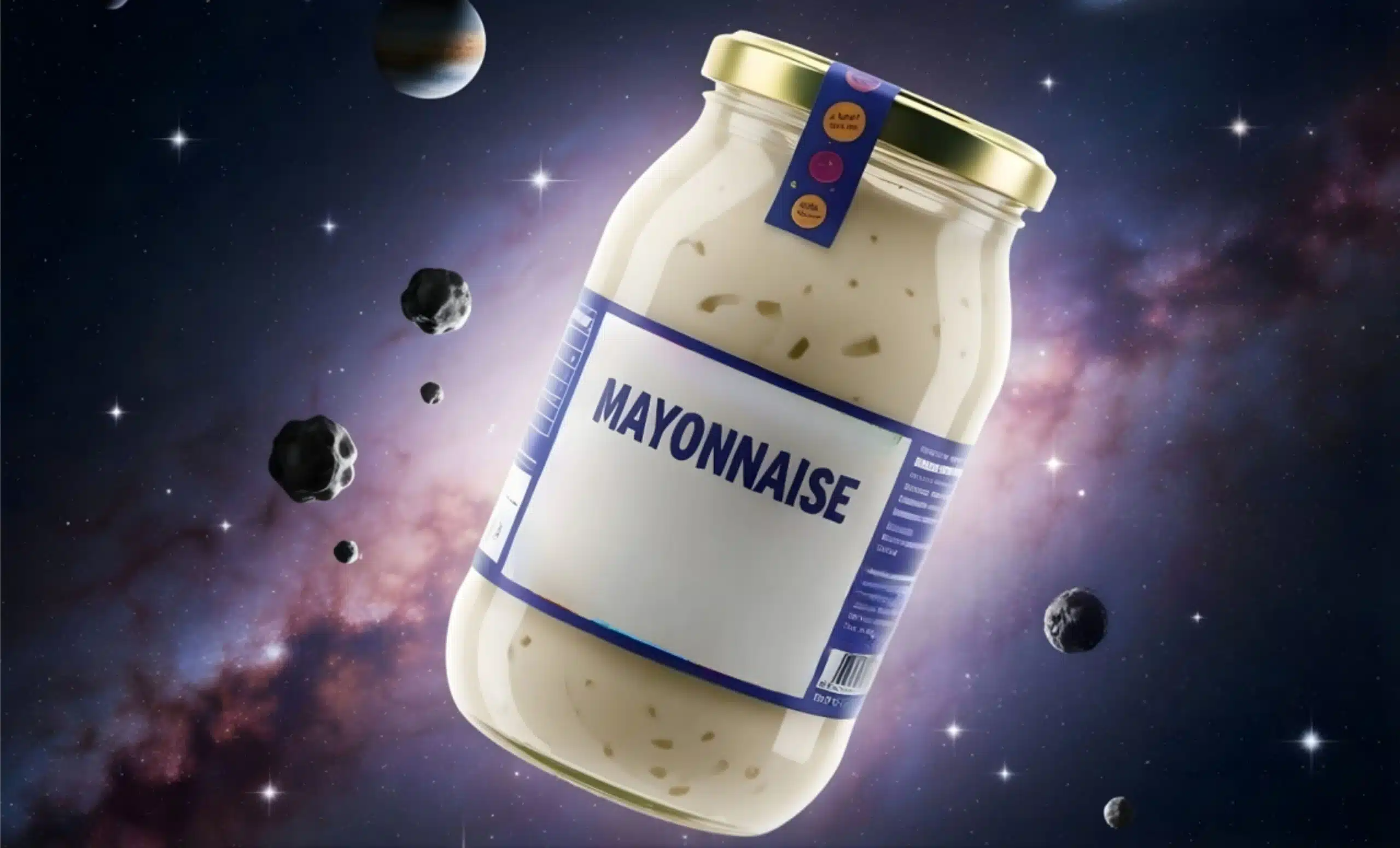
Have you ever noticed how mayonnaise separates after being stored in the fridge, or how the texture of sunscreen can alter over time? While these may seem like minor annoyances, they actually relate to a fascinating scientific puzzle involving "soft matter," a group of substances including gels, foams, and colloids.
These materials are tricky to understand because their internal structures continuously change with time. Until recently, studying these dynamics has been challenging due to Earth's constant gravitational pull, which influences these materials and obscures their true behavior. How do these substances evolve when gravity’s impact is removed?
Breaking New Ground with Space-Based Research
To address this, experts from Politecnico di Milano and Université de Montpellier launched the COLIS experimental setup aboard the International Space Station (ISS). This facility allows scientists to observe soft matter in a microgravity environment where the influence of gravity is virtually eliminated.

For more than 25 years, researchers Luca Cipelletti and Roberto Piazza have worked together to unlock how products like mayonnaise and sunscreens undergo structural changes that are difficult to detect under Earth’s gravitational conditions.

Advanced Methods to Probe Soft Materials
The ISS-based lab employs sophisticated techniques, including dynamic light scattering, to investigate soft matter. This method involves directing a laser through samples and analyzing the subtle variations in scattered light, referred to as speckle patterns. These patterns reveal how gels, creams, and other soft substances change over time.
The COLIS experiment’s findings, reported in publications such as EurekaAlert, have provided surprising insights. Researchers discovered that gravity's influence on soft matter is far more significant over extended durations than they had anticipated. Roberto Piazza expressed his astonishment:
“It’s amazing to see how much gravity, so familiar in our daily lives, acts behind the scenes to shape the materials we use every day,” this realization is opening up new doors for improving products that rely on soft materials.
Implications for Everyday Products in Cosmetics, Food, and Healthcare
Though the idea of studying mayonnaise in orbit might sound whimsical, this research carries serious significance. Many everyday products consist of soft matter that must maintain stability throughout their shelf life. Understanding how these materials behave in microgravity could facilitate the development of more durable and effective products on Earth.
The COLIS laboratory currently examines colloidal nanoparticles, ideal subjects due to their heightened sensitivity to environmental changes when suspended in liquids. This makes them excellent models for investigating the effects of gravity’s absence.
Discoveries from this spaceborne research could revolutionize formulations for lotions, foods, and pharmaceuticals by enhancing their stability and performance. The European Space Agency’s "Colloids in Space" initiative, supported by Italian and French space agencies, underpins this groundbreaking investigation.
- Categories:
- Space













0 comments
Sign in to Comment