
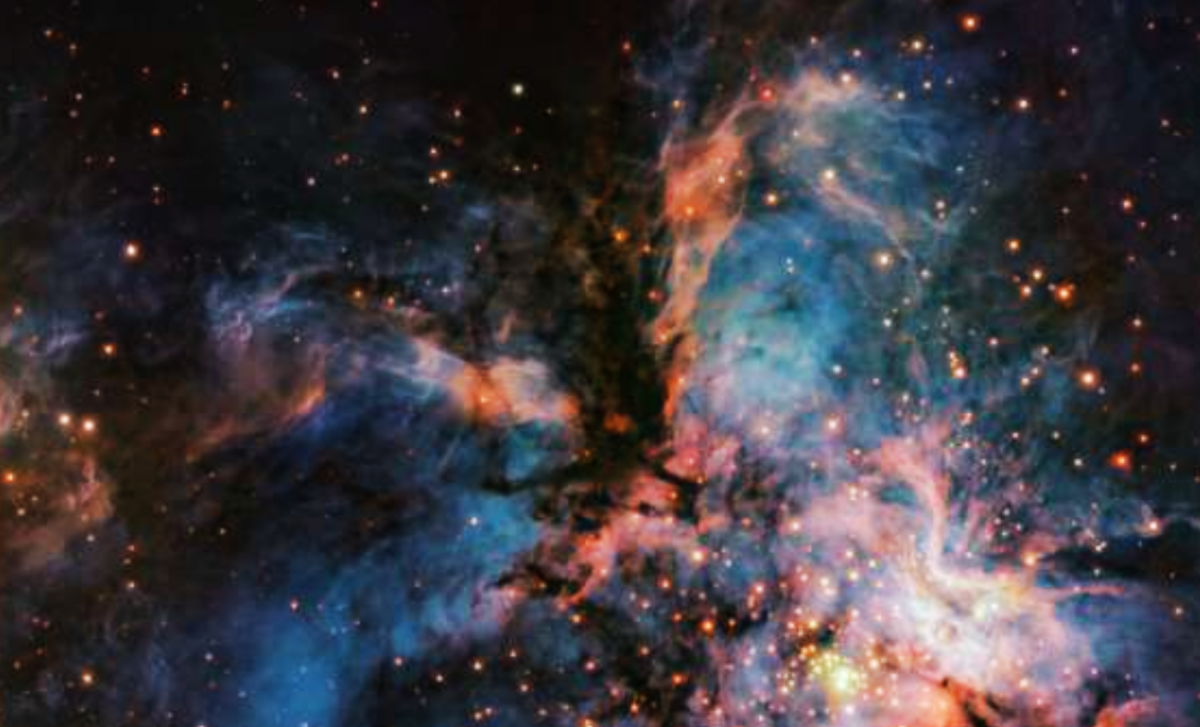
The Very Large Telescope (VLT) has recently captured a striking image of the RCW 36 nebula, evoking the shape of a majestic space hawk with its wings spread wide. This captivating photo highlights colossal newborn stars and offers new perspectives on the elusive brown dwarfs concealed within. Published in Astronomy & Astrophysics, this research explores these enigmatic objects, uncovering their hidden roles inside nebulae like RCW 36.
The Nebula Resembling a Hawk in the Cosmos
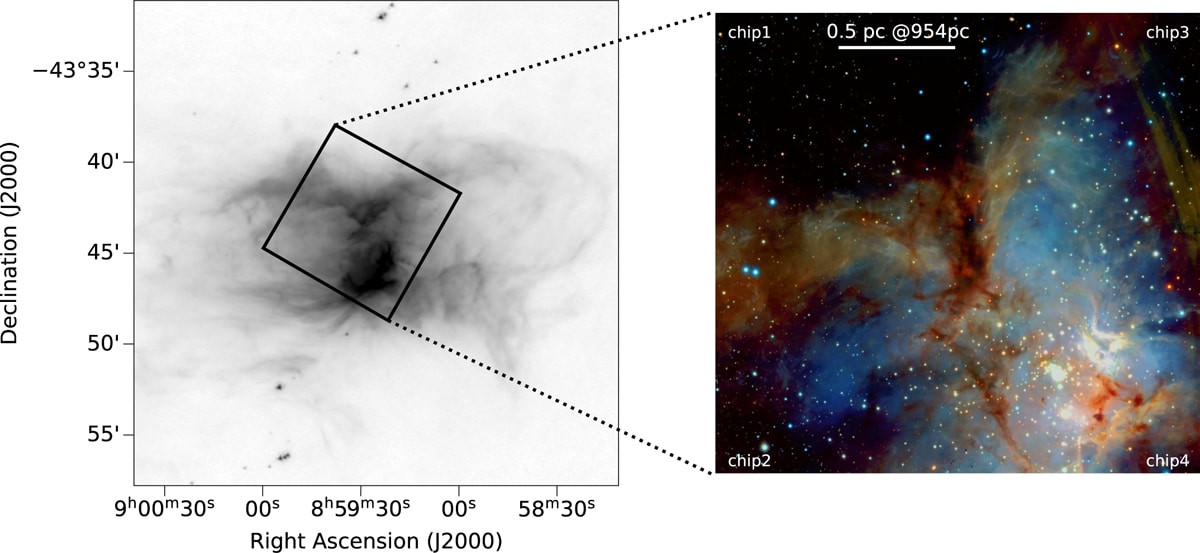
Situated around 2,300 light-years away in the Vela constellation, the RCW 36 nebula has earned the nickname “cosmic hawk” due to its bird-like appearance in the VLT image. Dark dust clouds form the hawk’s head and body, while bright filaments stretch outward, resembling wings. Beneath the nebula, glowing blue gas lit by young luminous stars adds vibrancy to the scene. This stunning view was obtained through the HAWK-I instrument, which detects infrared light, helping astronomers pinpoint cold objects such as brown dwarfs.
Illuminating Brown Dwarfs Within RCW 36
While attention often gravitates toward massive stars in such images, researchers focus keenly on the dim, hard-to-spot brown dwarfs lurking in the nebula. Known as “failed stars,” these bodies fall short of the mass needed for sustained hydrogen fusion, so they shine faintly compared to typical stars. Nonetheless, their weak infrared glow allows detection using instruments like HAWK-I.

The Astronomy & Astrophysics study utilized HAWK-I’s exceptional imaging resolution to map the presence of brown dwarfs in RCW 36. The results indicate these objects significantly influence early star formation phases, offering vital clues about the intricate dynamics within nebulae such as RCW 36.
Advanced Capabilities of the HAWK-I Instrument
HAWK-I stands as a cutting-edge device optimized for infrared cosmic observations. Its ability to correct atmospheric distortions via adaptive optics delivers sharper, more detailed images. This precision is essential for identifying faint sources like brown dwarfs that remain nearly invisible in optical light. Thanks to HAWK-I’s cutting-edge technology, astronomers can now explore nebula interiors with unprecedented clarity, uncovering fresh insights into star and brown dwarf formation.
The recent findings underscore how vital such advanced equipment is for investigating star birth. Without instruments like HAWK-I, many formative activities inside nebulae like RCW 36 would go undetected, vastly limiting knowledge about brown dwarfs.
Emerging Massive Stars Carving Their Surroundings
The RCW 36 nebula also illustrates how newborn massive stars push aside nearby gas and dust. Researchers compare this to a creature hatching from its shell for the first time. Through intense radiation and powerful stellar winds, these stars send shockwaves that clear material, allowing them to grow and mature.
This energetic interaction plays a crucial role in star formation, influencing the surrounding nebula and regulating how quickly stars and brown dwarfs arise. The study reveals the impact of massive stars on their environment, shaping the nebula’s development and structure.
Exploring the Rich Star-Forming Vela Constellation
RCW 36 sits within the dynamic Vela constellation, a hotbed for star birth and astronomical phenomena. Located in the southern celestial hemisphere, it represents one of the most fertile grounds for observing stellar genesis. The nebula’s ongoing creation of massive stars makes it an ideal target for research into star evolution.
Besides RCW 36, the Vela region hosts multiple nebulae and star-forming zones, offering astronomers valuable data about stellar life cycles. Studying this nebula grants deeper understanding of how star systems develop and how their cosmic neighborhoods influence their growth.
- Categories:
- Astronomy






0 comments
Sign in to Comment