

The Appalachian Mountain range, known for its ancient formations and enduring landscapes, harbors a remarkable geological feature beneath its surface. Scientists have identified a subterranean hot spot located roughly 125 miles underground that is influencing the region's geology and gradually making its way toward New York.
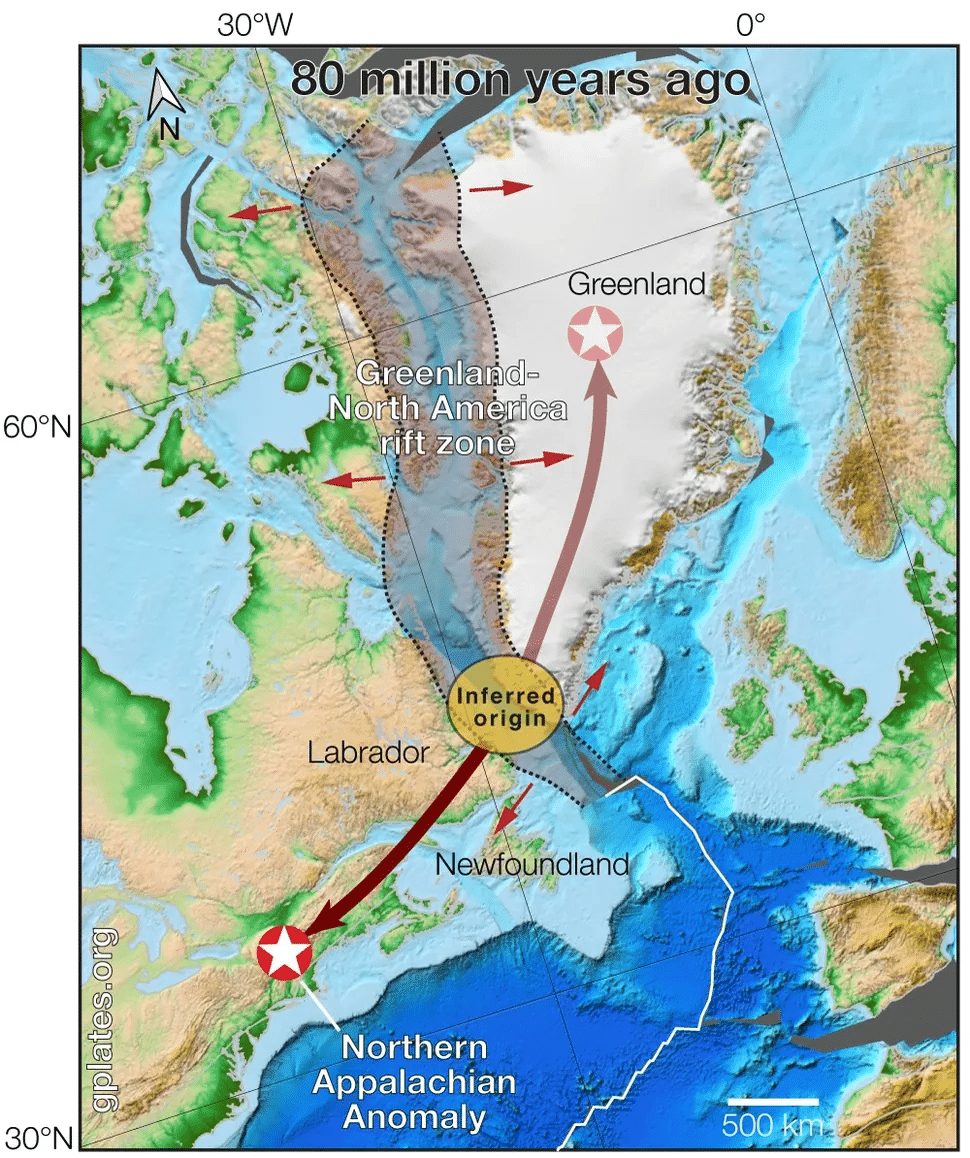
This groundbreaking finding, detailed in a July 30, 2025 Geology publication, offers fresh insights into the forces sculpting the terrain beneath the Appalachians. Termed the Northern Appalachian Anomaly, this hot zone emerged approximately 80 million years ago amid the separation of Greenland from North America. Over millennia, it has persistently impacted the area, and its slow migration will not reach the New York region for several million years to come.
Decoding the Origins of the Northern Appalachian Anomaly
The hot spot beneath the Appalachian Mountains has puzzled geologists for decades. Early theories suggested it was a remnant from the breakup of North America and Africa roughly 180 million years ago, but recent evidence challenges this view.

“This thermal feature has been a geological enigma because it occurs beneath a tectonically inactive region for the past 180 million years,” commented Thomas Gernon, the study’s lead investigator and professor at the University of Southampton. “The hypothesis that it was leftover from ancient continental separation didn’t align with new data.” Instead, researchers now link the anomaly to the rifting event that separated Greenland from North America.
Formation of Mantle Hot Spots and Their Role in Continental Shifts
Mantle hot spots like this develop when rising material from Earth's mantle fills gaps created by tectonic plate movements. As this material ascends, it cools, densifies, and eventually descends, inducing cyclical motions known as "mantle waves" that shape geological formations far beyond the immediate area.
According to Gernon, the creation of these hot zones requires a steep temperature gradient where mantle material intrudes. Not all continental separations result in such phenomena, making the Appalachian hot spot a unique geological case. Its thermal energy is credited with contributing to the sustained elevation of the Appalachian Mountains despite persistent erosion.
“Heat beneath a continent can erode its dense root, effectively making the crust lighter and more buoyant, much like a hot air balloon losing weight and rising,” Gernon explained. He believes this effect is crucial for the ongoing uplift observed in the Appalachian region.
Trajectory and Future Effects of the Hot Spot on New York
The hot anomaly has been gradually drifting southwestward at roughly 12 miles per million years. Projecting this rate forward, it is expected to reach the New York vicinity within 10 to 15 million years. When the hot spot moves away from the Appalachians, the crustal support will diminish, leading to a reduction in mountain heights over time.
Though this may seem far off, such deep Earth processes shape the landscape over vast timescales. The team’s simulations suggest that the hot spot has already influenced the persistence of the Appalachians’ towering peaks, countering millions of years of erosion.
Continuing Geological Impact of the Thermal Anomaly
Beyond elevating the Appalachians, this deep-seated hot spot could affect other North American geological phenomena. For instance, heat anomalies like the Northern Appalachian Anomaly might influence the behavior of continental ice sheets from deep underground. Gernon emphasized that despite a lack of visible tectonic activity at the surface, ancient rifting continues to produce effects hundreds of miles below.
“Ancient heat anomalies continue to play a key role in shaping the dynamics of continental ice sheets from below,” Gernon said. “Even though the surface shows little sign of ongoing tectonics, deep below, the consequences of ancient rifting are still playing out.”
Broader Implications for Earth's Geological History
This revelation about the hot spot beneath the Appalachians invites a reconsideration of what drives continental breakup and geological evolution. Co-author Derek Keir stated, “Understanding that rifting can generate circulating pools of hot rock deep within continents, spreading thousands of kilometers inland, pushes us to rethink continental boundaries both in modern times and through Earth’s history.” Such knowledge opens new pathways to explore how ancient subterranean processes continue to influence the planet today.
As scientists delve deeper into Earth's interior dynamics, it becomes clear that many surface features have roots in deep events from Earth’s distant past, whose impacts persist into the present day.
- Categories:
- News







0 comments
Sign in to Comment