
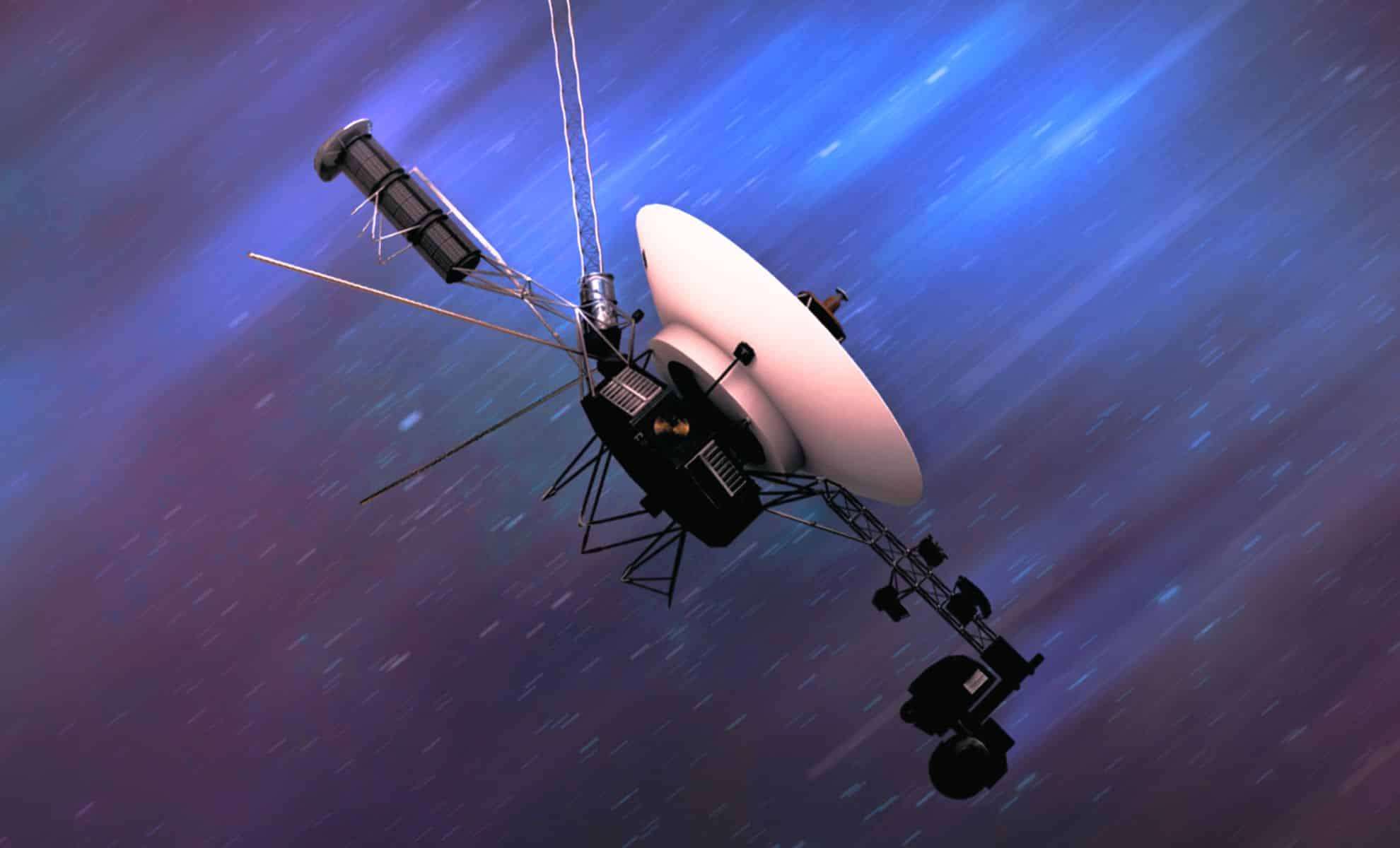
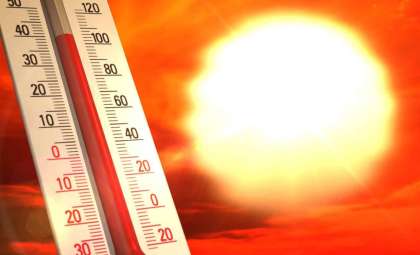
NASA’s Voyager 1 spacecraft has ventured beyond the heliopause into a startling environment where temperatures soar near 50,000°C. Remarkably, despite such intense conditions, the probe continues to operate effectively.
This insight emerges from recent NASA data, initially highlighted by WION News. The nearly 50-year-old Voyager is navigating what experts now describe as an interstellar "firewall" — a turbulent, high-energy zone marking the outer edge of our solar system.
An Unexpectedly Fiery Region Beyond the Solar Boundary
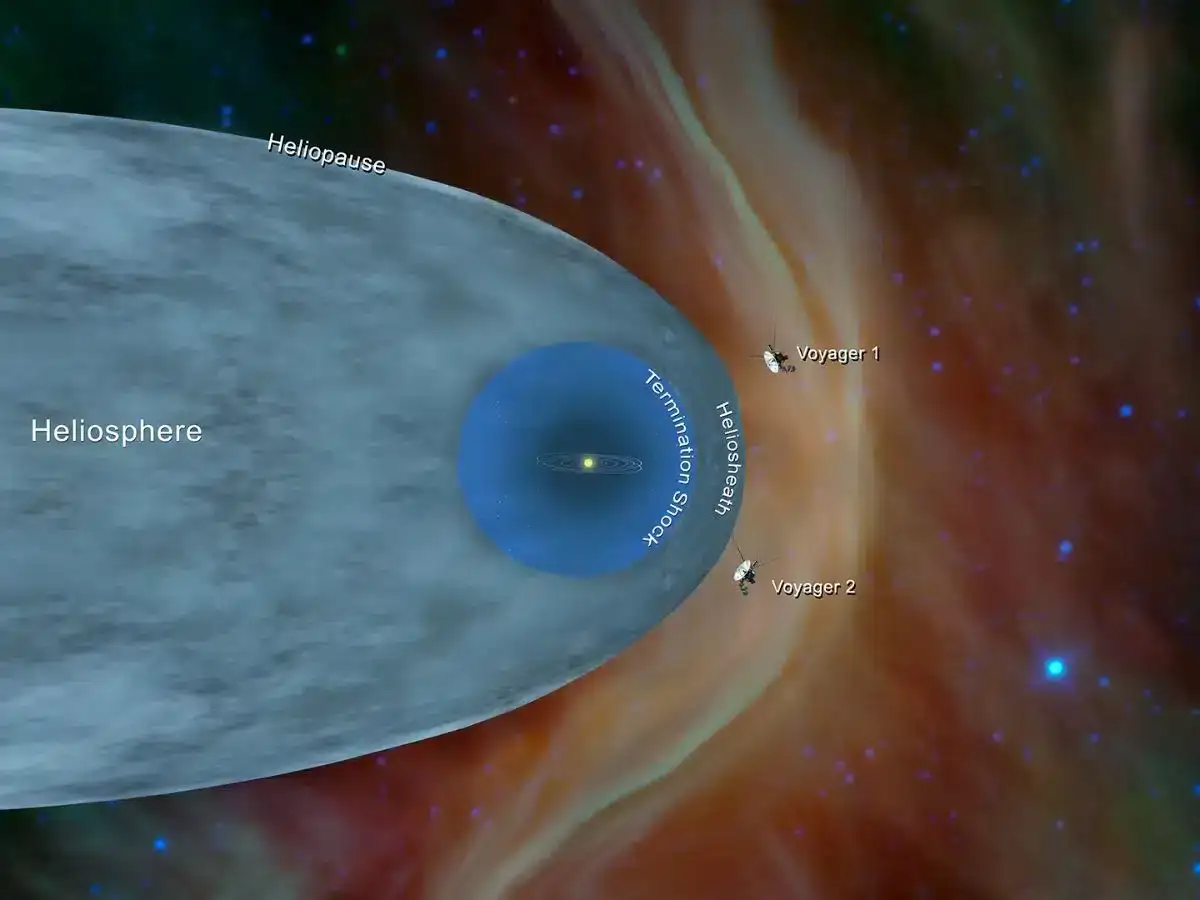
Just outside the heliopause — the dividing line separating the solar wind from the interstellar environment — Voyager 1 has uncovered a surprisingly hot zone. Temperatures here reach between 30,000 and 50,000 degrees Celsius, despite the absence of air or matter dense enough to cause combustion.

Rather than sensing heat directly, Voyager’s instruments track charged particles and plasma waves, from which temperature readings are inferred. Scientists believe the elevated temperatures result from energetic particle collisions at the solar system’s boundary, generating a powerful but invisible region of high energy.
High-Energy Particle Interactions Form a Dynamic Barrier
Researchers explain this "firewall" as the impact zone where the solar wind — a flow of charged particles from the Sun — collides with the denser interstellar medium surrounding our cosmic neighborhood. Instead of dispersing softly, this encounter creates turbulence and accelerates particles to extreme energies.
This discovery is challenging prior assumptions about the heliosphere. Previously viewed as a quiet transition region, new evidence shows it to be a complex and energetic boundary filled with particle-driven turbulence.
How Voyager 1 Withstands Such Harsh Conditions
One might ask how Voyager 1, launched in 1977, resists destruction in this intense setting. The key is the near-vacuum of space. Although the temperatures measure up to 50,000°C, the sparse matter density means there aren’t enough molecules to transmit heat as we experience it on Earth — without molecular collisions, heat transfer is minimal.
While Voyager is surrounded by highly energized particles, their low density ensures the spacecraft’s electronics aren’t overloaded. Moreover, Voyager’s sturdy yet simple shielding, designed for longevity, helps protect it. Admittedly, many instruments have been powered down to conserve energy, but those still operational continue transmitting invaluable data nearly five decades after launch.
Continued Discoveries from a Reliably Resilient Explorer
Currently, Voyager 1 operates its plasma wave detector, magnetometer, and cosmic ray instrument. These devices provide crucial insights into the conditions beyond our solar system, enabling scientists to refine models of the heliosphere — the vast magnetic bubble shielding our solar system.
With Voyager’s revelations, the heliopause is no longer seen as a placid boundary but a lively, energetic frontier. This paradigm shift in understanding reinforces Voyager 1’s role not just as a survivor in deep space, but as an ongoing source of transformative scientific knowledge.
- Categories:
- News







0 comments
Sign in to Comment