

New research uncovers that one hemisphere of Earth is cooling at a notably faster pace than the other. Scientists at the University of Oslo have found that the Pacific hemisphere sheds heat far more rapidly compared to its African counterpart. This phenomenon is primarily influenced by the distribution of land and ocean, which governs how heat dissipates from the planet’s inner molten layers.
The study, featured in Geophysical Research Letters, investigates the cooling process of Earth over the last 400 million years. Utilizing sophisticated computer simulations, the team examined how the shifting positions of continents and oceans impact the rate at which heat escapes the planet. Their findings offer fresh insight into Earth's thermal evolution.
The Role of Continental Movement in Heat Dissipation
A striking aspect of this research is how the arrangement of continents influences heat retention. The scientists divided the globe into two sectors: the Pacific hemisphere and the African hemisphere. Simply put, land areas tend to trap heat far better than ocean-covered regions. Hence, the African hemisphere, with its vast landmasses, retains heat longer, while the largely oceanic Pacific hemisphere cools more swiftly.

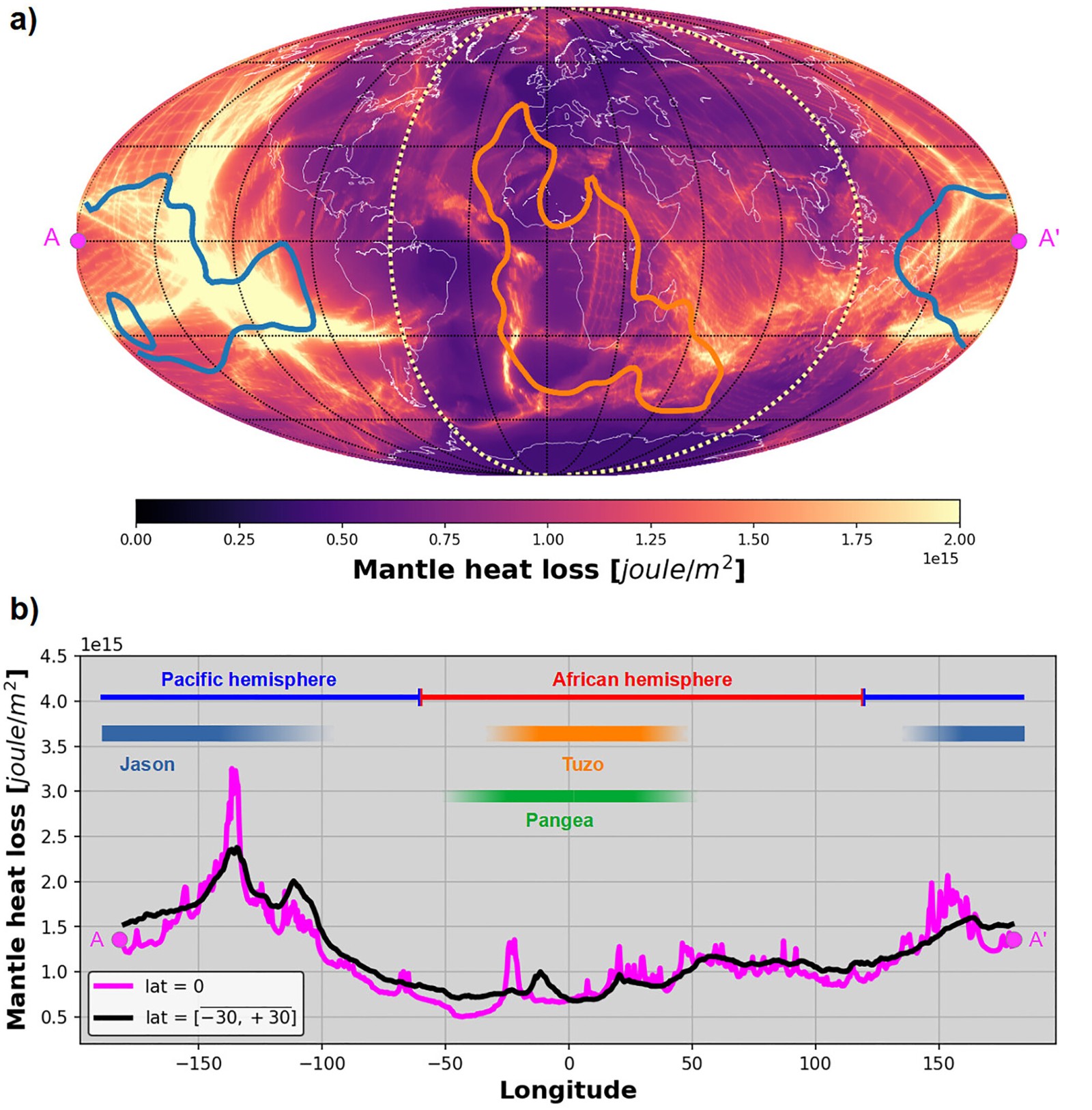
Imagine it like a thermal container. Continental crust acts as a heat insulator, preserving warmth beneath, whereas the oceanic crust is thinner and directly exposed to the chilly ocean waters above, resulting in faster heat loss.
Why Does the Pacific Ocean Floor Cool More Rapidly?
The Pacific seafloor significantly contributes to the accelerated cooling in this hemisphere. Due to its thinner oceanic crust beneath a vast expanse of cold water, it sheds heat at a quicker rate than more extensive continental areas. The massive Pacific Ocean covers a substantial portion of Earth's surface, intensifying how rapidly heat escapes.
The study incorporated models to quantify heat loss from the seafloor over geological timescales. Researchers identified that the thinner Pacific crust facilitates easier heat escape. Continuous tectonic processes reshape the seafloor, exposing fresh, colder crust, which accelerates the cooling effect.
Influence of Plate Tectonics on Earth’s Thermal Evolution
Throughout the past 400 million years, the Pacific region has experienced higher rates of tectonic plate movement, indicating it was much warmer historically. Such tectonic activity plays a crucial role in transporting heat from Earth's mantle to its surface. As plates shift, heat is released, leading to mantle cooling.
Scientists suggest that the heightened tectonic dynamics in the Pacific currently drive its rapid cooling. The fast-moving tectonic boundaries promote increased heat release, and when combined with the thin oceanic crust and cold Pacific waters, create a thermal tempo much faster than that of the African hemisphere.
- Categories:
- Science










0 comments
Sign in to Comment