
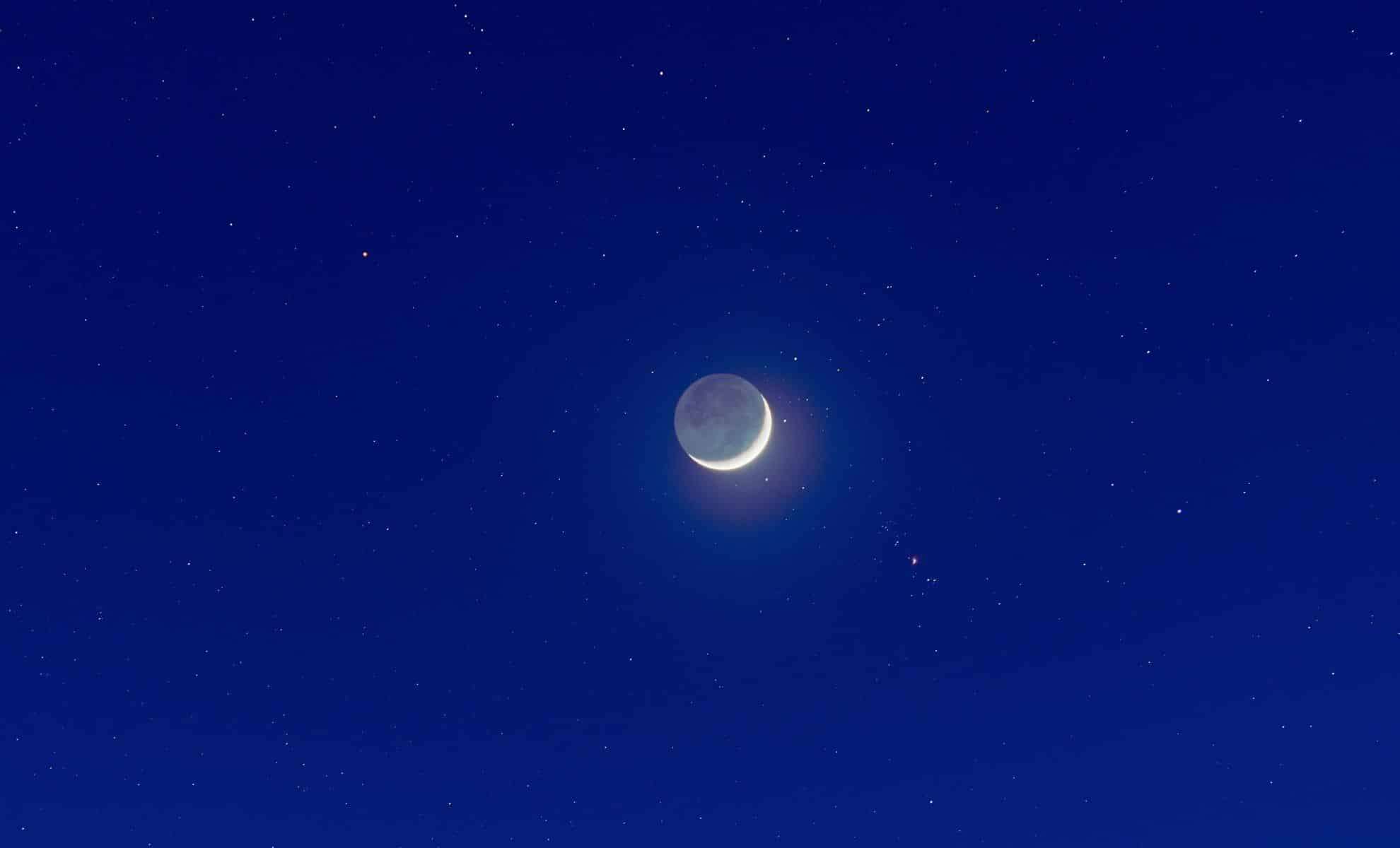
Observers are in for a treat this week as an extraordinary celestial event unfolds in the western twilight sky. As featured on Space.com, Mercury, the slender crescent Moon, and Gemini’s twin stars Pollux and Castor will appear together in a captivating alignment from June 24 through June 26. This is an uncommon chance to view four distinct and bright astronomical objects clustered closely. Whether you’re a seasoned stargazer or just looking for a serene sky spectacle, this event is sure to impress.
Mercury Shines Bright in the Evening Sky
Mercury, the smallest and swiftest planet orbiting the Sun, is currently making a notable appearance after sunset. From June 20 to July 11, stargazers can spot this elusive planet as it journeys through the dusk sky. The best viewing opportunity is on June 26 when Mercury will be visible in the west-northwest roughly 45 minutes to an hour post-sunset. It will outshine most nearby stars during this time, making Mercury relatively straightforward to locate even without optical aids. Following this peak, the planet’s brightness will slowly diminish as it distances itself from the Sun, with its brightest phase expected to last until early July.
Gemini’s Twin Stars: Pollux and Castor
Joining Mercury in the night sky are Pollux and Castor, the two luminary stars that define the constellation Gemini. These stellar twins will be part of the remarkable grouping observed this week. Early on June 24, Mercury aligns with Pollux and Castor, creating an approximate straight line with about 4.5 degrees separating the two stars. Despite their brilliance, Pollux and Castor will appear less luminous than Mercury; Pollux shines at magnitude +1.1 and Castor at +1.6, while Mercury gleams at magnitude 0.0. This contrast ensures Mercury remains the primary highlight of the cosmic arrangement.

The Crescent Moon Joins the Celestial Gathering on June 26
On June 26, the slender crescent Moon will enter this marvelous night scene, just over a day after the new moon phase. At only 3% illuminated, the crescent will softly complement the brightness of Gemini’s stars and Mercury. The Moon’s position, a few degrees to the right of Pollux, will create a nearly symmetrical visual relationship where the distance from Pollux to the Moon closely matches that from Pollux to Castor, culminating in a striking triangular display.
Tips for Viewing the Celestial Event
The optimal viewing window falls about 45 minutes to an hour after sunset, when Mercury is sufficiently elevated above the horizon. Although Mercury’s brightness makes it easily observable to the naked eye, catching Pollux and Castor’s glow might be aided by binoculars or a small telescope, given their relatively lower luminosity. The tiny illuminated Moon will also add charm to this scene. Since this entire alignment occurs close to the horizon, an unobstructed view to the west is crucial for the best experience. Keep in mind that atmospheric conditions like humidity or haze may impact visibility, so seeking a clear spot will enhance your chances to enjoy this celestial spectacle.
Why This Cosmic Confluence Matters
Events when multiple prominent celestial objects align are uncommon and offer a fascinating glimpse into the movements of the solar system. Such alignments showcase the interconnected dance of planets, stars, and moons, reminding us of the vast and dynamic universe we inhabit. Though these moments are fleeting, they provide valuable insight and inspiration for astronomers and sky lovers to marvel at the cosmos.
A Second Opportunity: Mercury’s August Appearance
If you miss this week’s gathering, Mercury’s next notable visibility comes in August. By late July, the planet transitions to the morning sky, and early risers can enjoy spotting it alongside Venus and Jupiter before dawn. In early to mid-August, Mercury will ascend higher above the horizon, reaching its peak on August 19. This period promises another stunning celestial showcase featuring Mercury paired once again with Pollux, Castor, Venus, and Jupiter.
- Categories:
- News





0 comments
Sign in to Comment