
In Saudi Arabia’s Al-Qassim region, archaeologists have uncovered an exquisite trove of gold jewelry dating back approximately 1,100 years at the Diriyah excavation site. Buried for centuries, the collection consists of over 100 pieces decorated with floral patterns and vibrant gemstones, shedding light on the Abbasid era’s craftsmanship.
The Saudi Ministry of Culture reports that this significant find emerged during excavations directed by the Saudi Heritage Commission. Diriyah was situated on the historic Basran pilgrimage path connecting Iraq and Mecca, a vital route used by merchants, pilgrims, and travelers across generations.
While the original owner or reason the ornaments were left at the location remains a mystery, the skillful artistry of the items immediately captivated experts.

Intricately Crafted Gold Artifacts with Floral Motifs
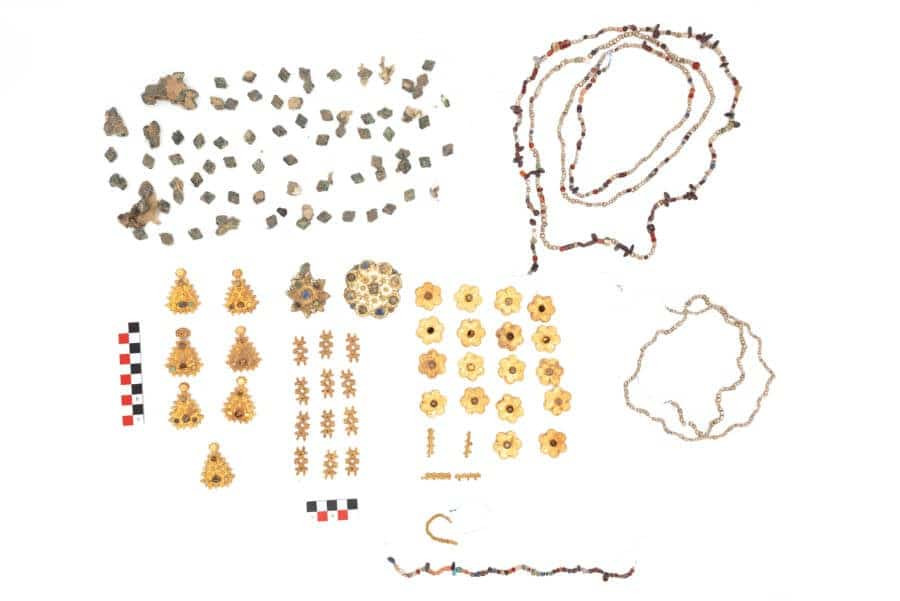
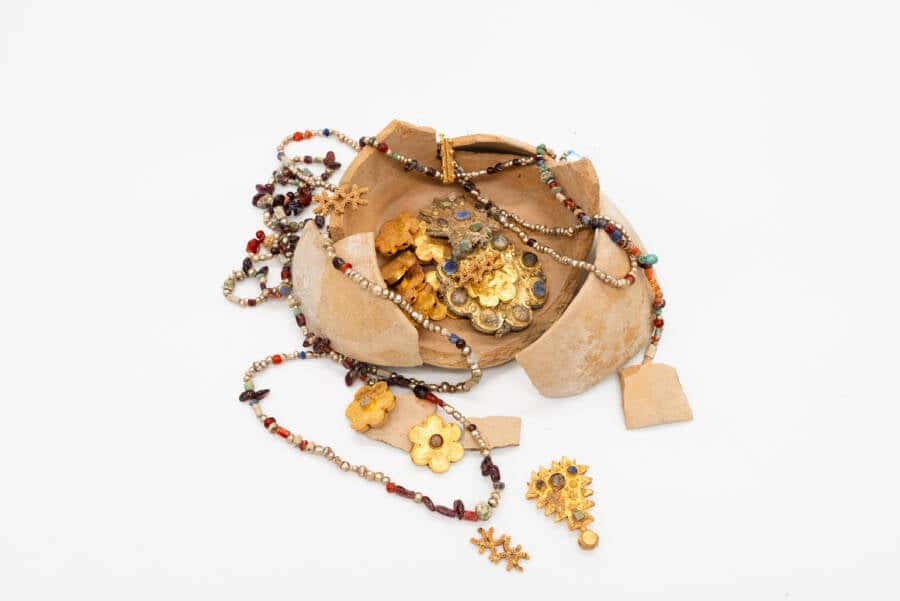
A statement on the Saudi Heritage Commission website reveals that the treasure comprises around 100 gold artifacts, including pendants, beads, necklaces, and circular decorative pieces. The designs heavily feature floral elements and some pieces are embedded with colorful stones.
“One of the most important discoveries of this sixth season was the uncovering of the ‘Diriyah Treasure,’ which consists of a collection of gold pieces, gemstones and oxidized copper fragments,” a specialist working with the Saudi Heritage Commission noted in a translated video.
Experts explain that the jewelry was created using delicate hammered gold sheets, showcasing exceptional precision and artistry. Patterns were embossed onto the gold, with some pieces carefully inlaid with gemstones set in gold frameworks.
Remarkably, despite more than a millennium underground, many objects have remained in excellent condition. Intricate details are still crystal clear, and some ornaments appear so delicate they could be mistaken for modern creations.
The inclusion of colorful stones also reflects the vibrant trade networks of the time, as goods continually flowed along the pilgrimage and commercial routes during the Abbasid dynasty, connecting distant lands.
Ongoing Excavations Reveal Signs of Daily Life
Further investigations at Diriyah uncovered structural remains such as stone foundations, hearths, mud walls, and plastered rooms, indicating a well-established settlement.
Archaeologists also discovered fragments of pottery, glass, and metal tools dispersed around the site, suggesting the area was a permanent habitation rather than a temporary stop.
Its strategic position near the Basran pilgrimage trail likely made Diriyah a favored rest point for travelers journeying between Iraq and Mecca. This constant flow of pilgrims, traders, and itinerants could explain how such exquisite gold items were deposited at this site.
Connecting the Find to Saudi Arabia’s Rich Heritage
The Saudi Heritage Commission notes the excavation forms part of a broader mission to preserve and document Saudi Arabia’s historical locations.
“This discovery at Diriyah reflects the abundance of the Kingdom’s cultural heritage and its longstanding role as a crossroads of trade routes and cultural exchange,” said Dr. Jasir Suliman Alherbish, CEO of the commission.
Dr. Alherbish emphasized that the project not only enriches understanding of the region’s past but also fosters protection of vital archaeological sites.
Although the original owners remain unknown, and the reasons for abandoning the collection unclear, the find offers valuable insights into the artistry and cultural dynamics along a key Islamic trade corridor more than a millennium ago.
- Categories:
- News







0 comments
Sign in to Comment