
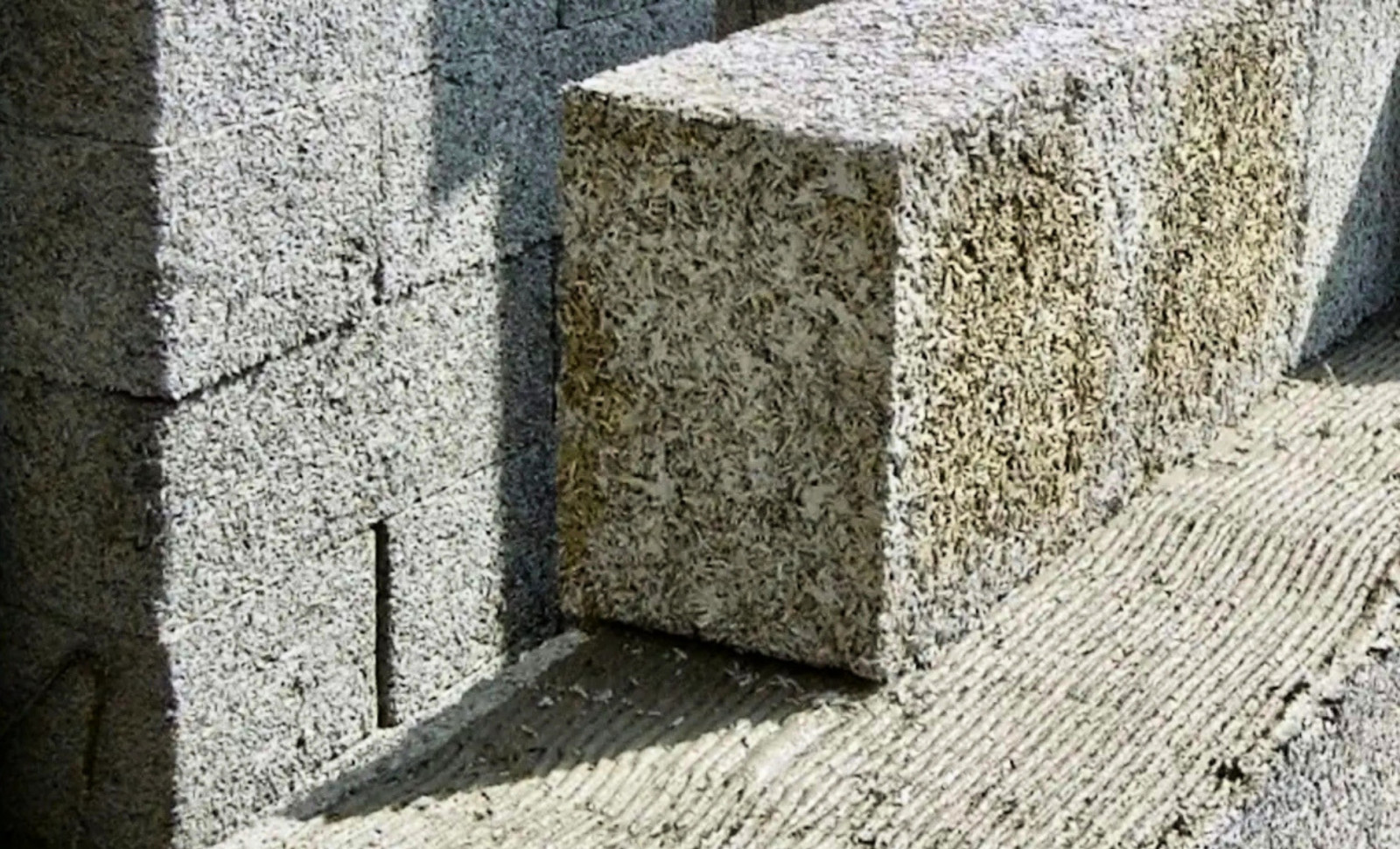
An industrial plant long restricted by law is making a significant comeback in construction as a certified insulation product. This innovative material blends hemp's woody core with a lime binder, forming infill panels used within non-structural walls.
The International Code Council has officially incorporated hemp-lime construction into the 2024 International Residential Code. This update enables builders in numerous US regions to employ this sustainable material in residential buildings without requiring special engineering approvals.
Previously, using hemp-derived materials was challenging due to nearly a century of federal restrictions that grouped industrial hemp with psychoactive cannabis varieties, effectively banning its widespread use.

The regulatory landscape shifted with the 2018 Farm Bill, which formally distinguished industrial hemp from marijuana at the federal level. This legislative change empowered the US Hemp Building Association to collaborate over several years, providing research data and standards to update national construction codes.
A report from Reasons to be Cheerful outlines that the new code applies to single- and two-family homes and mandates specific formulation and thickness requirements detailed in the annex.
Growing commercial interest has prompted architects and environmental experts to examine the performance characteristics of hemp-lime composites. Rather than serving as a structural concrete alternative, this material primarily acts as a highly effective insulating layer around timber frameworks.
Exploring the Characteristics of Hemp-Lime Composites
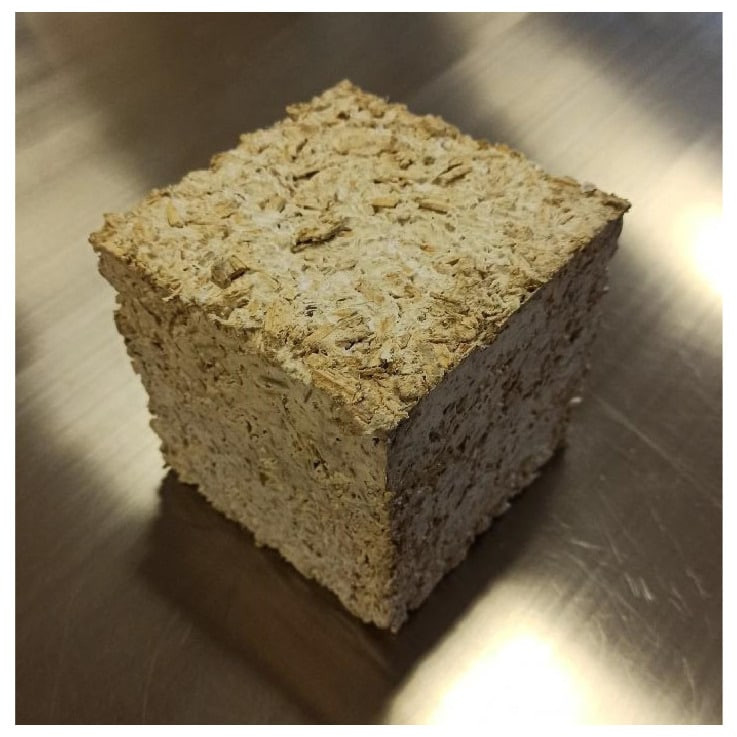
At the heart of the hemp stalk lies the hurd, a woody core separated from outer fibers during processing. The hurds are combined with hydrated lime and water, initiating a curing reaction that hardens the mixture.
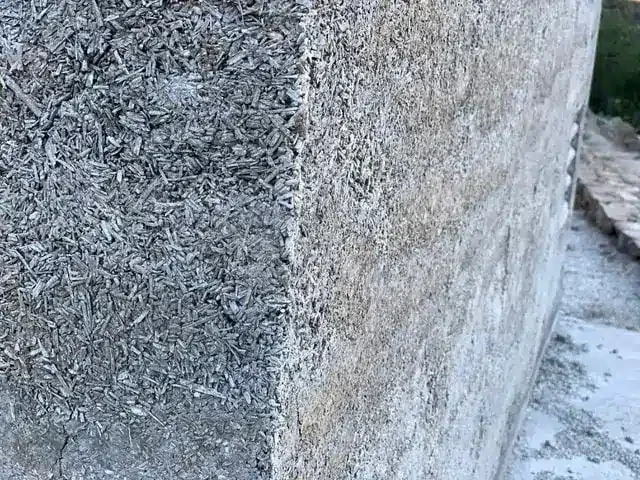
As detailed in a scientific review on NCBI, the lime coats porous hemp hurds, forming a lightweight matrix. This binder gradually absorbs carbon dioxide from the atmosphere through a carbonation reaction, solidifying into a stone-like calcium carbonate layer over time.
This composite delivers a thermal insulation performance that surpasses standard concrete by as much as 15 times. This enhanced insulation stabilizes indoor climate by greatly reducing heat loss through exterior walls.
The material also exhibits hygroscopic properties—its porous nature absorbs moisture from humid indoor air and releases it when conditions dry out.
Such breathability prevents moisture buildup inside the walls. Additionally, the alkaline lime binder discourages mold growth and insect damage by maintaining a high pH environment within the wall assembly.
Homes That Act as Carbon Absorbers
Traditional construction materials like fiberglass and concrete contribute significantly to global CO₂ emissions. In contrast, industrial hemp sequesters carbon as it grows, capturing atmospheric CO₂ through photosynthesis.
The Guardian reports that hemp’s rapid growth enables the finished hemp-lime product to achieve an almost carbon-negative footprint. The carbon stored in the plant material typically outweighs all emissions linked to harvesting and processing.
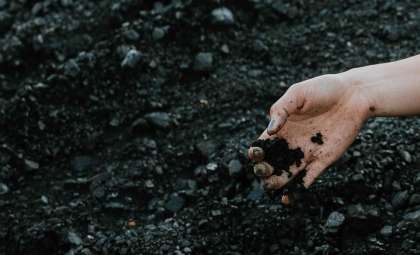
The crop requires fewer pesticides and fertilizers than many conventional materials. With a growth cycle of 90 to 120 days, hemp can be rotated efficiently, while its deep roots help preserve soil integrity.
Once incorporated into buildings, the sequestered carbon remains trapped for the structure’s lifespan. The hemp-lime mix contains no synthetic chemicals, so when demolished, it can be crushed and returned safely to the earth.
Experts caution against using hempcrete for foundations in contact with soil, as prolonged moisture exposure impairs the lime binder's breathability, leading to degradation of the organic components.
Challenges in Supply and Processing Infrastructure
Although code acceptance clears legal hurdles, supply chains in some regions still face challenges due to limited processing capabilities. Specialized equipment to separate hemp fibers from hurds is not widely available across North America.
Farmers must transport harvested stalks to facilities equipped with industrial decorticators, machines that mechanically split stalks to isolate the hurd required for construction mixes.
With few high-volume decorticators in the US, transportation expenses add to project costs. Early US hempcrete buildings often depended on imported hurd from Europe, where hemp farming has been continuous.
Processing infrastructure is gradually expanding as agricultural manufacturing zones develop. Increased facility availability improves local material supply and can reduce costs for builders.
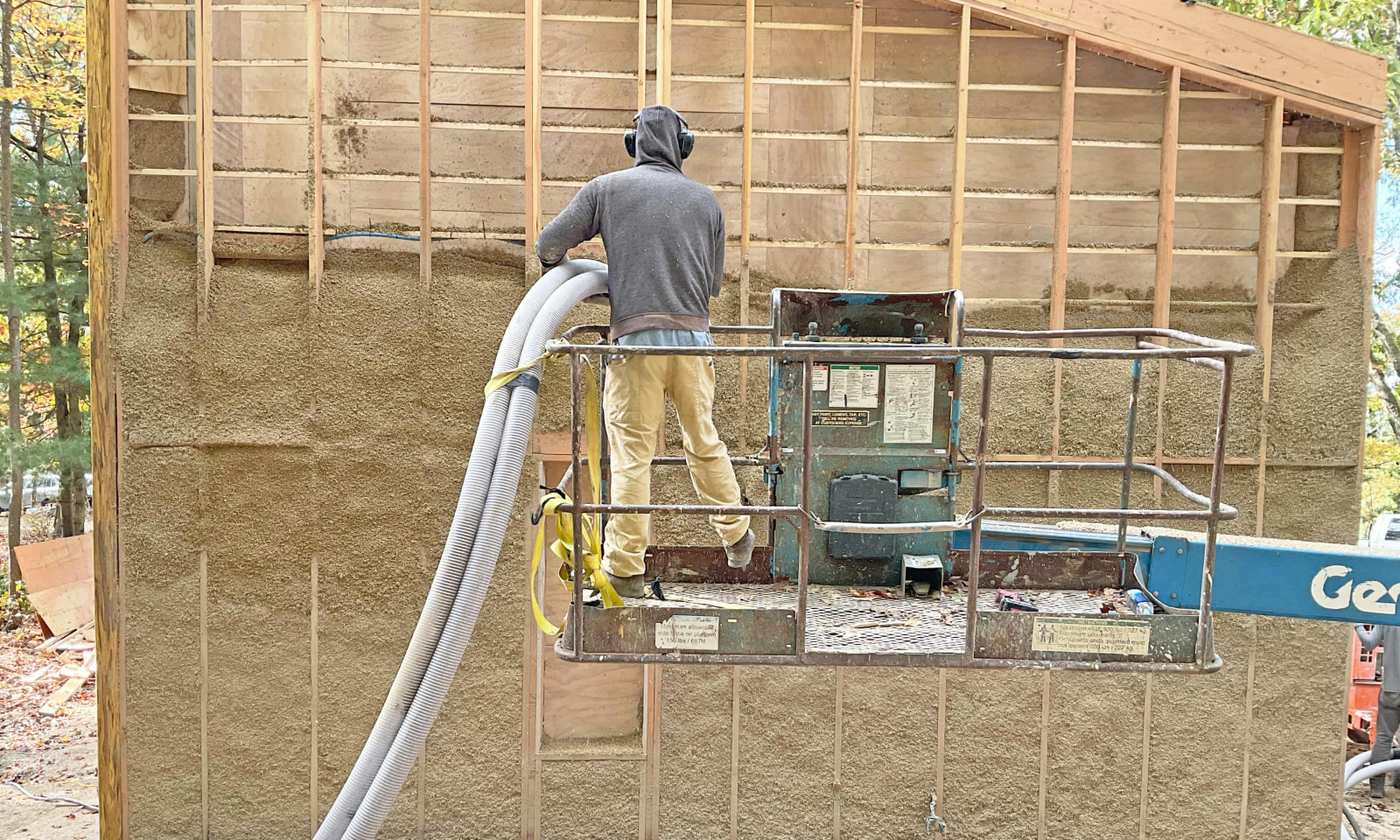
To streamline onsite work, architects are innovating with prefabricated hemp blocks and sprayed hempcrete applications, reducing labor intensity compared to traditional hand-compacting methods that require more time and supervision.
- Categories:
- News







0 comments
Sign in to Comment