
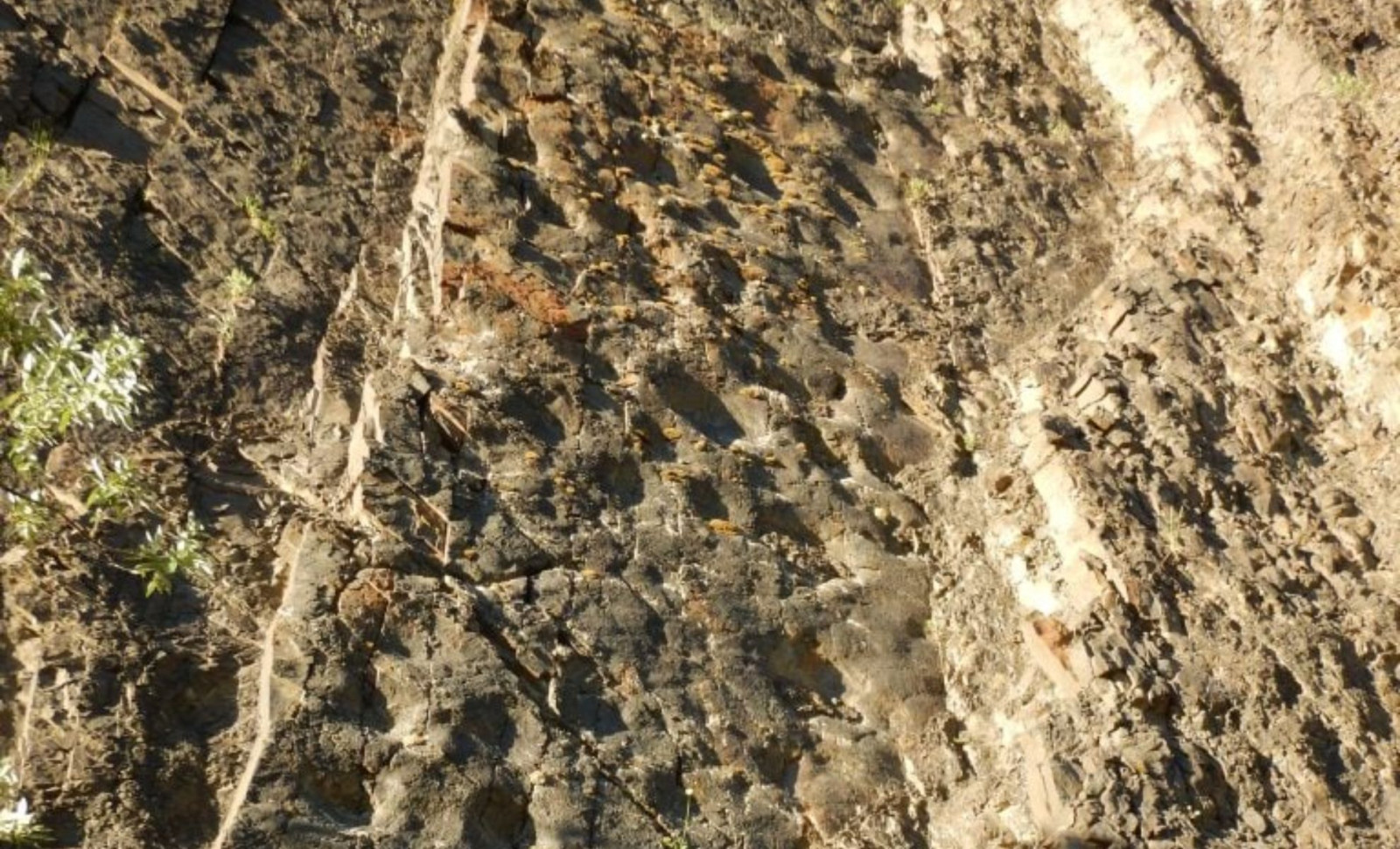
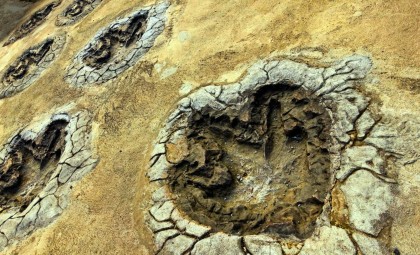
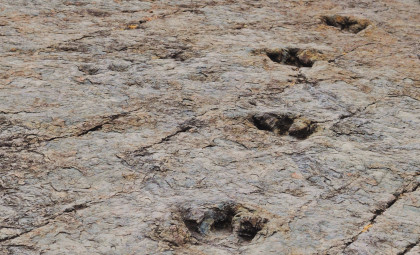
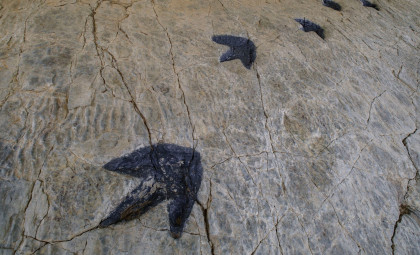
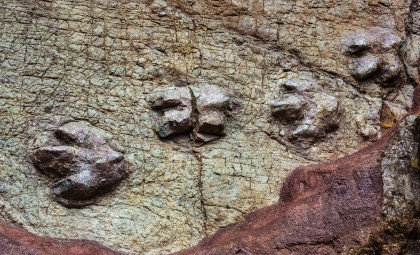
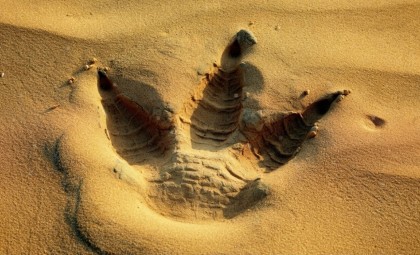
Researchers exploring Denali National Park and Preserve have identified Alaska’s most extensive dinosaur tracksite to date. Known as “The Coliseum,” this expansive location features thousands of dinosaur footprints dating back approximately 70 million years to the Late Cretaceous era.
According to the University of Alaska Fairbanks scientists, this discovery provides valuable evidence of a prehistoric ecosystem that once thrived in Interior Alaska. The team’s findings have been detailed in the journal Historical Biology.
After trekking through the park, the researchers initially found the cliff unremarkable, resembling other rocky landscapes typical of Alaska. However, their perspective shifted dramatically when the fading sunlight illuminated the cliffface.

Dinosaur Footprints Become Apparent Only at Sunset
Covering an area comparable to a small commercial plaza, the site features multiple layers of ancient footprints, setting The Coliseum apart from smaller track sites previously identified within Denali National Park.
“It’s not just one level of rock with tracks on it,” lead author Dustin Stewart explained in comments released with the study. “It is a sequence through time. Up until now, Denali had other track sites that are known, but nothing of this magnitude.”
Initially, the scope of the site was underestimated. Pat Druckenmiller, the University of Alaska Museum of the North’s director, shared that the team first noticed just a handful of prints near the base of the rock formation. However, as twilight progressed, hundreds more footprints emerged under the changing light.
“When the sun angles itself perfectly with those beds, they just blow up,” Stewart said. “Immediately all of us were just flabbergasted.”
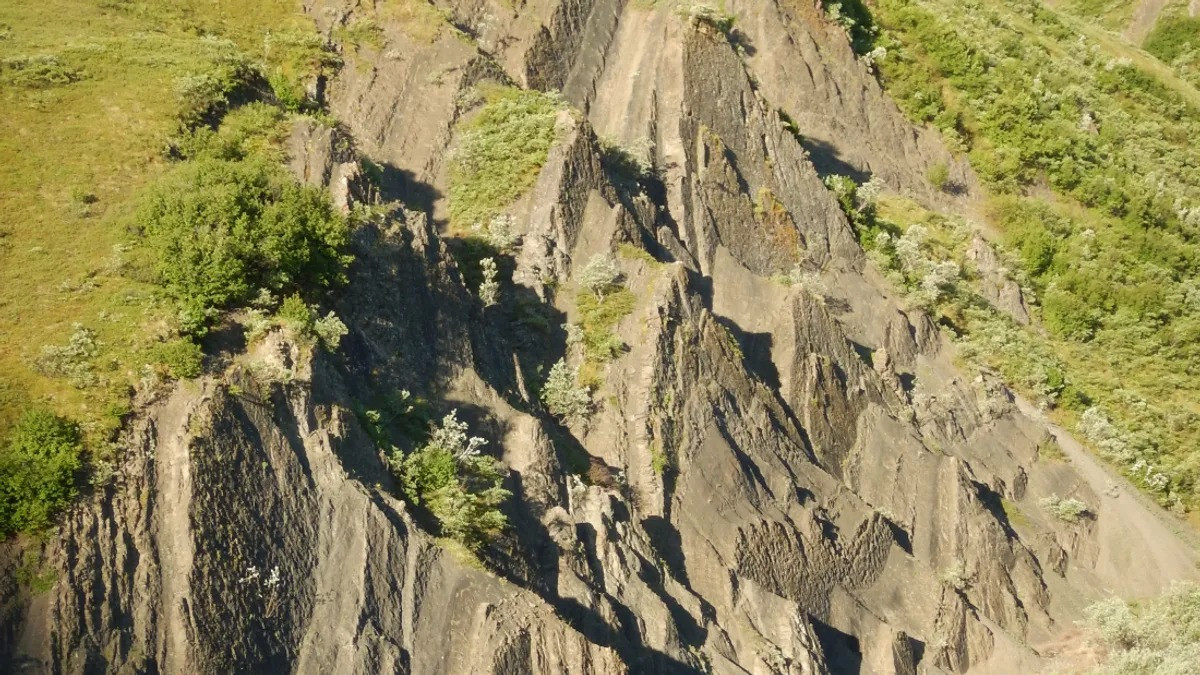
These towering rock faces, extending more than 20 stories in height, represent what was once a muddy floodplain crisscrossed by rivers and ponds, where dinosaurs repeatedly traversed soft sediments millions of years ago.
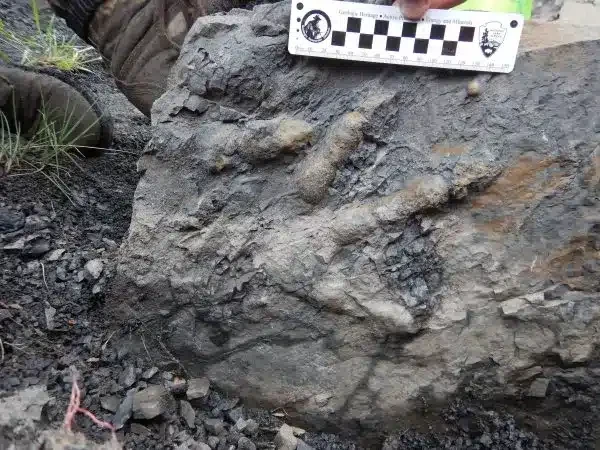
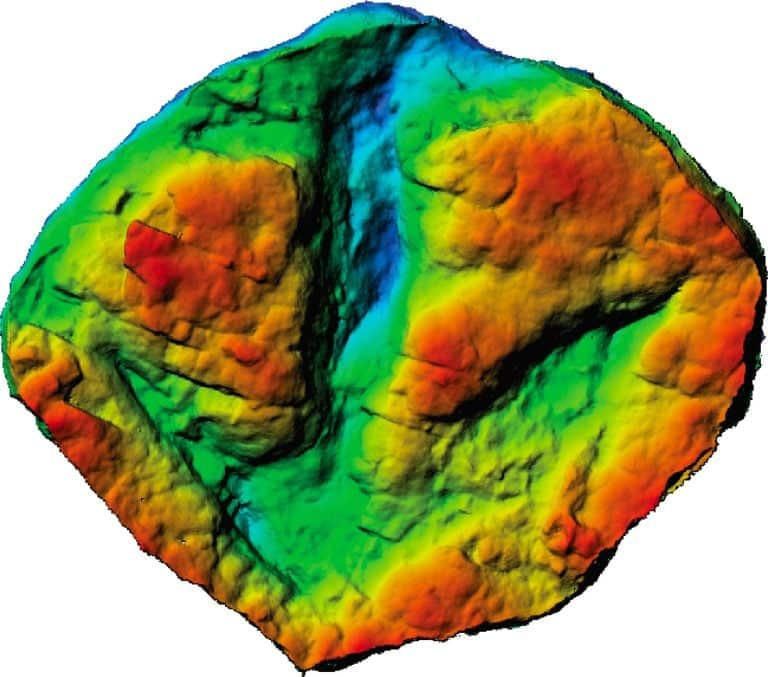
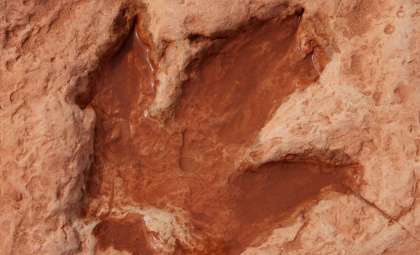
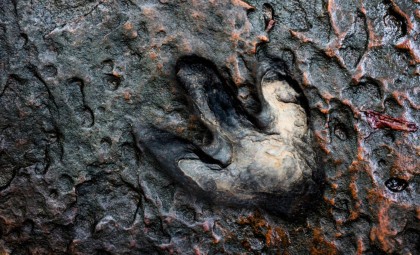
Geological activity tied to the creation of the Alaska Range subsequently uplifted and tilted these sediment layers, exposing fossil-rich surfaces seen today. Several footprints preserve delicate details including toe impressions and skin texture, as Druckenmiller noted.
Reconstructing a Prehistoric Environment Through Fossils
Besides the dinosaur prints, the scientists discovered fossilized flora, pollen, freshwater mollusks, and small invertebrate traces within the site.
Published in Historical Biology, the research explains that these finds helped reconstruct a landscape from 70 million years ago. The location once formed part of an extensive river network complemented by lakes and ponds.
At that time, the climate in Interior Alaska was warmer than today. Scientists liken the setting to the current Pacific Northwest, featuring forests of conifers and deciduous trees, along with an understory rich in ferns and horsetails.
“All these little clues put together what the environment looked like as a whole,” Stewart said.
These collective fossil records offer insight into the interactions and coexistence of plant and animal life in ancient northern ecosystems.
Large Herbivorous Dinosaurs Once Roamed Here
The majority of footprints recovered from The Coliseum belong to sizeable plant-eating dinosaurs, especially duck-billed hadrosaurs and horned ceratopsians. Tracks of both juvenile and mature dinosaurs indicate the site was frequented repeatedly over millennia.
Predatory species footprints were also recorded, including raptors and tyrannosaurs, alongside smaller impressions likely left by birds and flying reptiles.
Druckenmiller emphasized that the ancient Denali was home to a diverse range of creatures quite unlike the current landscape. He remarked:
“There was a tyrannosaur running around Denali that was many times the size of the biggest brown bear there today. There were raptors. There were flying reptiles. There were birds. It was an amazing ecosystem.”
Today, the National Park Service oversees protection of this fossil-rich area and aims to collaborate with scientists as further discoveries unfold from new fossil layers and tracks.
- Categories:
- Science


0 comments
Sign in to Comment