

A unique meteorite discovered in Alaska is encouraging scientists to reconsider how Earth's water initially formed. Recent evidence implies that our planet might have possessed enough hydrogen internally to generate water without needing asteroid deliveries, challenging long-standing views in planetary research.
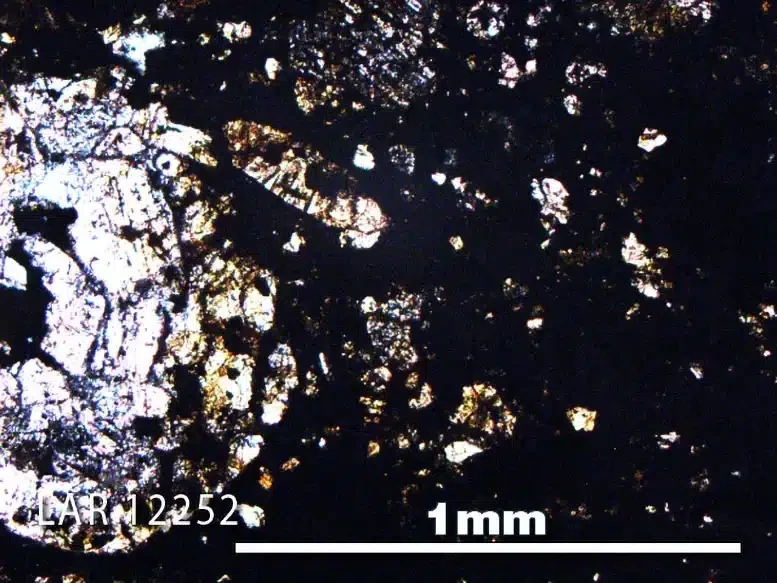
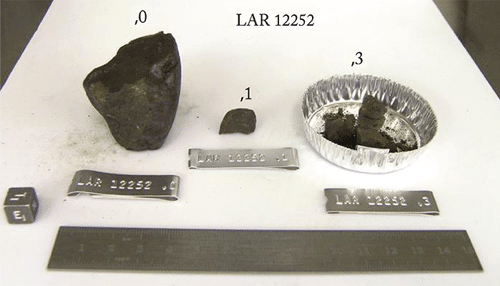
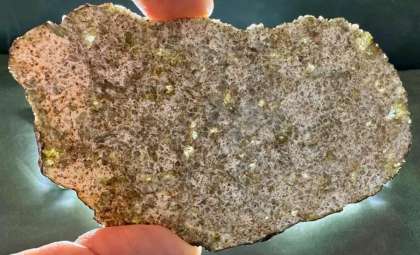
This groundbreaking discovery comes from researchers at the University of Oxford who examined an enstatite chondrite meteorite named LAR 12252. Its chemical makeup, resembling Earth's composition from approximately 4.55 billion years ago, revealed significant hydrogen levels that had gone unnoticed until now. This study introduces tangible proof that hydrogen was inherently part of rocks similar to those that built early Earth.
Uncovering Hidden Hydrogen in Meteorite Matrix
Previous analyses had detected minor traces of hydrogen in LAR 12252, though there was concern these might stem from contamination after landing on Earth. To eliminate this doubt, scientists shifted focus to the meteorite’s matrix, the material around its chondrules.

Thomas Barrett | Department of Earth Sciences, lead author and Oxford researcher, explained:
“We were incredibly excited when the analysis told us the sample contained hydrogen sulfide—just not where we expected,” he stated in a University of Oxford press release. “Because the likelihood of this hydrogen sulfide originating from terrestrial contamination is very low, this research provides vital evidence to support the theory that water on Earth is native—that it is a natural outcome of what our planet is made of.”
Reevaluating Planetary Origins With LAR 12252
The importance of LAR 12252 stems from its identification as an enstatite chondrite, a rare type of meteorite closely mirroring the isotopic signature of early Earth. According to James Bryson, co-author of the study and as detailed in their Icarus publication, these meteorites represent “snapshots” of the primordial matter that formed our planet.
Previously, it was assumed Earth remained dry during formation and gathered water later from wet asteroid impacts. This new research challenges that idea, revealing that Earth’s original materials might have contained enough hydrogen to create water internally.
The concept that Earth’s own building blocks naturally produced water alters how scientists view the planet’s chemical development. The Oxford team emphasizes that water formation was likely an inherent result of planetary assembly rather than a rare cosmic accident.
Questioning the Conventional Water Origin Hypothesis
The prevailing hypothesis that water arrived via asteroid impacts has been widely accepted, supported by findings of hydrated minerals in meteorites and moon soil samples. However, this theory relies on the assumption that a young Earth was too dry to produce water on its own.
Insights from the LAR 12252 study strongly challenge this view. The detection of indigenous hydrogen within a meteorite closely linked to Earth's early composition suggests water may have originated natively on our planet.
- Categories:
- Science





0 comments
Sign in to Comment