
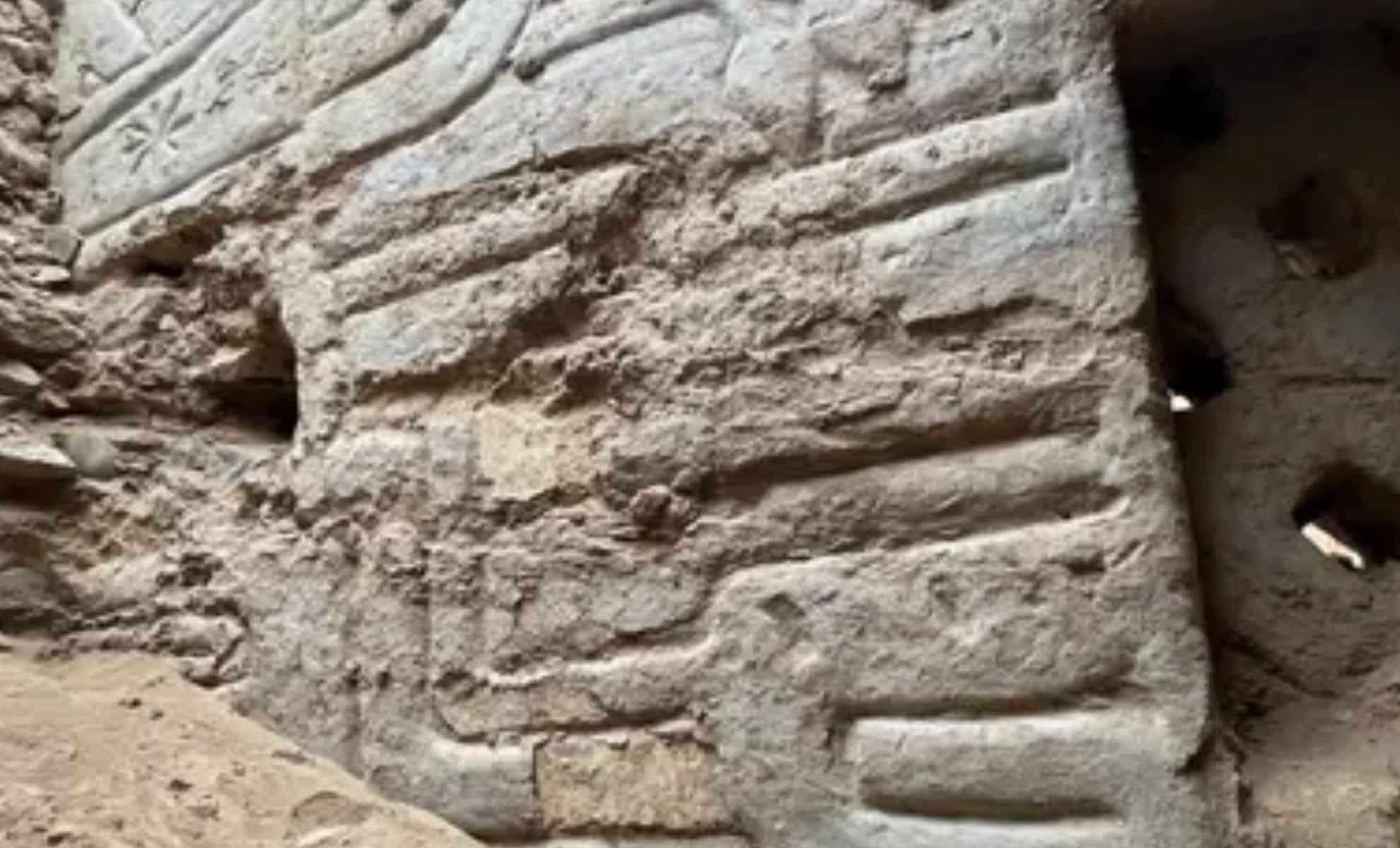
Researchers in Peru have discovered a 4,000-year-old vibrant three-dimensional mural at the Huaca Yolanda site in the Tanguche Valley. This find provides valuable new perspectives on the early cultural developments in Peru’s ancient civilizations.
A Window into Pre-Incan Artistic Expression
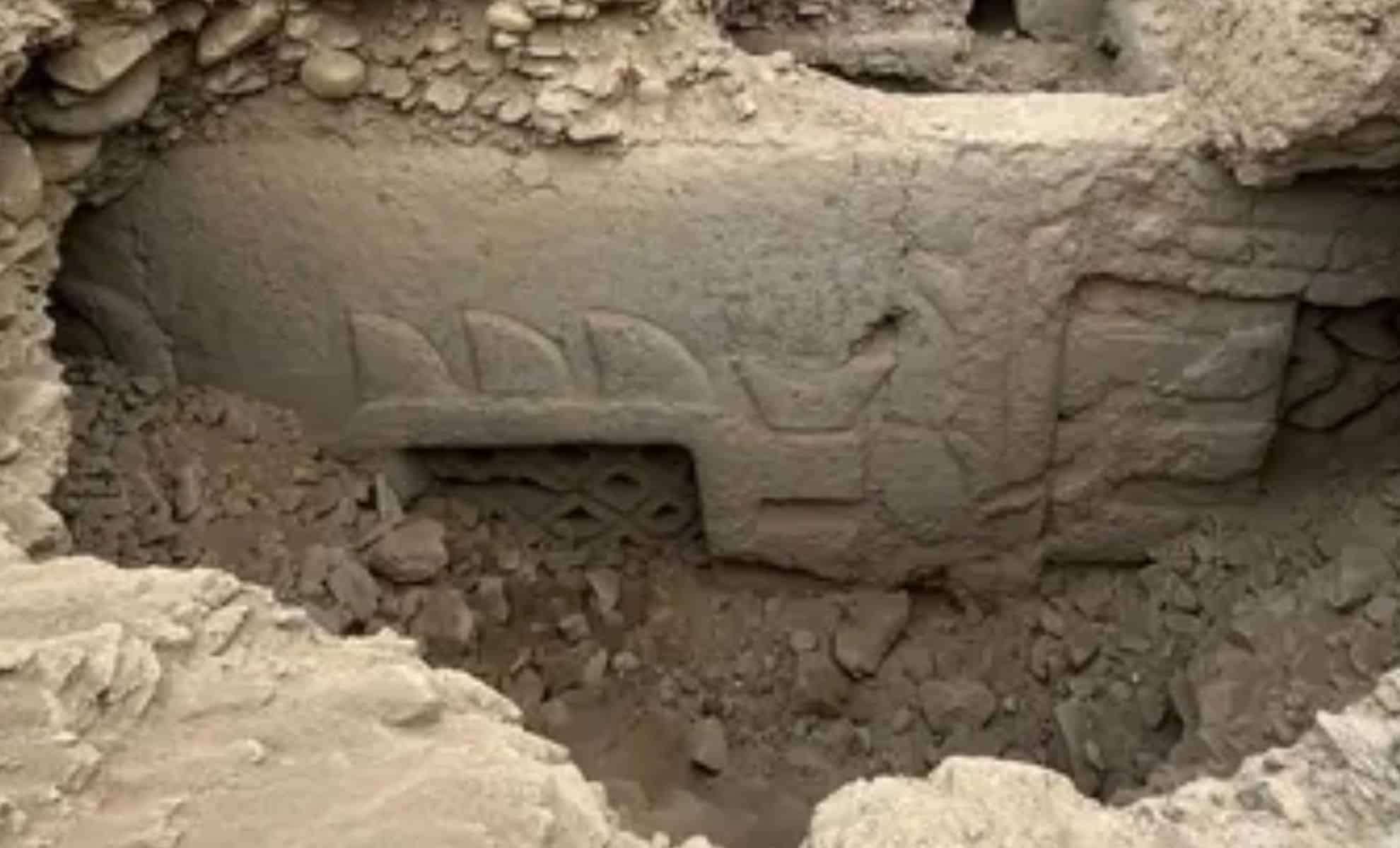
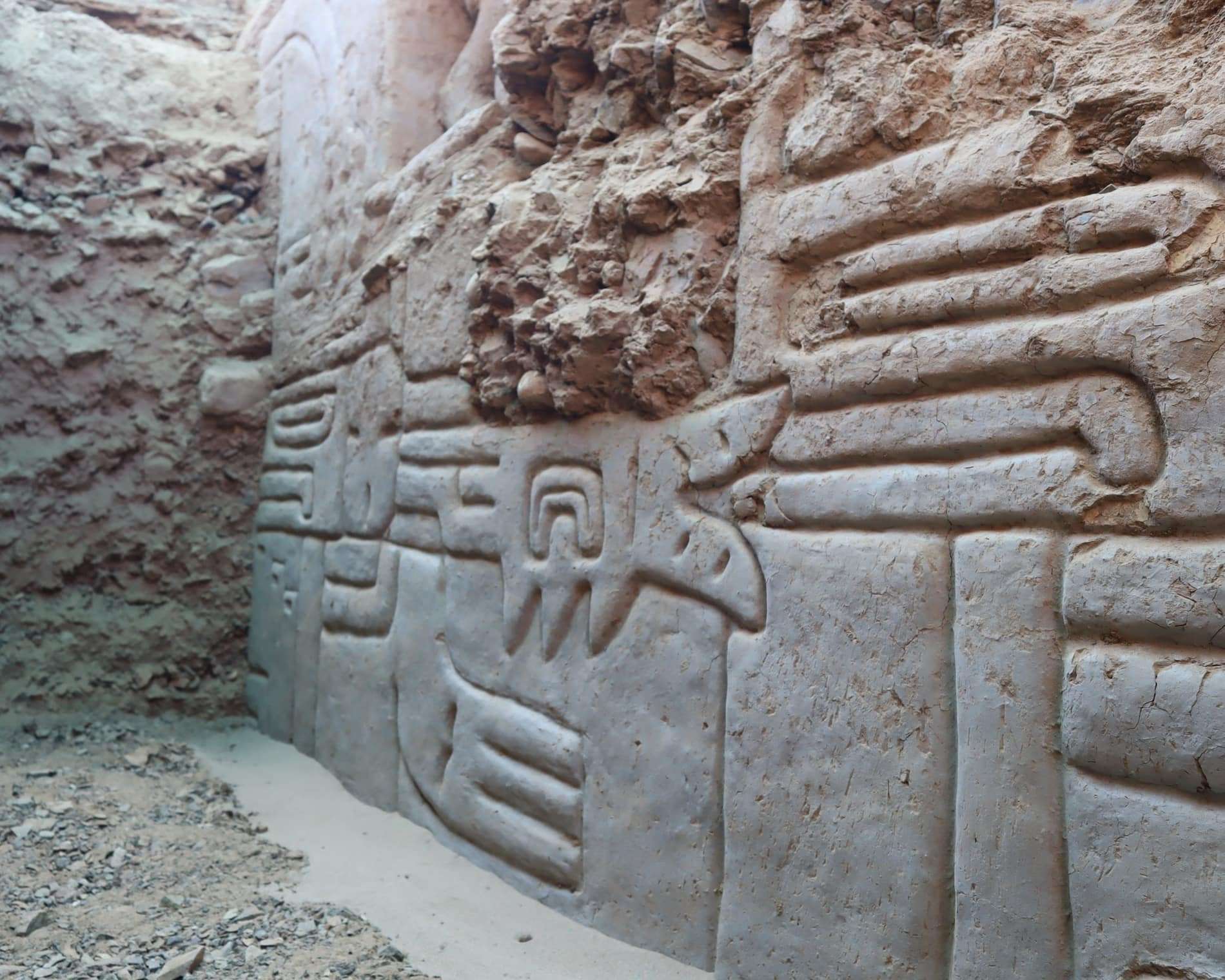
Reported by The Guardian on September 2, 2025, the mural stretches nearly 20 feet in length and stands 9.5 feet in height, featuring vivid high-relief carvings painted in striking shades of blue, yellow, red, and black. Dominating the mural is an enormous bird of prey with outstretched wings, its head embellished with diamond-shaped patterns.
Leading the excavation, Ana Cecilia Mauricio from the Pontifical Catholic University of Peru describes this as a “remarkably unique” find. Depicting stylized fish, fishing nets, mythical creatures, and celestial imagery, the artwork reveals a society where spirituality, nature, and cosmology were deeply interconnected in their rituals and belief systems.

Understanding the Symbolism
The detailed carvings indicate a community with clear social stratification. Mauricio suggests that shamans, who combined spiritual authority with scientific knowledge, played key roles in this culture. “They held critical wisdom about medicinal plants and the stars,” she notes.
One of the mural’s most captivating elements portrays a transition from human to bird form. This may symbolize a shamanic “rite of passage,” a spiritual transformation possibly induced by hallucinogenic plants such as the San Pedro cactus, traditionally used in Andean rituals.
Insights into a Complex Ancient Society
Archaeologists believe the mural adorned a temple interior, likely a site for sacred ceremonies. Huaca Yolanda, dating back to the formative period (2000–1000 BCE), represents a time when early complex societies were emerging, marked by advances in agriculture, urban development, and ceremonial architecture.
While sharing some artistic elements with other Peruvian sites, Huaca Yolanda’s coastal setting and distinctive style differ from mountain murals like those at Chavín de Huántar. Unlike Chavín’s depictions of jungle fauna, this mural highlights marine life and fishing implements.
Preservation Challenges for Huaca Yolanda
Despite its significance, the Huaca Yolanda site currently lacks official archaeological protection. Mauricio has expressed alarm over threats from urban expansion, agricultural activities, and looting. “The site is endangered by basic development pressures,” she warns, noting that nearby areas have already suffered damage from illegal encroachments and construction projects. She calls on the Peruvian Ministry of Culture and local agencies to take immediate measures to safeguard this cultural treasure.
Since initiating research at the site in 2012, Mauricio and her team have sought to broaden understanding of coastal early societies, especially their relationships with environmental factors such as the El Niño climate phenomenon that has influenced the region for centuries.
- Categories:
- News





0 comments
Sign in to Comment