

During routine repairs at a temple in Thailand, workers uncovered a remarkable collection of ancient items hidden beneath one of the nation’s oldest reclining Buddha statues. The excavation revealed 33 artifacts in gold, silver, and bronze estimated to be roughly 1,300 years old.
The find took place at the Wat Thammachak Sema Ram temple complex, near the Phra Non archaeological site. This sandstone reclining Buddha statue, recognized as the longest and most ancient in Thailand, spans 43 feet and dates back to approximately 657 A.D.
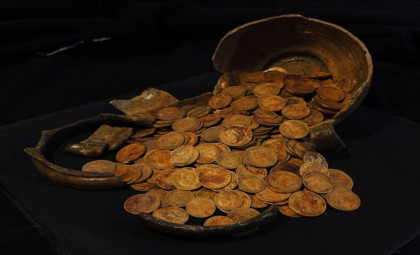
While digging more than four feet underground, workers unexpectedly discovered a ceramic jar containing ornaments linked to the Dvaravati era, including gold rings, silver earrings, and distinctive bronze hoop earrings.

The Fine Arts Department of Thailand reported that the bronze earrings bear close resemblance to similar artifacts from the same period found across the country. Following this initial find, experts expanded their search around the statue and uncovered further relics.
Unearthing Secrets Beneath a Revered Shrine
The first treasure emerged from a routine drainage repair project. Beneath the reclining Buddha statue, workers discovered a ceramic vessel filled with a diverse array of small metal objects.
These artifacts, crafted from various metals, reflect the rich artistry of the Dvaravati period. The bronze earrings particularly intrigued researchers due to their origin and design consistency with other period specimens.
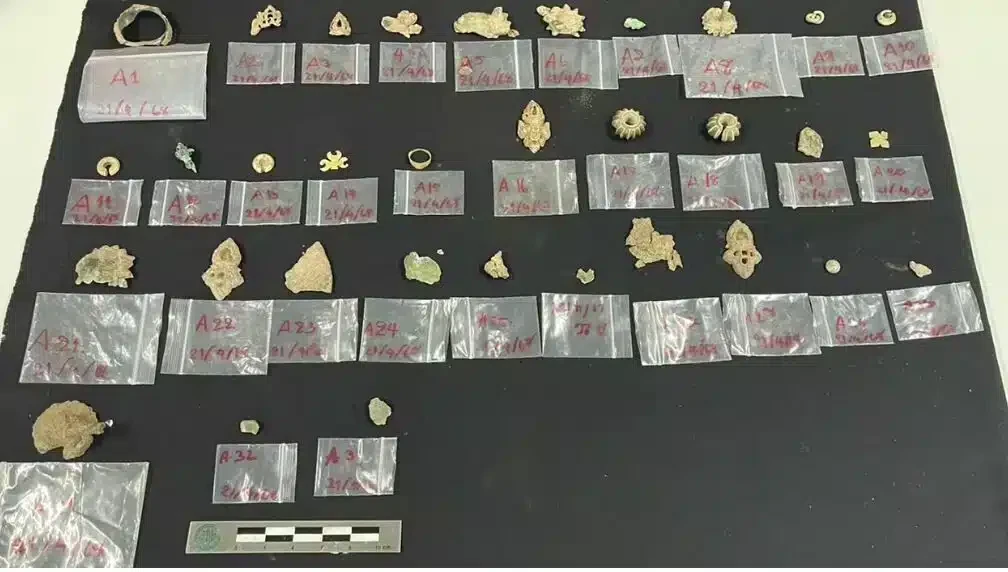
The location of these finds increases their significance, as they were nestled beneath a Buddhist monument standing for over a millennium. This provides scholars with valuable artifacts to explore the beliefs and cultural practices of the ancient society responsible for the statue’s creation.
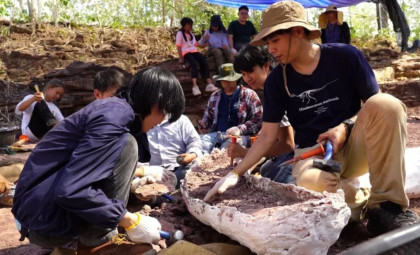
Following the initial breakthrough, conservationists widened their excavation around the statue, uncovering three additional clusters of artifacts.
Golden Artifacts Illuminate Historical Craftsmanship
Among the newly recovered treasures was a small rectangular gold plaque adorned with an intricate depiction of a seated Buddha figure. Measuring roughly three by five inches, this item was fashioned using the repoussé method, where metal is shaped into raised relief designs.
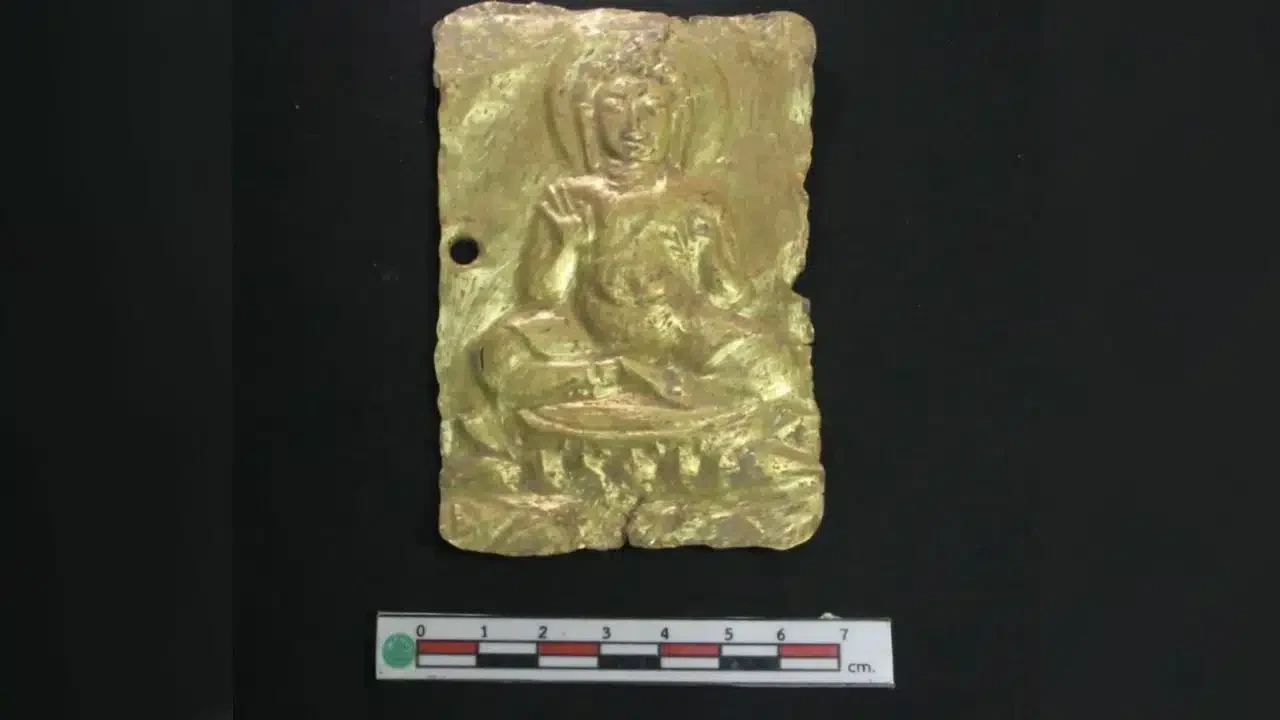
The image portrays the Buddha in a teaching stance, featuring spiral hair curls, a grand halo, elongated ear lobes, and a robe draped over one shoulder. A small hole in the plaque’s upper corner hints it may have once been suspended or worn as an ornament.
“These finds are extraordinary,” Phanombutr Chantrachot, director-general of the Fine Arts Department, explained in a release. “They offer significant insights into the craftsmanship and religious devotion of the period,” adding that the hole provides clues about how the gold piece may have been used.
Research teams also uncovered another metal sheet made of a lead-tin alloy, measuring about 4.5 inches by 6 inches. This repoussé panel depicts a standing Buddha framed by an arch and accompanied by two attendants.
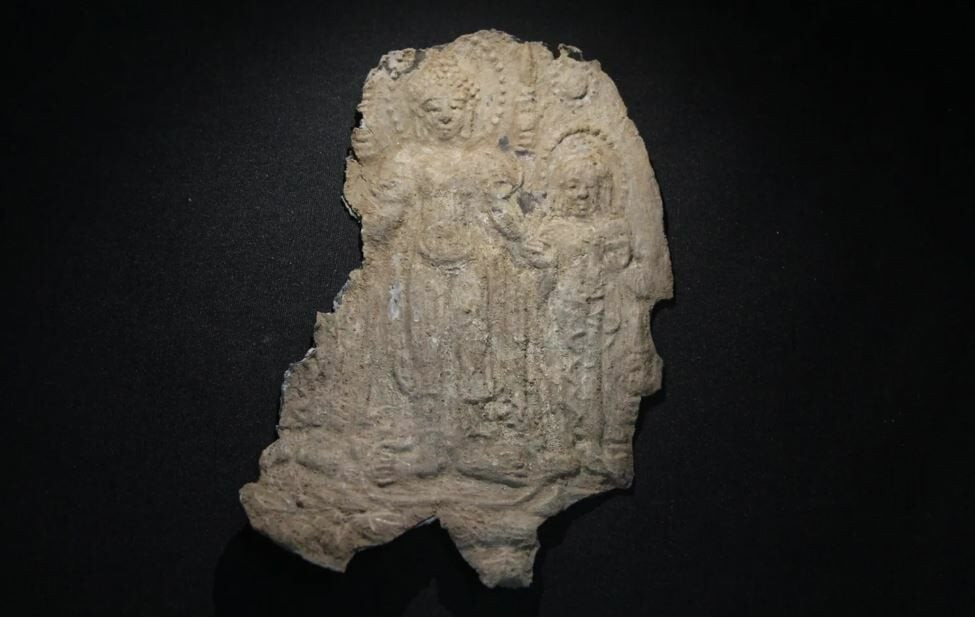
While one attendant’s figure was too damaged to identify clearly, the other may represent a Thai adaptation of the Hindu deity Brahma, according to Chantrachot.
Potential Ritual Items Unearthed by Archaeologists
The third notable find was a set of stacked metal sheets embedded in clay mixed with cement between layers. Due to its fragile condition, the exact count of sheets and full details of engraved images remain uncertain.
Its location is particularly suggestive, having been placed behind the reclining Buddha’s head, a spot that researchers believe was carefully selected.
Chantrachot proposed that this artifact might have served as a ritual offering, positioned as part of religious ceremonies associated with the statue.
The artifacts recently found are currently undergoing examination and preservation at the Phimai National Museum. Experts are cataloging the items and applying conservation methods to ensure their longevity.
- Categories:
- News



0 comments
Sign in to Comment