
Deep within Earth’s crust, far removed from sunlight and in utter darkness, microorganisms have not only endured but formed intricate ecosystems. Recent research demonstrates that subterranean microbes establish stable communities where distinct groups carry out various functions, enabling life to flourish in some of the planet’s most secluded niches.
This insight emerges from an extensive study of the deep underground biosphere, a largely uncharted realm believed to host a significant portion of Earth’s microbial life.
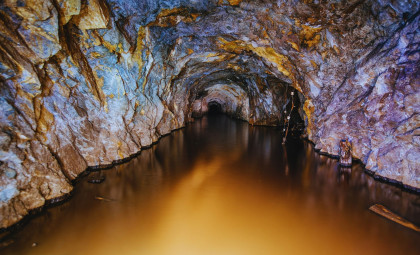
To explore subterranean life more closely, scientists analyzed microbial populations at the Sanford Underground Research Facility in Lead, South Dakota—formerly the Homestake Mine. This site offered access to samples collected from depths ranging from several hundred meters up to over a kilometer beneath the surface.

Unseen Ecosystems Beneath Our Feet
Under the direction of geobiologist Magdalena Osburn of Northwestern University, the team set up six sampling locations throughout the mine.
Scientists drilled into native rock formations to retrieve fluids coursing through natural fissures. These gathered fluids contained water, dissolved gases, and thriving microbial communities. Published in the Journal of Geophysical Research: Biogeosciences, the study revealed that some of the trapped water has remained isolated underground for up to 10,000 years.
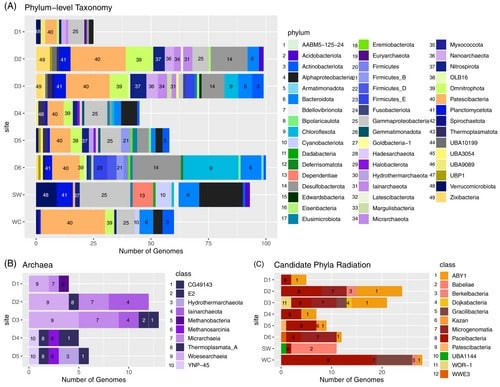
Tracking these six locations from 2015 to 2019 produced one of the most comprehensive long-term assessments of microbial processes deep underground. Initially, researchers anticipated identifying broadly similar microbial assemblages across the mine due to its uniform conditions—perpetual darkness, isolation, and limited energy supply.
“Within the goldmine, we sampled six spots, ranging from 250 meters deep to 1500 meters deep,” Osburn said. “We thought we might see some subtle variation with depth but assumed the microbial communities should be broadly similar. That’s not what we found at all.”
Contrary to expectations, even sites close to each other often had dramatically different microbial populations, akin to discovering distinct islands rather than parts of a single continuous ecosystem.
Distinct Microbial Profiles Lack a Universal Underground Microbiome
Rather than spotting a shared core of microorganisms adapted to life underground, each site hosted unique ecosystems molded by local geochemical and geological factors.
“Because deep underground environments share extreme conditions, including darkness, isolation and limited energy, we thought we’d find a common set of specially adapted microbes,” Osburn noted. “But effectively, we found there is not a core microbiome anywhere in this mine. We did not expect that.”
A major takeaway was the absence of a unifying microbiome. Instead of recurring species across all sampled zones, researchers encountered distinctive microbial communities unique to each location.
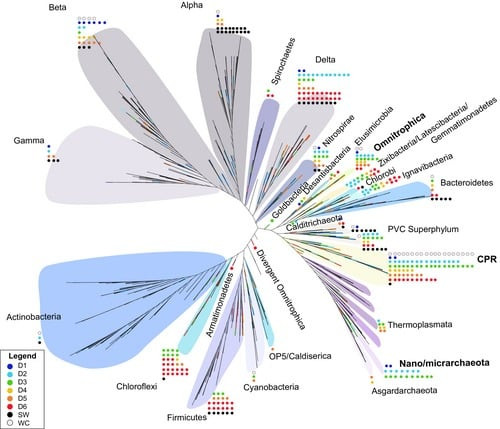
This highlights how local underground conditions critically determine which microbial species can thrive, even within a single mine.
Shared Microbial Roles Across Varied Communities
Though species compositions varied widely, the structural organization of these underground ecosystems showed a remarkable consistency, with two main microbial groups identified at each site.
One group constituted a stable core community, involved in slow but steady carbon cycling and essential biological functions. These microbes subsisted on scarce resources, maintaining activity over extended timescales.
The second group acted as opportunistic responders, activating when new nutrient pulses—containing sulfur, nitrogen, or iron—became available, taking advantage of episodic chemical shifts.
“The core community has a low and slow metabolism,” Osburn explained. “Then this other community of organisms is poised to respond to pulses of nutrients when they become available.”
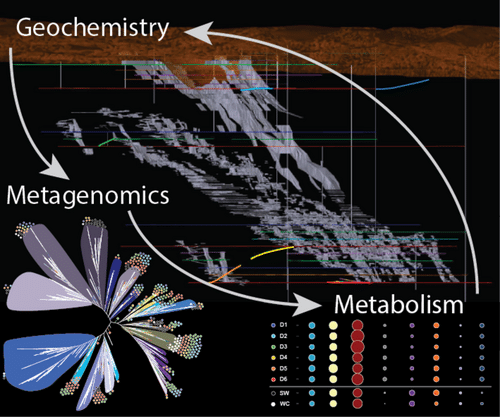
Environmental events such as earthquakes can induce underground chemical alterations that release nutrients, prompting sudden microbial activity. Despite community differences, all six ecosystems included microbes capable of similar ecological tasks.
These groups, known as functional guilds, consist of various organisms performing comparable ecological roles. Osburn gave an analogy:
“I have a friend who says, ‘Every town needs a plumber.’ These sites reflect that idea. Each one is filled with different types of microbes, but all have a ‘plumber.’”
- Categories:
- Science







0 comments
Sign in to Comment