
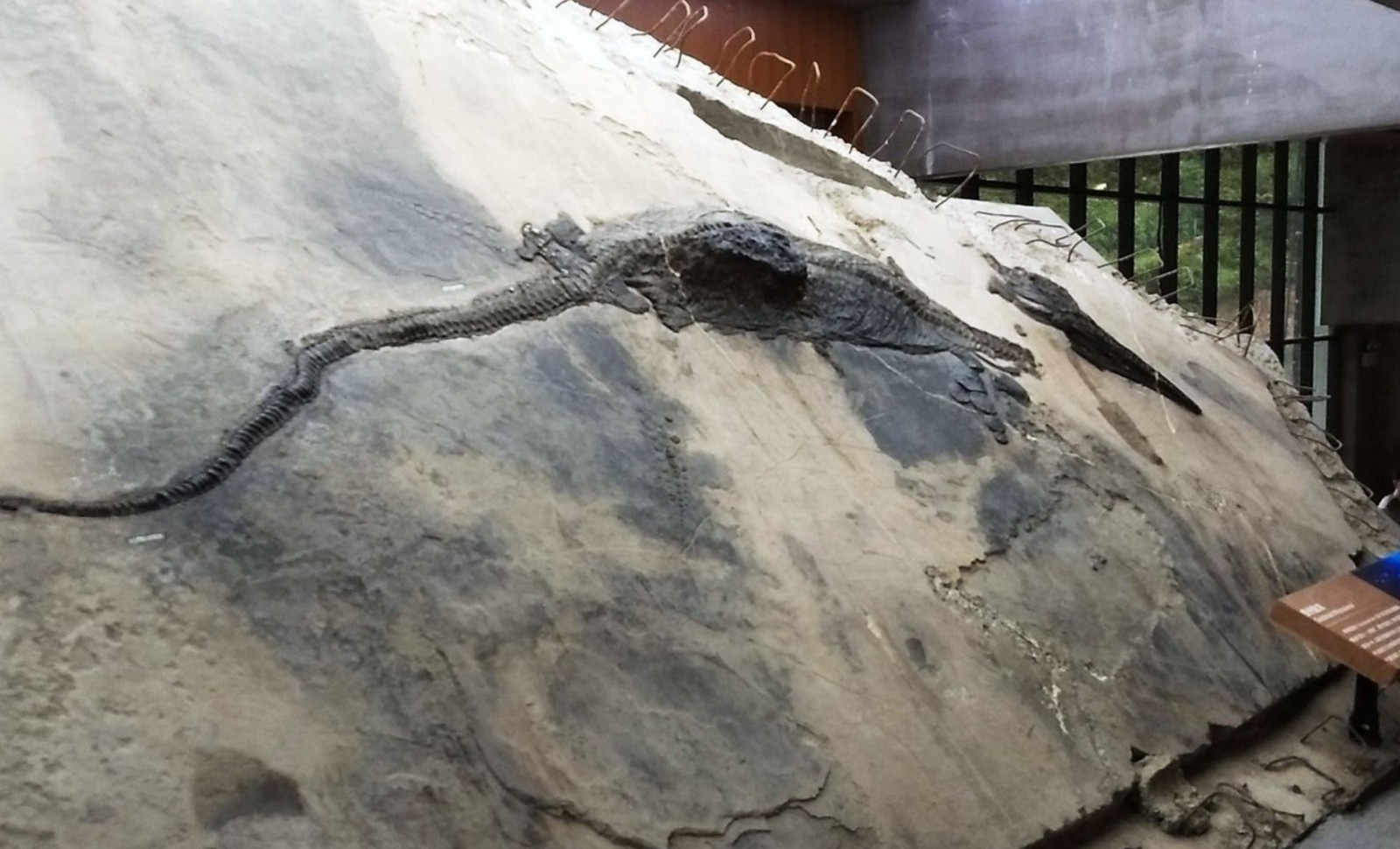
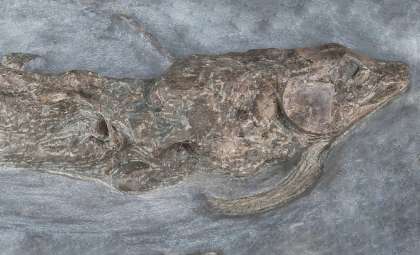
A recently uncovered fossil in China reveals an ancient marine predator just after consuming an enormous prey. Researchers discovered the remains of a 4-meter-long marine reptile lodged inside a 5-meter Guizhouichthyosaurus, offering rare, direct evidence that some Triassic predators hunted substantial prey.
Previously, ichthyosaurs were believed to mainly feed on soft-bodied creatures, but this finding highlights their significant predatory role in prehistoric ocean ecosystems.
Emerging about 250 million years ago, soon after the Permian extinction event, ichthyosaurs adapted rapidly to marine life with fish-like bodies and lungs for breathing air, but their exact feeding habits have been elusive until now.

A Snapshot of a Last Meal Preserved
The fossil was discovered in Guizhou province during 2010 and was analyzed by researchers from the University of California, Davis, and Peking University. Ryosuke Motani expressed his team’s initial disbelief when they found another large marine reptile fossilized inside the Guizhouichthyosaurus.
“We have never found articulated remains of a large reptile in the stomach of gigantic predators from the age of dinosaurs, such as marine reptiles and dinosaurs,” he said.
The prey has been identified as Xinpusaurus xingyiensis, measuring around 4 meters. The fossilized remains within the ichthyosaur include the midsection of the body, spanning from its front to hind limbs. A nearby tail fragment suggests the animal was dismembered before ingestion.
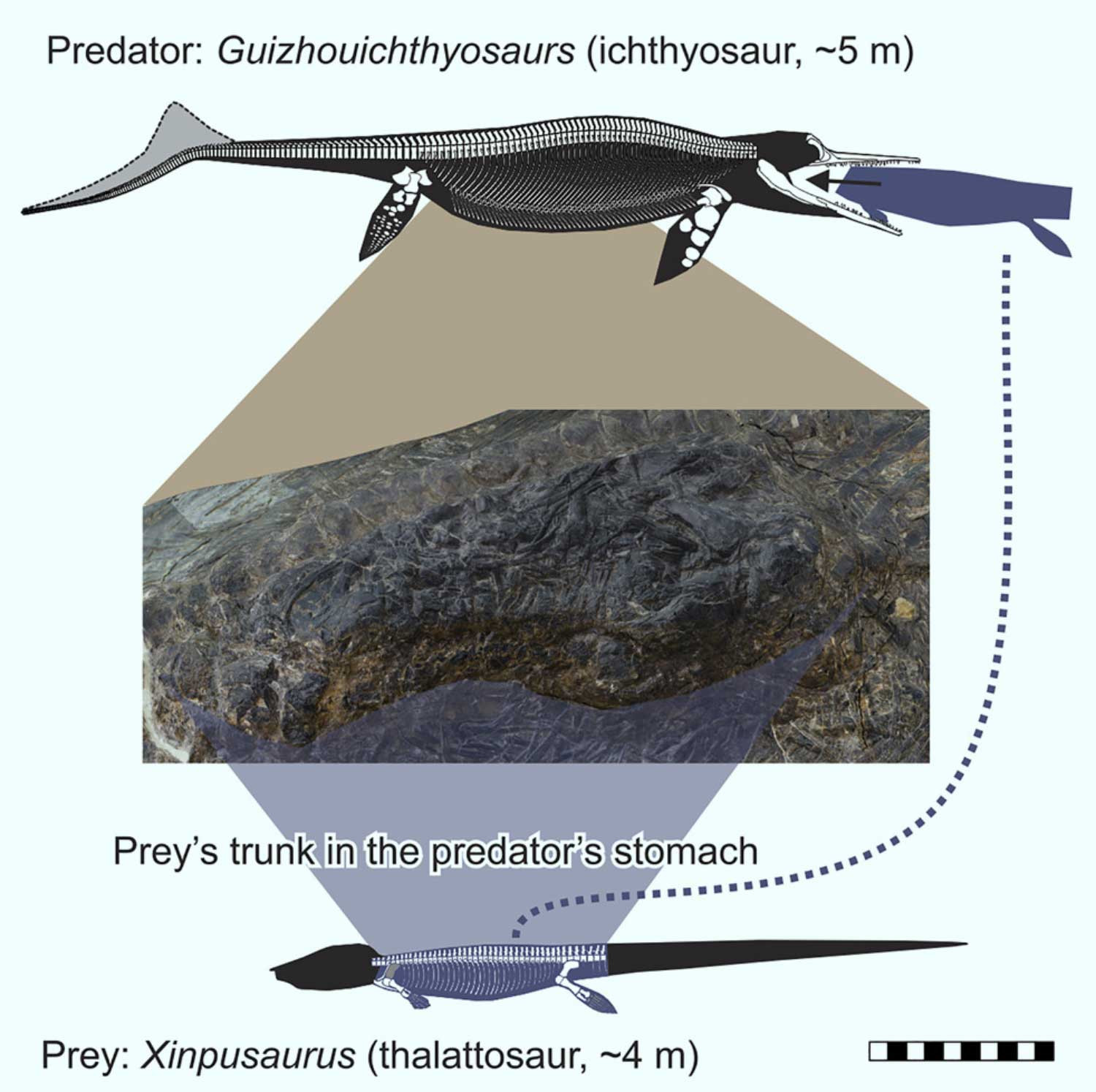
The research, published in iScience, represents the oldest confirmed case of megafaunal predation among marine four-limbed vertebrates and surpasses the former largest recorded prey at 2.5 meters.
“Before, we guessed that they must have eaten these big things, but now, we can say for sure that they did eat large animals.” Motani added, “This also suggests that megapredation was probably more common than we previously thought.”
Unusual Hunting Strategies Without Sharp Teeth
One of the most intriguing insights comes from studying the predator’s dental structure. Guizhouichthyosaurus possessed small, peg-shaped teeth typically linked with a diet of soft prey like squid, yet the fossil evidence paints a different picture.
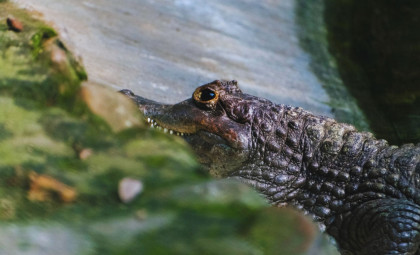
“Guizhouichthyosaurus probably used its teeth to grip the prey, perhaps breaking the spine with the force of its bite, then ripped or tore the prey apart. Modern apex predators such as orca, leopard seals and crocodiles use a similar strategy,” explained Motani.
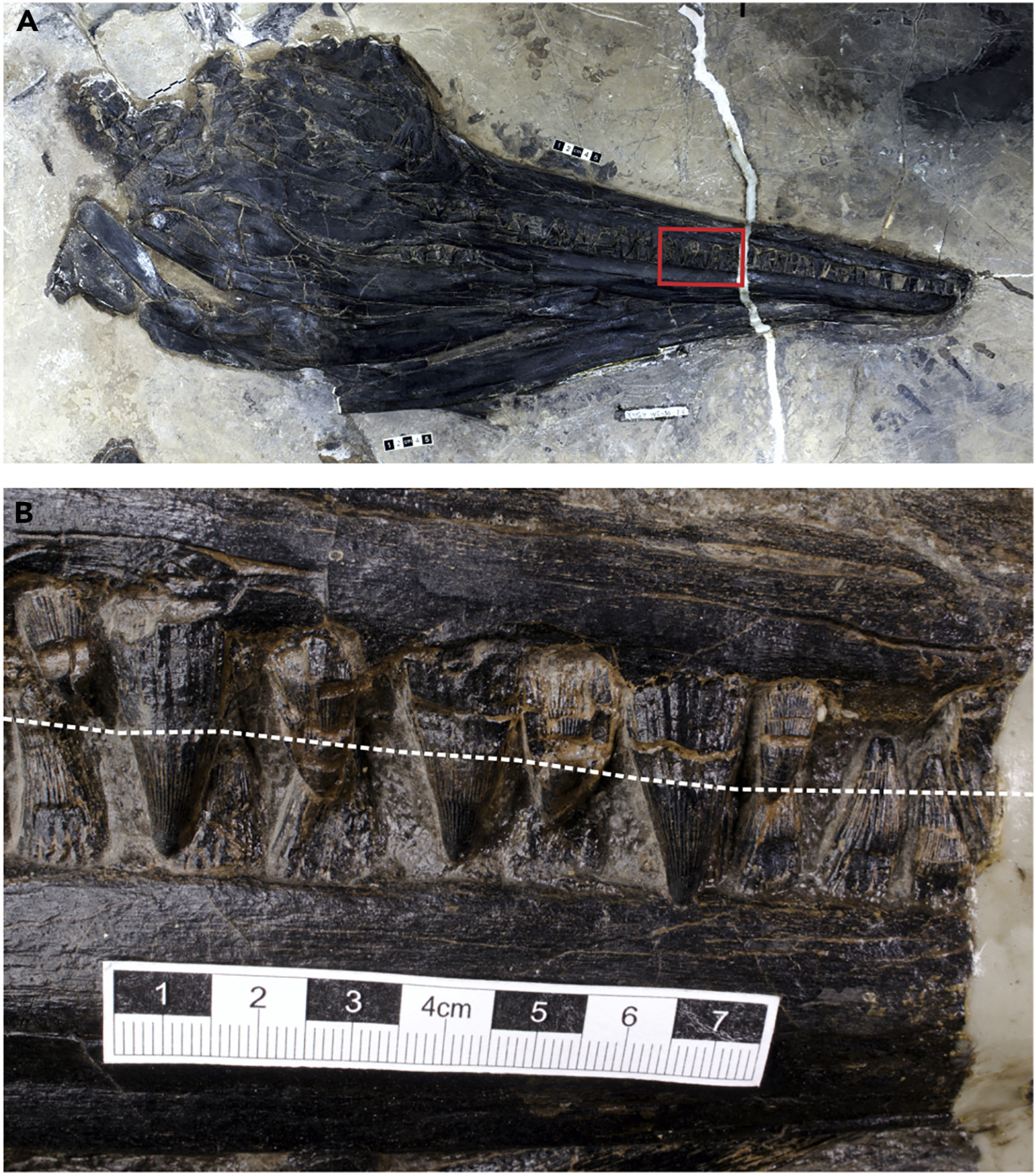
Motani compared this hunting style to that of present-day orcas, leopard seals, and crocodiles, which utilize strength over sharp teeth to handle large prey.
Further evidence comes from the state of the stomach contents, which showed minimal digestion, indicating the ichthyosaur died soon after its meal.
New Findings Support Active Hunting Over Scavenging
A key discussion point is whether the ichthyosaur actively hunted the thalattosaur or scavenged its remains. The evidence favors predation. Marine decomposition studies reveal that limbs typically detach before tails during decay, but this fossil displayed the reverse pattern.
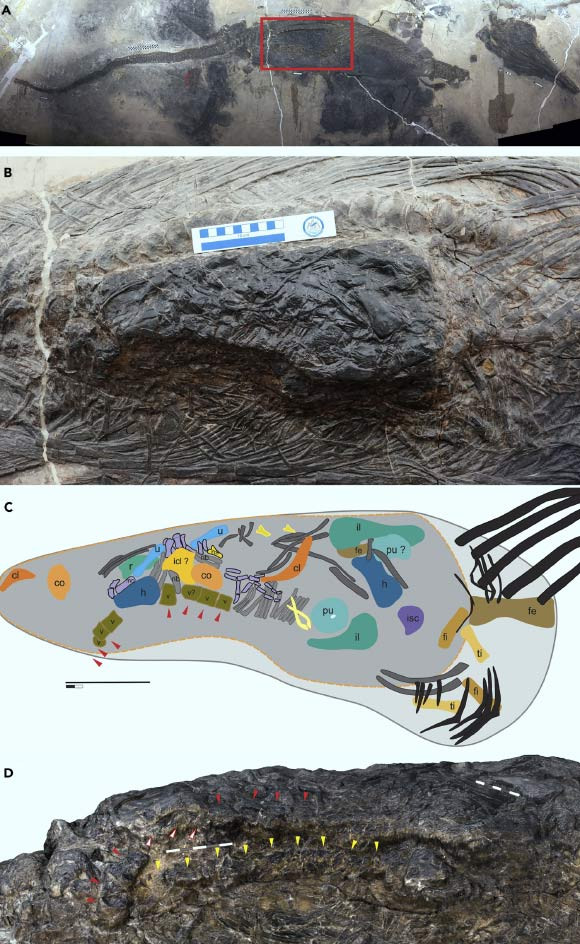
“However, there is reason to believe this was not a case of scavenging: modern marine decomposition studies suggest that if left to decay, the thalattosaur’s limbs would disintegrate and detach before the tail. Instead, we found the opposite in these fossils,” noted the authors in a release.
These findings establish Guizhouichthyosaurus as an active apex hunter and demonstrate that intricate food chains were already established in Middle Triassic seas.
- Categories:
- Science


0 comments
Sign in to Comment