
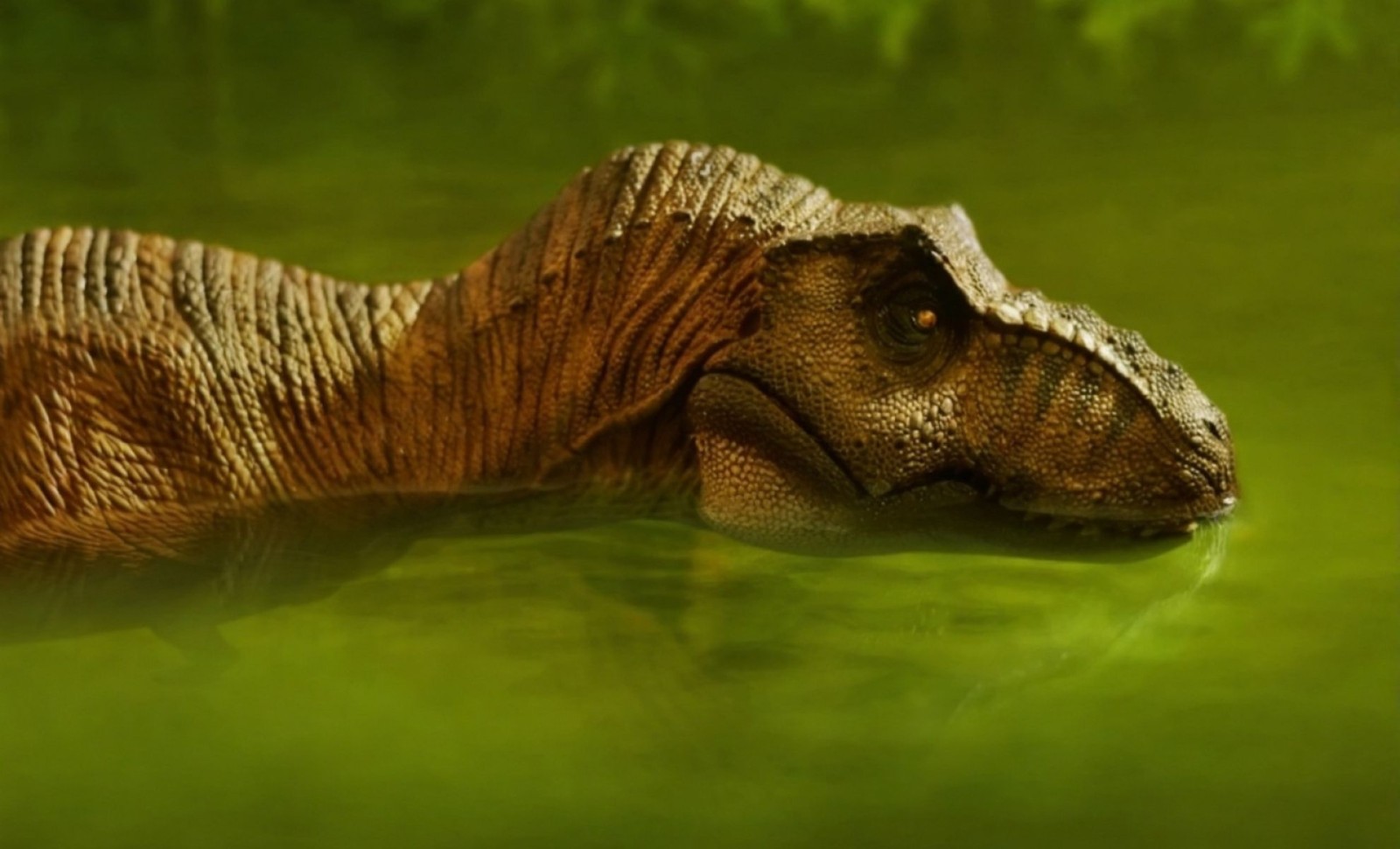
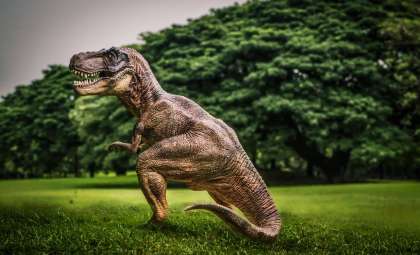
Traditionally imagined as a fierce terrestrial hunter, T. rex might have been more versatile than previously thought—potentially adept at swimming despite its enormous frame and relatively tiny forelimbs. Recent fossil discoveries have unveiled clues indicating that this legendary predator could have spent considerable time in aquatic environments.
This intriguing perspective stems from a study published in the Zoological Journal of the Linnean Society, which analyzes ancient “swim marks” attributed to large theropods related to T. rex. Unlike speculative theories, this work is grounded in tangible fossil evidence preserved within sedimentary strata.
Evidence of Dinosaur Swimming in the Fossil Record
One compelling line of evidence comes from fossilized swim trackways discovered in various locations, including Spain’s Cameros Basin and sites in Utah. These preserved impressions were created as dinosaurs moved through watery environments. Notably, these swim traces intersect older dinosaur footprints, implying these creatures were compelled into water by environmental shifts.

“On the basis of this evidence, we think that T. rex would have been an excellent swimmer,” Dr Darren Naish, scientific consultant for Prehistoric Planet, clarified in a YouTube video. “It would’ve used this behavior to expand its feeding opportunities.”
These kinds of footprints are akin to snapshots showing a massive creature needing to traverse water, likely during a sudden rise in flooding or shifts in its habitat.
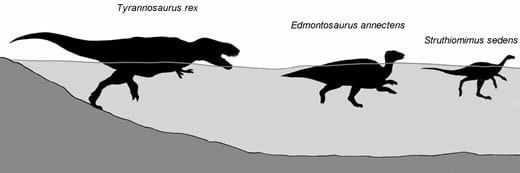
The Role of Hollow Bones in Buoyancy
As highlighted by National Geographic, a defining characteristic aiding T. rex’s potential swimming ability is its pneumatic bones—hollow bones filled with air. This anatomical trait parallels modern birds, which utilize air pockets to reduce weight and facilitate flight.
For Tyrannosaurus rex, these air-filled bones may have provided natural buoyancy, keeping it afloat rather than sinking. This characteristic could have allowed the dinosaur to survive and maneuver in watery environments more effectively.
“These heavier bones helped the dinosaur avoid being too buoyant, so that it could more easily use its muscle power to move through the water rather than actively working to stay submerged like we do when we go under water with lungs full of air”, according to the same source.
Swimming Motion Inspired by Modern Birds
The research also explores how T. rex might have swum by drawing analogies with extant animals that share similar body structures. The emu, a large flightless bird, presents a useful model; emus can swim efficiently by paddling with their strong legs and keeping their heads above water, resembling a “doggy paddle.”
Based on this comparison, it’s plausible that T. rex, equipped with powerful hind limbs, swam in a comparable style. The image of a multi-ton dinosaur paddling like a bird may seem surprising, but biomechanics support its feasibility. T. rex likely propelled itself through water by kicking with its strong legs while maintaining its head and upper body buoyant.
“With current evidence available to us,” said Cassius Morrison from University College London, “I would suggest that swimming may have been a way for Tyrannosaurus to navigate its environment.”
- Categories:
- Science




0 comments
Sign in to Comment