
On April 20, 1972, Apollo 16 crew member Charles Duke made a memorable impact not only through his scientific work but by leaving a deeply personal artifact on the lunar surface. Among the scientific endeavors and challenges of the mission, Duke chose to place a family photo on the Moon, a gesture that continues to resonate worldwide as a touching reminder of the human presence beyond Earth.
A Journey Filled with Unexpected Challenges
Launched in April 1972, Apollo 16 represented a major advancement in mankind’s lunar exploration. However, the mission encountered issues, including a critical failure when the Command Module's engine malfunctioned at a key moment. This engine was essential for ensuring the spacecraft remained in the correct orbit to reunite with the Lunar Module after the astronauts completed their work on the Moon’s surface.
“Due to lack of time, Young and Duke decided not to perform the Descartes Olympics – in tribute to 1972 being an Olympic year – a planned set of activities to demonstrate sports such as high jumps and long jumps in the low lunar gravity,” NASA explains.
Add Cosmo Herald as a Preferred Source

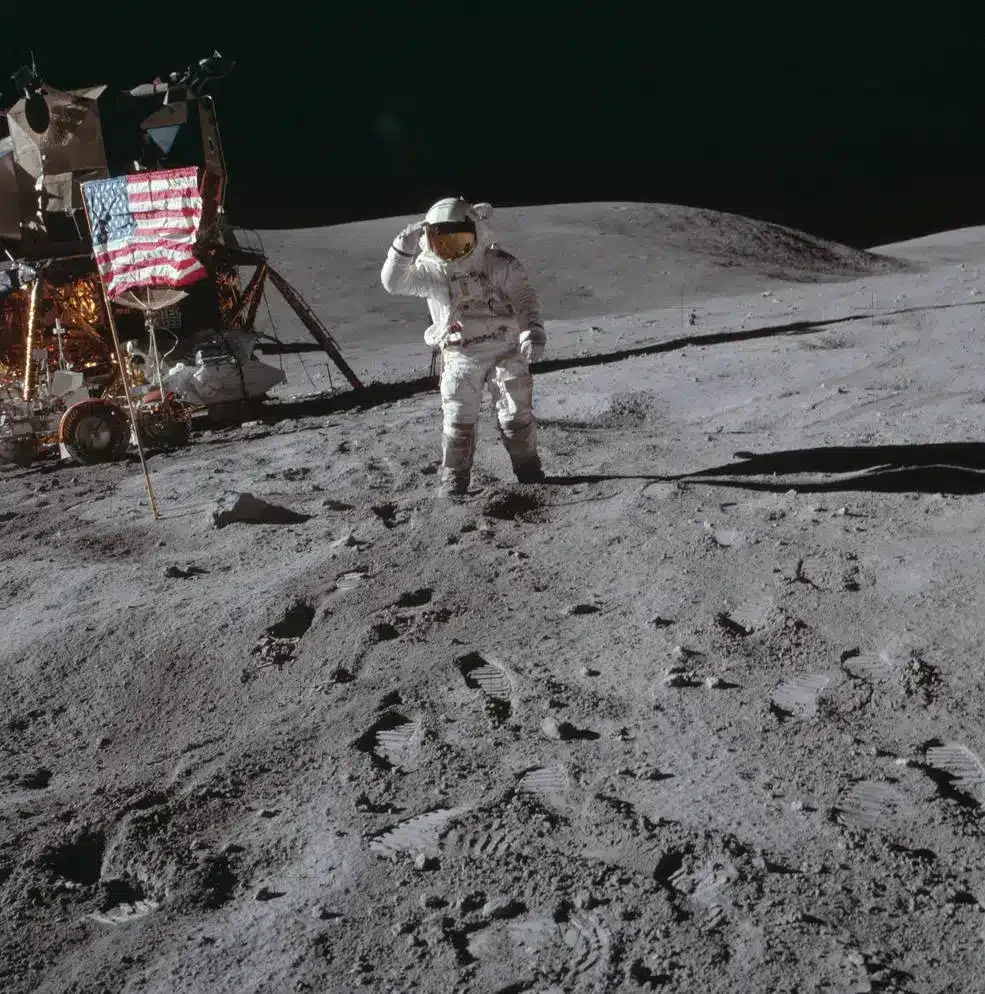
Nonetheless, the crew took some time to engage in an informal "Moon Olympics," exploring the effects of the Moon's reduced gravity by hopping and jumping around its surface.
Duke's attempt at a high jump nearly turned hazardous. As Young recounted years later, "I decided to join in and made a big push off the moon, getting about four feet [1.2 meters] high. But as I straightened up, the weight of my backpack pulled me over backward. Now I was coming down on my back. I tried to correct myself but couldn’t, and as my heart filled with fear I fell the four feet [1.2 meters], hitting hard – right on my backpack." Fortunately, Duke escaped without injury and his equipment was unharmed, yet the incident underscored the unforeseen perils of lunar exploration.
A Lasting Personal Tribute Left on the Moon
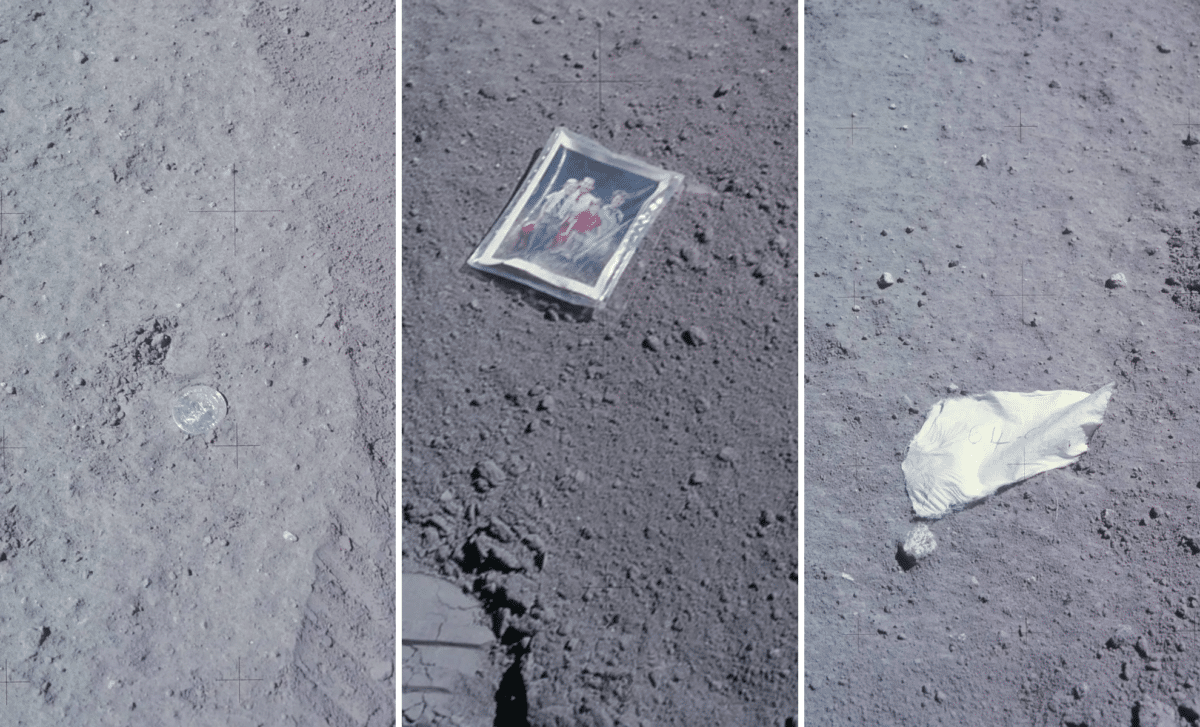
Alongside his official duties during Apollo 16, Charles Duke brought along a cherished family photo to leave on the Moon. This heartfelt act was intended to inspire and thrill his children about their father’s extraordinary journey. Reflecting on the moment in a 2015 interview, Duke shared, "Just to get the kids excited about what dad was going to do, I said ‘Would y’all like to go to the moon with me?’ We can take a picture of the family and so the whole family can go to the moon.”
In addition, Duke left several small but meaningful items, such as a piece of beta cloth inscribed with ’64-C’ to honor his U.S. Air Force Aerospace Research Pilot School class, and a medallion celebrating the 25th anniversary of the U.S. Air Force’s founding. These keepsakes served as a tribute both to his loved ones and his military career, encapsulating a unique personal story amidst the broader accomplishments of space exploration.
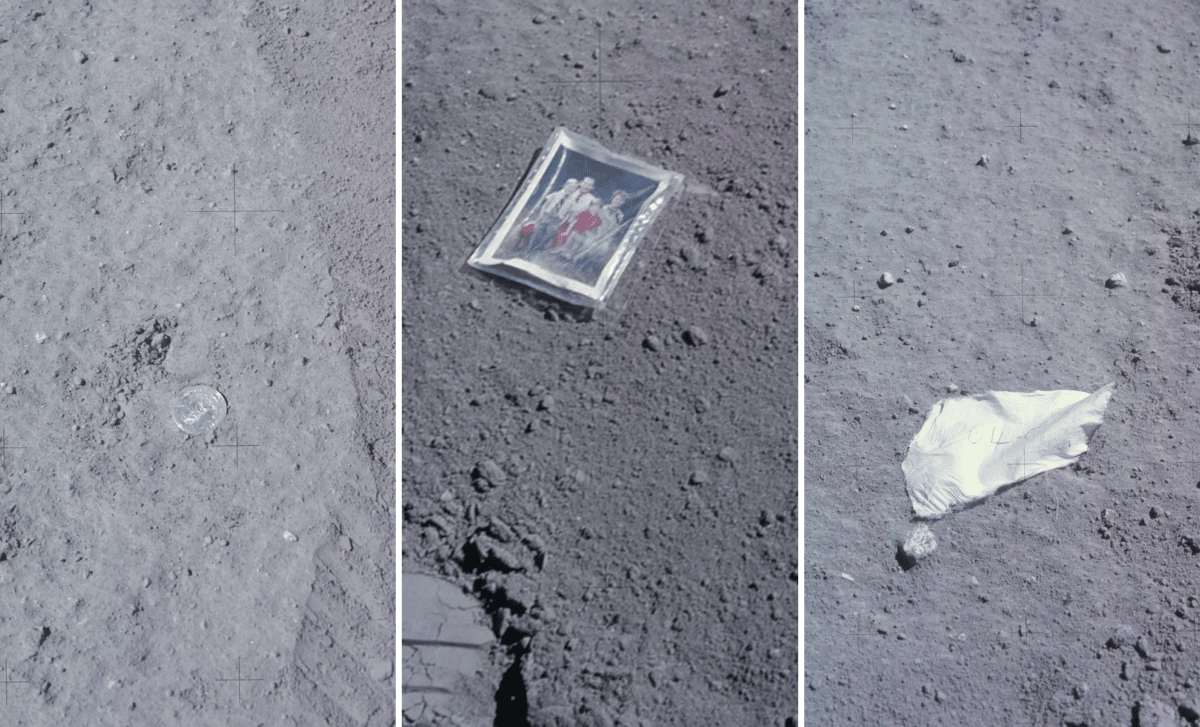
On the reverse side of the family photo, Duke wrote a heartfelt note: “This is the family of astronaut Charlie Duke from planet Earth who landed on the moon on April 20, 1972.” This message and the accompanying items remain on the Moon as enduring symbols of the personal and human dimensions intertwined with one of history’s greatest exploratory feats.
- Categories:
- Nasa







0 comments
Sign in to Comment