
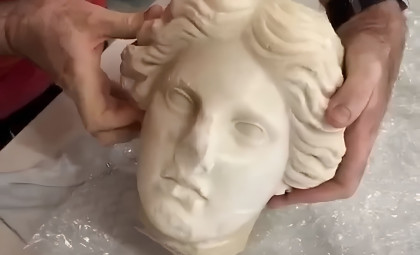
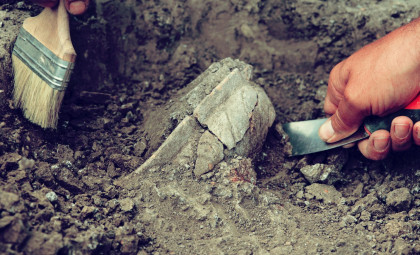
An intricately carved marble head, measuring approximately 24 by 25 centimeters, has been uncovered at Ihnasiya al-Madina. This sculptured fragment, depicting detailed facial features and curly locks, contributes to the rich historical narrative of Heracleopolis Magna, a significant ancient Egyptian city located in the Beni Suef region, where multiple eras overlap archaeologically.
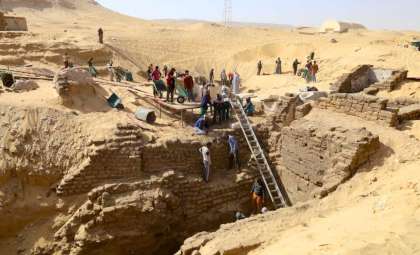
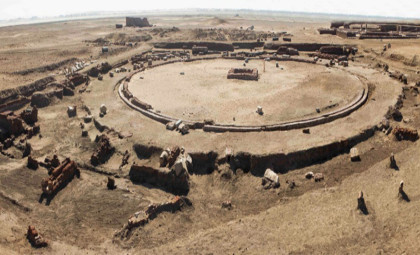
This significant find emerged from an excavation led by the Egyptian archaeological team operating under the Supreme Council of Antiquities. Their discoveries at the site also include a cartouche bearing the name of Senusret III, the remains of a Roman basilica, sections of a Doric temple, fragments of wall statues, and ceramic molds linked to coin minting, illustrating the site's extensive use through successive historical periods.
Heracleopolis Magna once served as the Egyptian capital in the 9th and 10th Dynasties. The array of artifacts showcases the city’s continuous importance, encompassing the reigns of pharaonic rulers, Greek-style art, Roman civic architecture, early Christian transformations, and industrial activities.

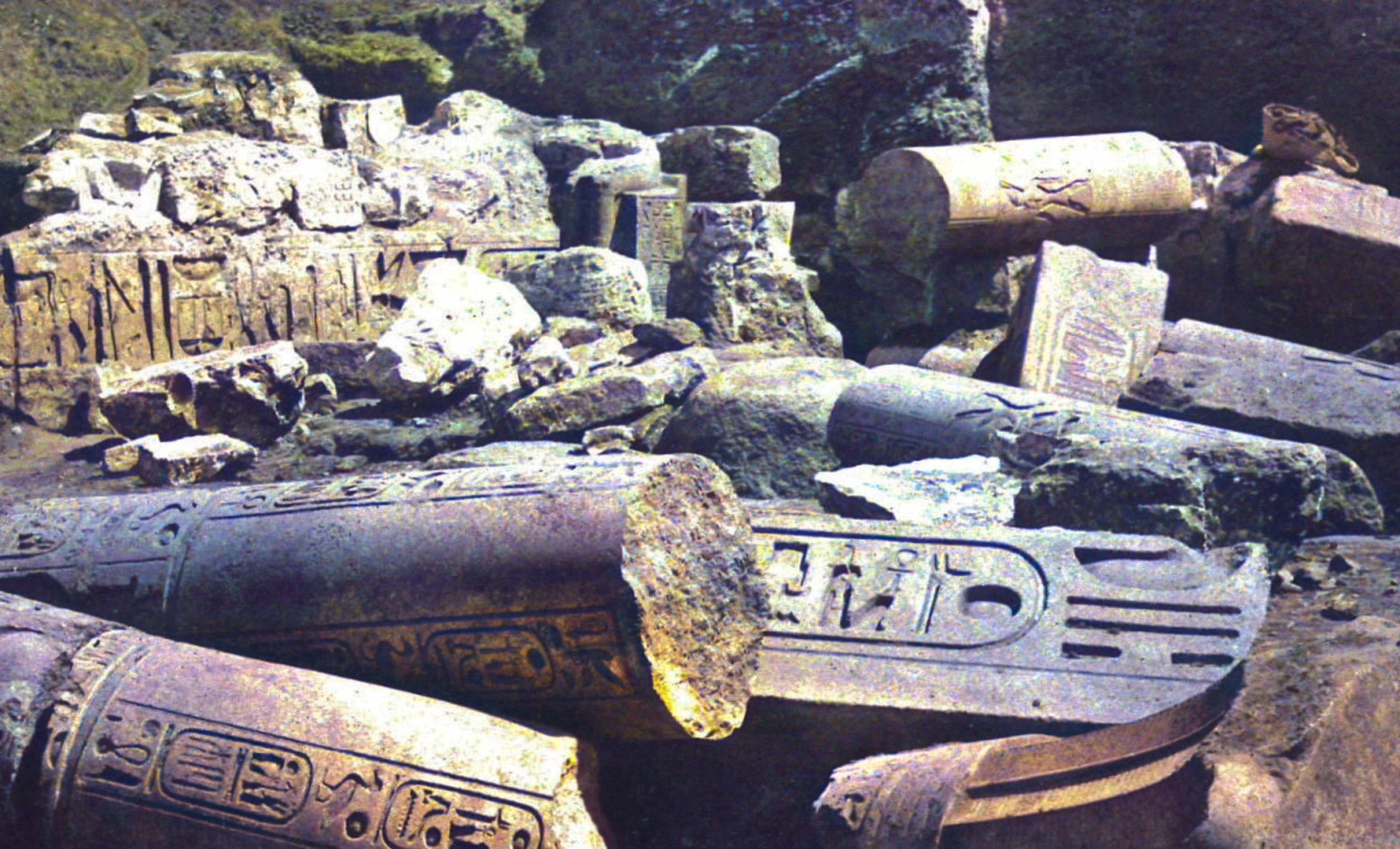
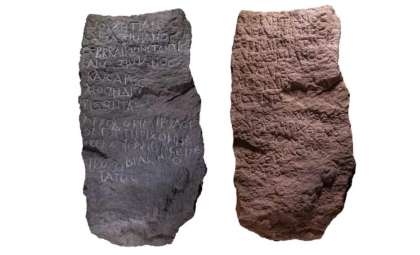
Cartouche of Senusret III Found on Recycled Stone
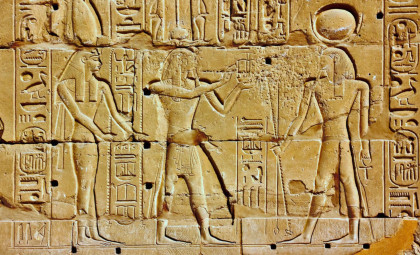
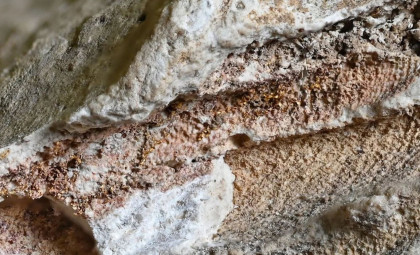
A noteworthy discovery is a repurposed stone block engraved with the cartouche of Senusret III. The inscription details the king’s birth and coronation titles, affiliating the artifact with the Middle Kingdom period, when the ruler is known to have initiated construction at Ihnasiya al-Madina.
Hisham El-Leithy, secretary general of the Supreme Council of Antiquities, remarked that this cartouche underlines the sacred stature of the city and highlights the Middle Kingdom’s royal attention to this politically and religiously significant locale.
The same stone also bears a secondary cartouche referencing Osiris Na Rief, a deity revered locally during the later Pharaonic age and continuing into the Ptolemaic period. This dual inscription transforms the block into an exceptional artifact connecting various religious epochs in one reused piece.
Roman Basilica Incorporates Ancient Temple Stones
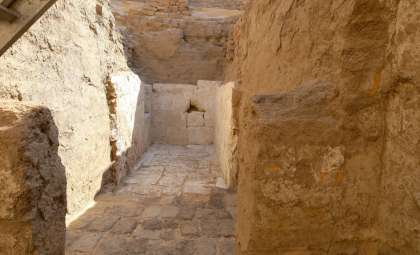
Archaeologists have also unearthed extensions of a Roman basilica alongside remnants of an older Doric temple. Preliminary studies suggest that in the 6th century A.D., builders ingeniously reused parts of the ancient temple as foundations and platforms supporting the basilica’s columns.
Rather than discarding these hefty architectural elements, they were repurposed to sustain massive pillars, demonstrating how earlier structures were adapted to new uses over time.
According to The Associated Press, some support blocks weigh as much as 45 tons, with three still standing in their original positions at the Beni Suef site, located roughly 130 kilometers (80 miles) south of Cairo.
The basilica's evolution reflects the changing function of the town: during Roman times, basilicas served as centers for civic activities including administration and trade, and later, they were adapted for Christian worship and ecclesiastical assemblies.
Greek and Roman Influence Evident in Aphrodite Bust
The discovery of the marble head portraying Aphrodite, the goddess of love and beauty, brings a distinct Greek and Roman artistic presence to the site. Egyptian officials have recognized the sculpture as a rare example of classical artistry, celebrated for its precise detailing and classical style.
The representation of the goddess with finely carved facial traits and naturally curled hair exemplifies Greco-Roman artistic conventions used in divine and elite portraits during their historical periods. This evidence reveals the blending of Greek and Roman art within a city long associated with native Egyptian religious and political history.
Additional wall statue fragments found nearby further support the existence of decorated architectural spaces. The team also retrieved ceramic molds for coin production tied to the Roman era, signifying the site’s role in manufacturing and economic life under imperial administration.
Collectively, the Aphrodite bust, statuary fragments, and coin molds illustrate that Heracleopolis Magna functioned not only as a religious and administrative hub but also as a vibrant center for artistry, commerce, and public affairs throughout varied historical periods.
Beni Suef Discoveries Expand Understanding of Egypt’s Past
Ongoing scientific examination and dating of these heterogeneous finds at Ihnasiya al-Madina are vital to contextualize each artifact and structure appropriately within their respective eras.
Currently documented remains include the reused Senusret III-inscribed stone, a cartouche of Osiris Na Rief, traces of a Roman basilica, parts of a Doric temple, the Aphrodite marble head, and ceramic coin molds from the Roman realm.
According to the Egyptian Ministry of Tourism and Antiquities, these findings underscore the historical richness of Ihnasiya al-Madina and exemplify Egypt's cultural and religious pluralism throughout its extensive history.
- Categories:
- Science


0 comments
Sign in to Comment