
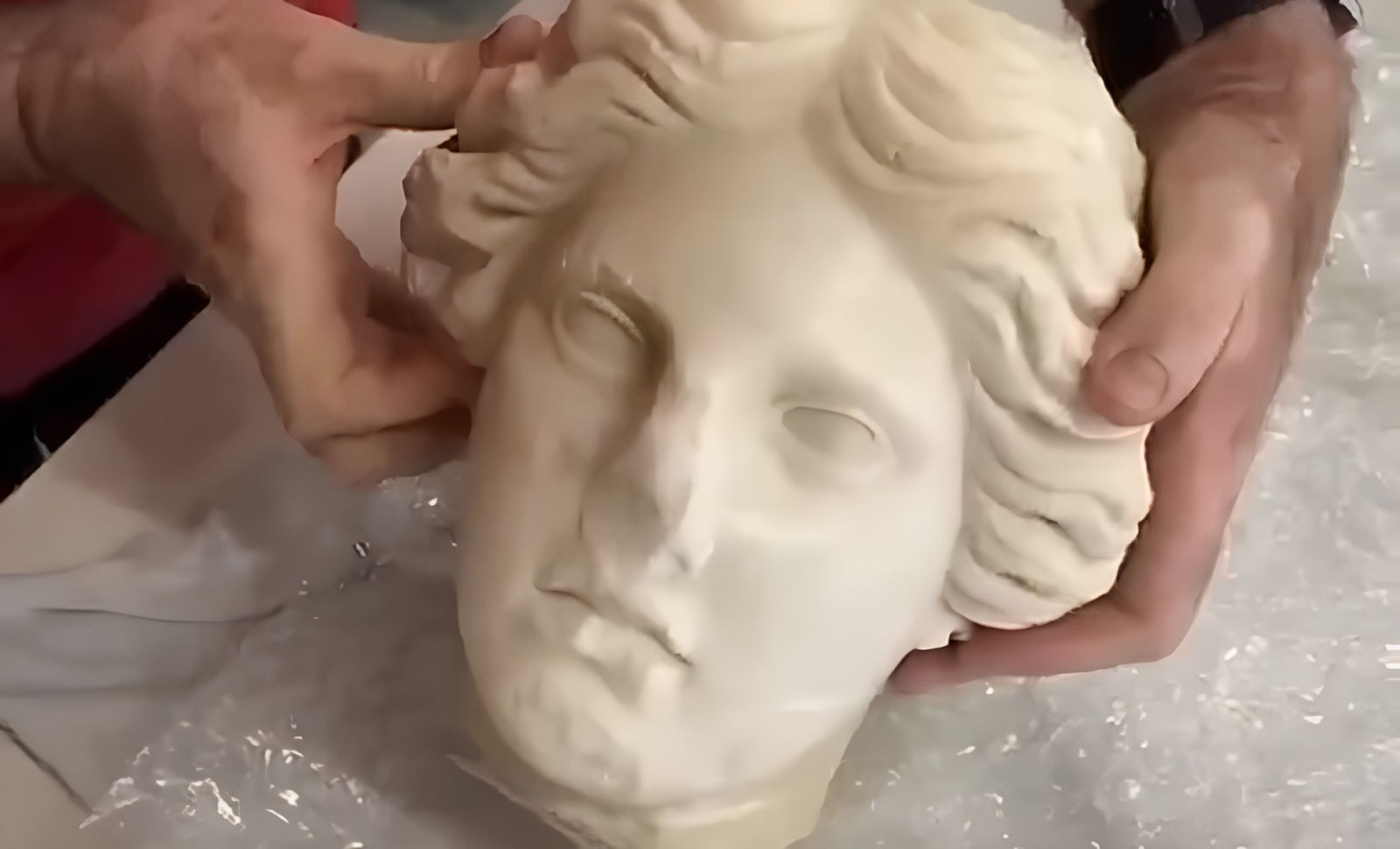
During a beach renovation effort in Alicante, workers stumbled upon a marble bust from the Roman era, astonishingly preserved beneath the sand. Estimated to be about 2,000 years old, this exquisite artifact has been hailed by local experts as one of the most significant Roman discoveries in the region’s history.
The sculpture emerged during restoration activities at La Almadraba beach, a well-known coastline area in southeastern Spain. What initially seemed to be a simple stone fragment was soon identified as an ancient marble bust tracing back to the Roman Empire period.
Its discovery has drawn interest because of both its advanced age and exceptional state of preservation. Archaeologists note that the sculpture retains many intricate details despite the passage of centuries.

Unexpected Find During Routine Beach Works
The marble head was revealed by workers engaged in efforts to rejuvenate La Almadraba beach. Rather than just encountering sand and debris, they unearthed a finely detailed marble bust believed to date between the first and second centuries AD.
As highlighted by The US Sun, experts emphasize the bust’s remarkable conservation, suggesting it ranks among the most important Roman finds uncovered locally.
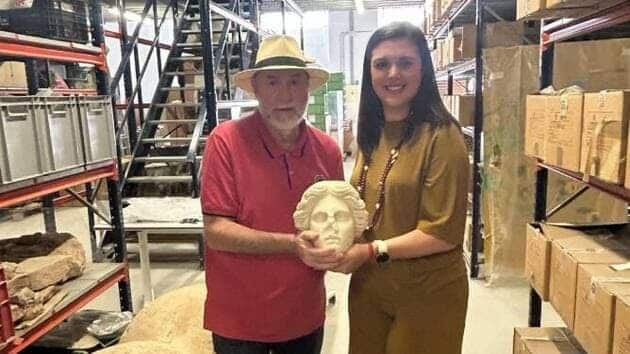
Local authorities quickly acknowledged the artifact’s significance, describing it as “a Roman head of exceptional artistic value and superb preservation.” The find has prompted a temporary work stoppage while specialists conduct a thorough examination of the site.
Is the Sculpture a Representation of Venus?
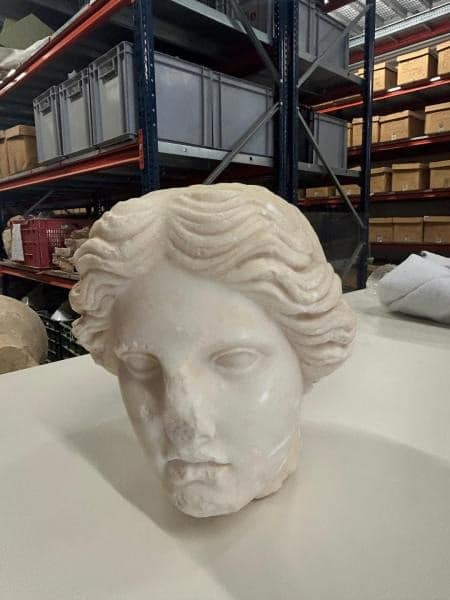
The marble bust is thought to possibly depict Venus, the ancient Roman goddess symbolizing love and beauty. This theory is supported by stylistic details such as the hair arrangement preserved on the sculpture.
José Manuel Pérez Burgos, heritage chief, explained:
the bust displays “a hairstyle of Hellenistic influence, with wavy hair pulled back with a parting in the middle following the idealized model of representations of divinities such as the Greek Aphrodite or the Roman Venus.”
According to the The US Sun, these observations indicate the bust adopts artistic traits typical of divine female figures during the High Roman Empire era. Ongoing studies aim to confirm both the sculpture’s age and authenticity. Experts are impressed by the clear preservation of many fine details despite its underground burial.
Adding a New Chapter to Alicante's Roman Past
This discovery complements a series of Roman-era artifacts previously excavated near Alicante. Archaeologists have focused on this area for years, especially after uncovering remains linked to the ancient Roman settlement of Lucentum in 2009.
Reports from the regional cultural authorities revealed that past digs uncovered remains of a maritime Roman villa, including house foundations, rooms, ceramics , and coins dating between the 3rd century BC and the 4th century AD.
Along with the bust, officials noted the presence of other well-preserved artifacts found onsite, reinforcing the idea that the villa once belonged to a privileged Roman inhabitant with coastal access.
- Categories:
- Science


0 comments
Sign in to Comment