
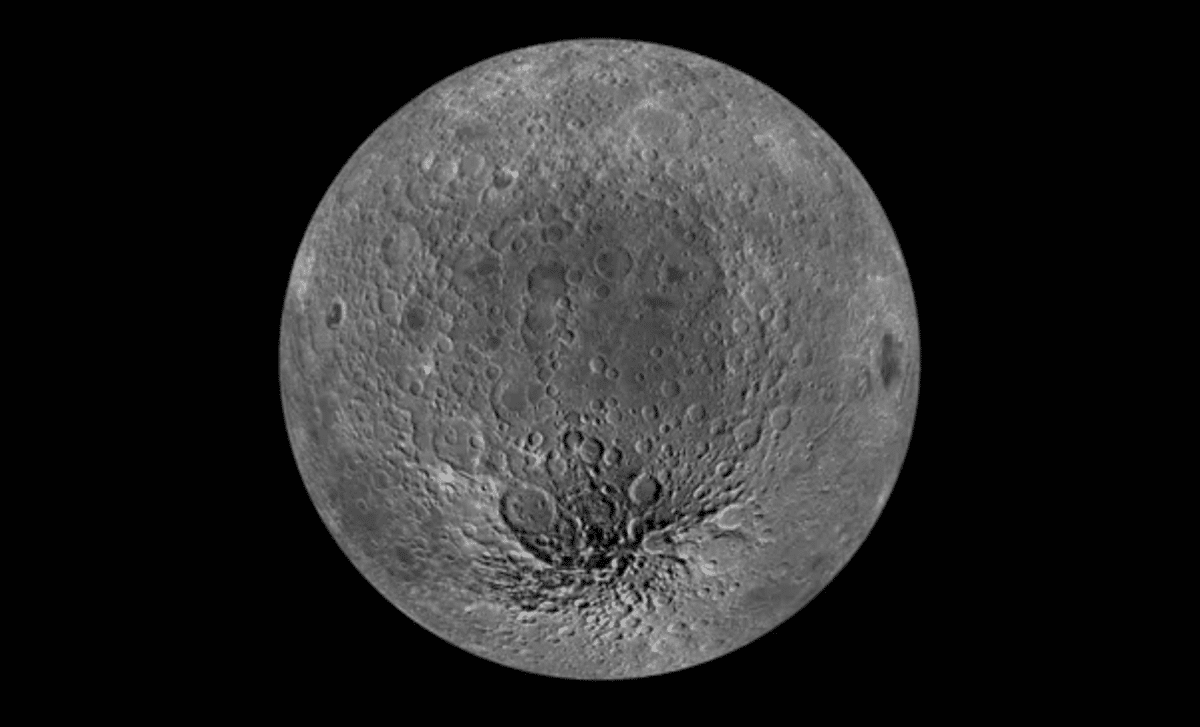
New scientific findings shed light on the South Pole–Aitken (SPA) basin, the moon’s biggest and oldest confirmed impact crater. This breakthrough could strongly influence NASA’s Artemis mission planned for 2028, which aims to land near the basin's southern edge. The research highlights the potential for retrieving rare lunar mantle materials, representing a significant advance in lunar exploration.
Unveiling the Mysteries of the South Pole–Aitken Basin
Spanning over 1,200 miles (2,000 kilometers), the SPA basin lies on the moon’s far side and has long intrigued planetary scientists. Its elliptical form has triggered debate about the direction of the impact that formed it, with theories split between a northbound or southbound trajectory.
According to a recent Science Advances study utilizing sophisticated 3D modeling, compelling evidence supports a north-to-south impact path. The researchers observed that the basin's narrow taper and variations in crust thickness align with this impact direction. They note,

“Large basins on the moon and other solid bodies (e.g., Mars and Pluto) are ellipses that taper in the downrange direction. SPA’s tapering toward the south, a steeper crustal thickness gradient toward the north, and the presence of a thorium- and iron-rich deposit toward the southwest of SPA beyond the basin rim support a southward impact trajectory.”
This new perspective on the impactor’s path will be instrumental in planning upcoming lunar missions, especially the Artemis project targeting the SPA basin’s vicinity.

Reconstructing the Impactor’s Characteristics
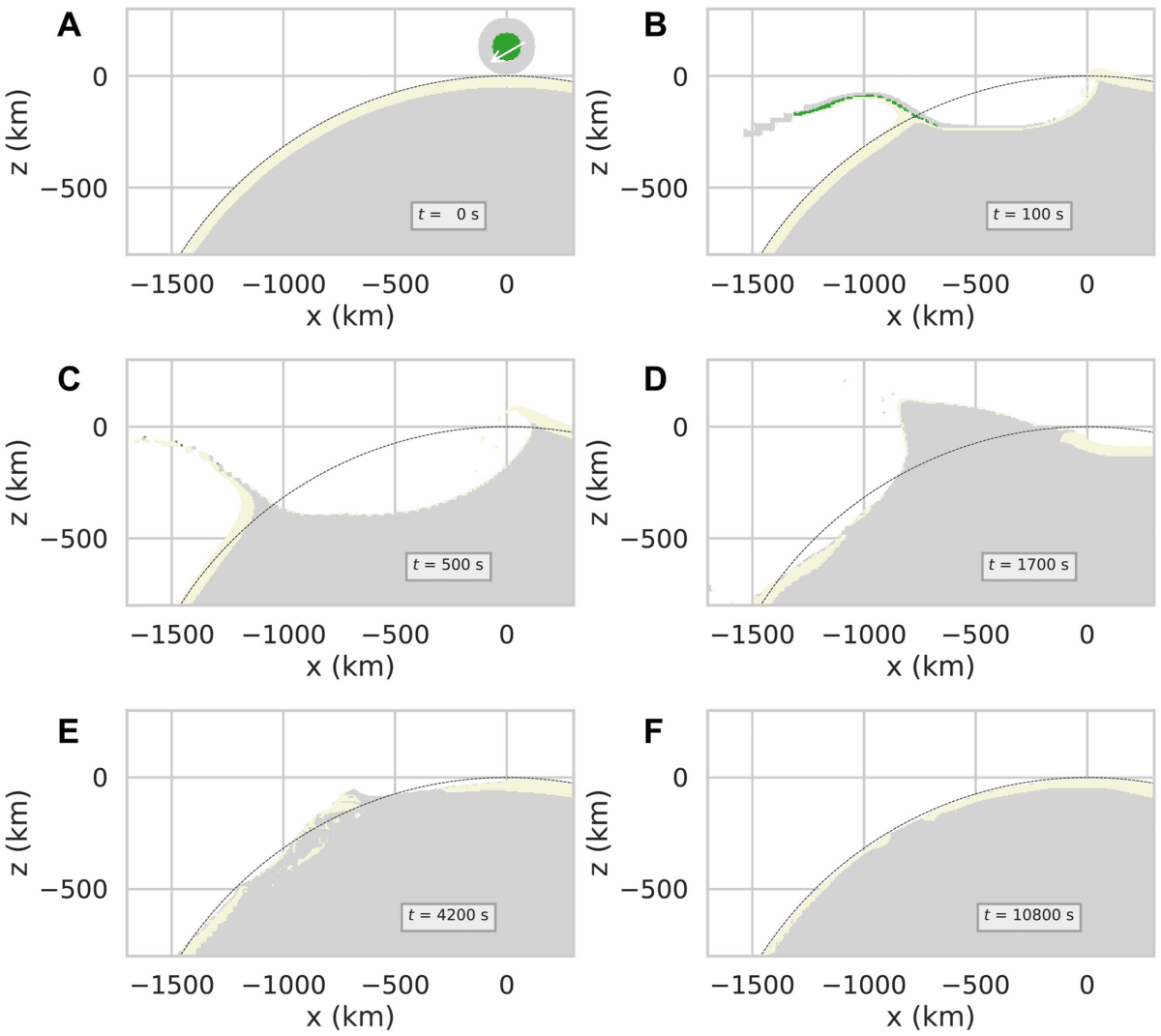
Using high-resolution simulations, scientists tested different impact variables including size, speed, and angle. Their data indicates the impactor was approximately 260 kilometers wide, likely possessing a layered structure with a dense core. The impact occurred at a shallow angle, explaining the basin's unique form. The lead authors comment,
“Our best-fit favoring a 13 km/s impact velocity implies that the SPA impactor was on a low inclination Earth-like orbit before it struck the moon.”
This speed also hints at the impactor’s origin, which the team suggests was from the Mars region rather than nearer Earth or Venus. They elaborate, “Given the collisional and dynamical evolution of leftover planetesimals, the most likely source of the SPA impactor probably originated within the Mars zone.”
Artemis Mission Poised to Collect Lunar Mantle Samples
Perhaps most thrilling is the study’s implication for the upcoming Artemis mission. The models suggest the SPA impact scattered mantle material in a distinctive "butterfly-shaped" ejecta pattern, with debris extending 550 kilometers downrange and 650 kilometers cross-range from the basin rim.
This dispersal pattern offers Artemis a unique chance to gather mantle samples, a feat not achieved by earlier lunar missions. The researchers write,
“For the previously assumed south-to-north impact, the Artemis landing region just beyond the postcollapse topographic rim would be devoid of ejecta from the lunar mantle. In contrast, for a north-to-south trajectory, our models predict that the Artemis III mission will land downrange of the impact point assuming our interpretation of a southward trajectory is correct.”
These insights indicate that landing near the SPA basin’s southern boundary could enable Artemis to retrieve priceless lunar mantle fragments, unlocking new knowledge about the moon’s internal makeup and its early history, thereby deepening our understanding of the solar system’s origins.
- Categories:
- News










0 comments
Sign in to Comment