
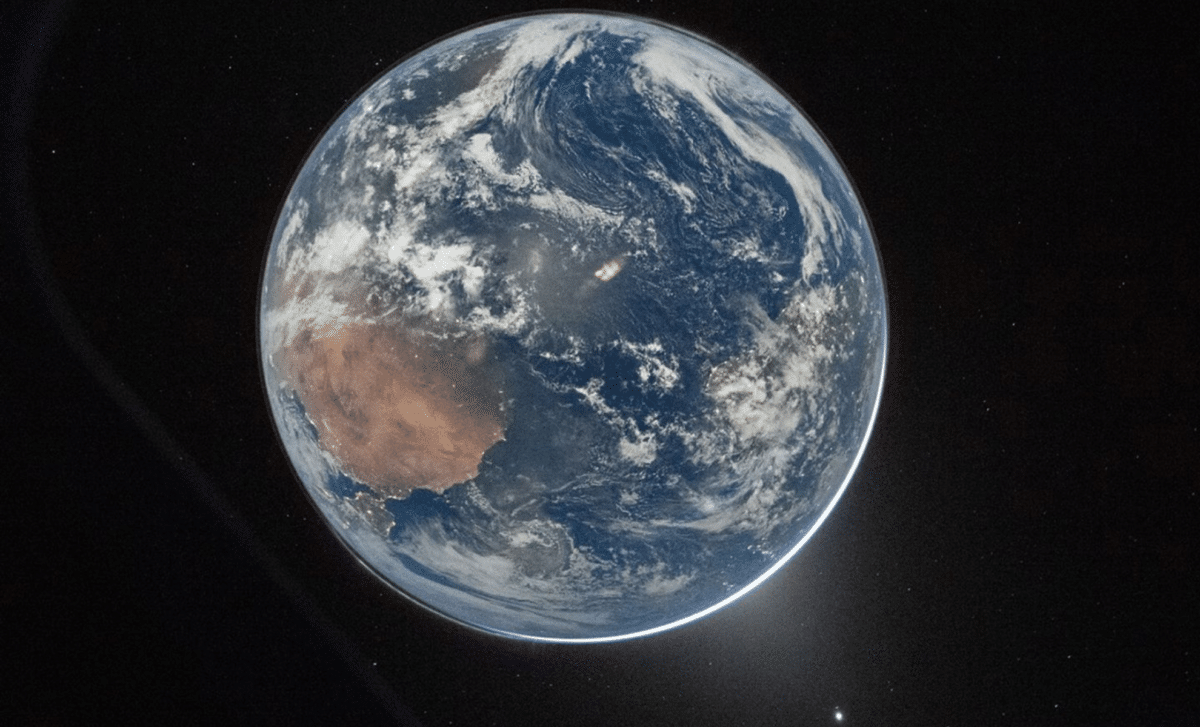
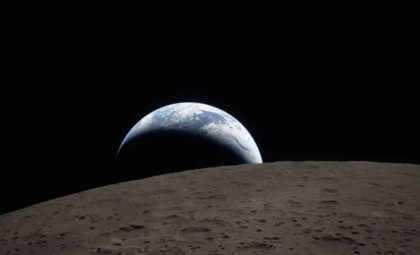
NASA’s Artemis II expedition has delivered a mesmerizing view of our planet from an extraordinary vantage point beyond low Earth orbit. One of the initial images sent back showcases Earth illuminated entirely by the Moon’s glow, encircled by cosmic features that highlight its position within our solar environment. Captured aboard the Orion spacecraft, this rare snapshot unveils nocturnal elements such as shimmering city lights and vibrant auroras, portraying our world as a lively, evolving entity.
Observing Earth Under Lunar Glow
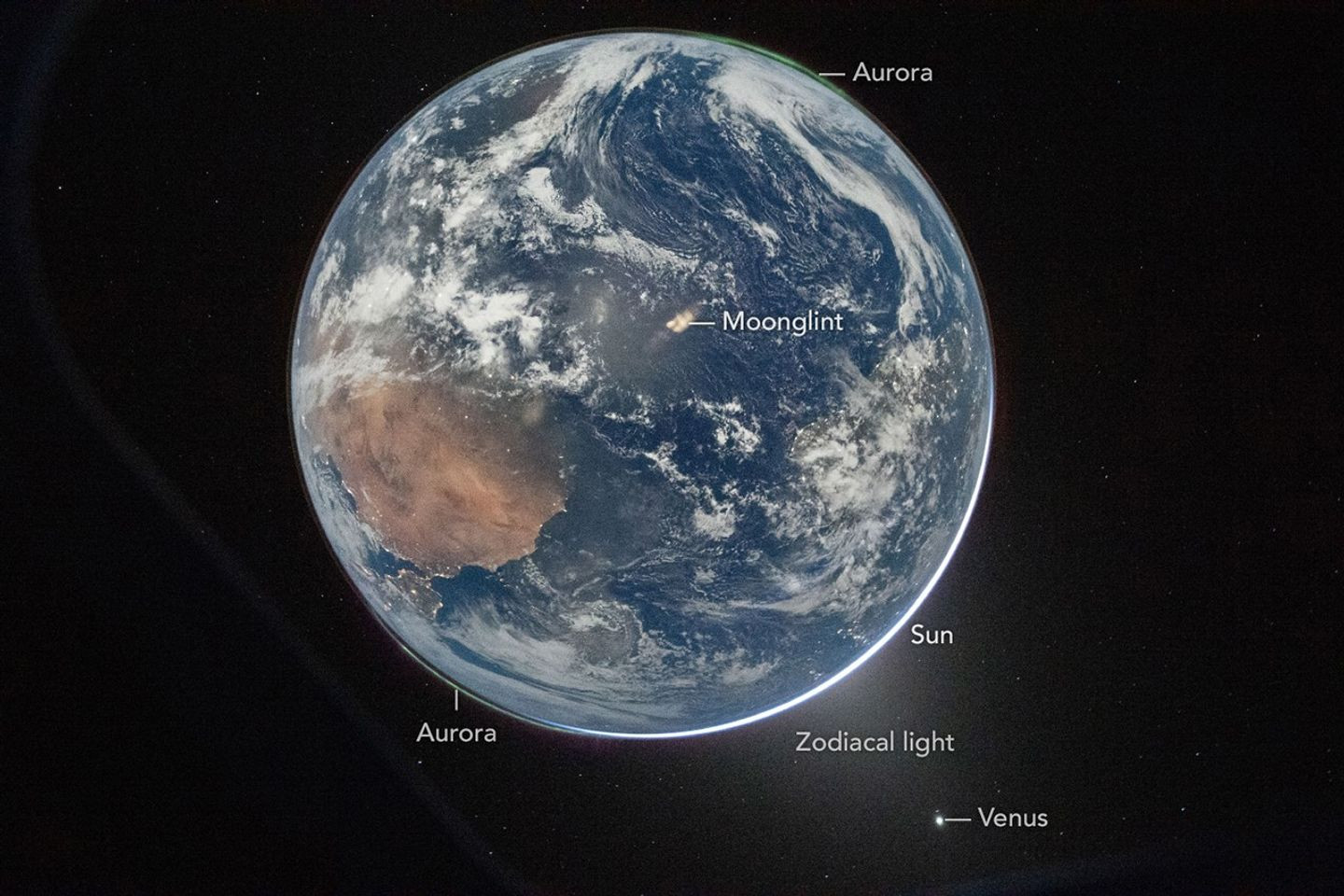
This striking image was captured following Artemis II’s translunar injection maneuver, which sent the spacecraft beyond Earth’s orbit en route to the Moon. Seen from this distance, the astronauts witnessed Earth partially shading the Sun, leaving only a thin line of sunlight visible along the planet’s circumference. The moonlight exposed features rarely observable in space at night. Around both poles, radiant green auroras glow, generated by solar particles interacting with the upper atmosphere. Additionally, the subtle glow of zodiacal light, caused by sunlight scattering off microscopic dust particles in the solar system, appears just beneath Earth—a phenomenon seldom caught in a single frame.
Illuminated Cities Highlight Human Activity
The most captivating feature of the Artemis II image is its depiction of human civilization lighting up the globe. Bright city lights outline regions including Spain, Portugal, northern Africa, sub-Saharan Africa, and Brazil, revealing urban networks visible only from this cosmic perspective. Utilizing a camera set at ISO 51,200—a remarkably high sensitivity—the crew was able to capture these faint illuminations alongside natural atmospheric phenomena and interplanetary reflections. This technological accomplishment enables researchers to analyze nighttime human activities, offering valuable insights into energy consumption, urban growth, and the spread of artificial light pollution across the planet. Combined with the moon’s gentle illumination, the image powerfully symbolizes Earth as both a thriving habitat and a fragile environment shaped by human presence.

Importance for Earth Science
Miguel Román, Deputy Director for Atmospheres and Data Systems at NASA’s Goddard Space Flight Center, highlighted the deeper meaning of this image: “[This photo] reminds us that Earth at night is visually compelling, physically complex, and scientifically underexplored. I see this image as a glimpse of what Earth science can become in the future.” While ongoing satellite missions like NASA’s Black Marble program continually track global night lights, the Artemis II photo is unique in being captured by humans and intensely immersive, blending scientific observation with breathtaking visual artistry. Viewing Earth from such a remote vantage point enhances scientists’ understanding of planetary energy flow, urban expansion, and the solar wind’s influence, while offering the public an inspiring perspective on the planet’s beauty and vulnerability.
- Categories:
- News









0 comments
Sign in to Comment