
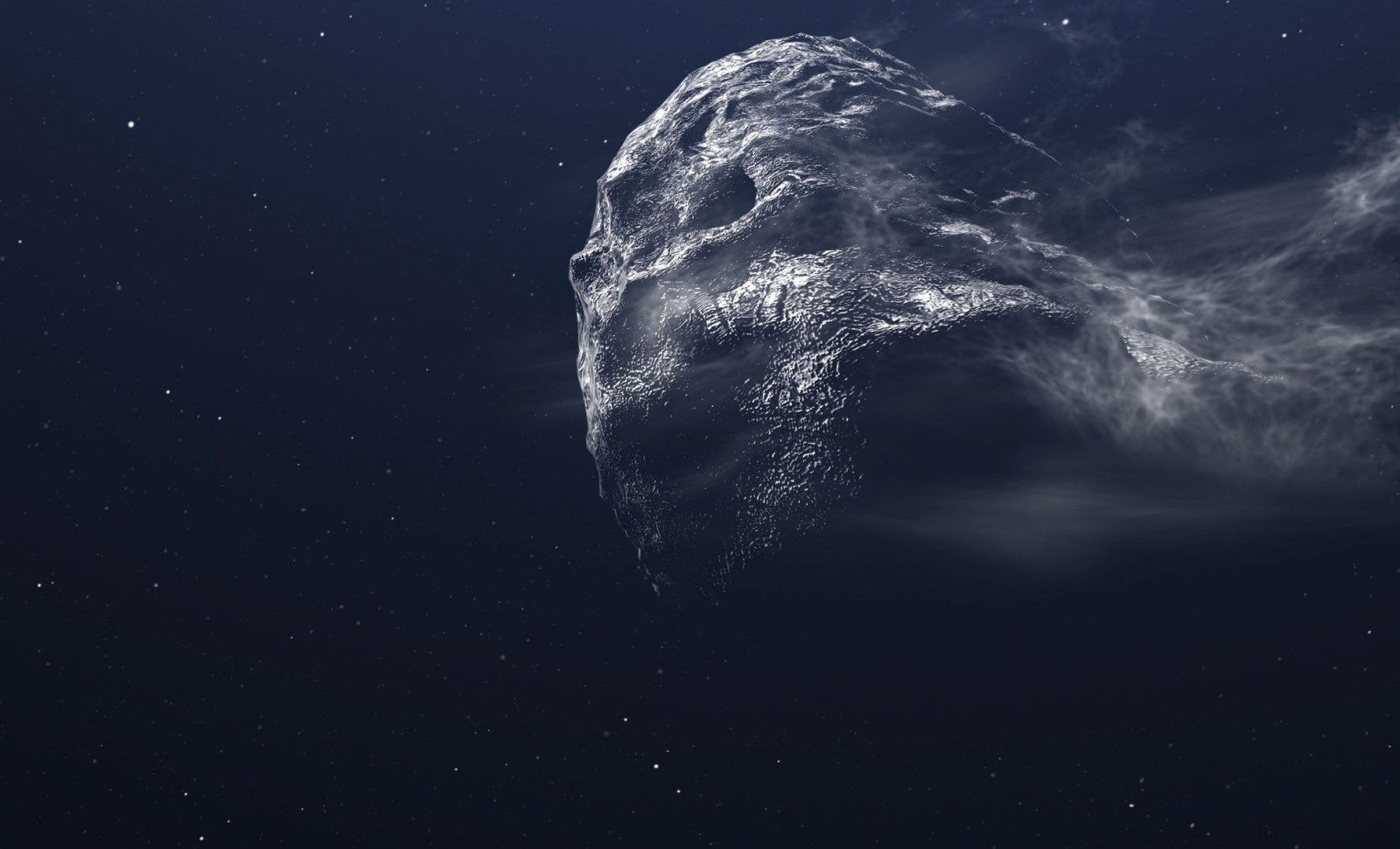
An asteroid recently identified has broken existing speed benchmarks by rotating once every 112 seconds, a pace unmatched by any known asteroid exceeding 500 meters in diameter. Designated 2025 MN45, its remarkable spin rate hints at a composition of solid rock, enabling it to resist the extreme forces generated by its rapid rotation.
This breakthrough was made possible through observations by the Vera C. Rubin Observatory located in Chile, representing a significant advancement in our understanding of planetary bodies. Beyond merely setting a speed milestone, this observation offers clues about the asteroid's make-up and potentially the formation of our solar system.
Record-Breaking Rotation
Typically, asteroids larger than 500 meters rotate much more slowly, often taking between 30 to 60 minutes to complete a full spin, as faster rotation threatens structural integrity. However, 2025 MN45 spins at an unprecedented rate of 112 seconds per revolution. "This is something unprecedented," remarked astronomer Sarah Greenstreet of the University of Washington.

“Since most asteroids are believed to be what we call ‘rubble pile’ asteroids, which means they are made of many, many small pieces of rock and debris that coalesced under gravity during solar system formation or subsequent collisions,” she added.
The extraordinary spin strongly indicates that 2025 MN45 is not a loosely assembled “rubble pile” like many asteroids but rather a dense, solid entity capable of enduring the powerful centrifugal forces.
A New Era in Space Observation
The Vera C. Rubin Observatory, inaugurated in 2023, played a critical role in detecting this accelerating celestial body. Situated in Chile, the observatory is tasked with mapping the southern sky repeatedly every few nights over the coming decade, facilitating the tracking of moving objects such as asteroids and comets. Its initial data release in June cataloged over 2,100 objects within the solar system, approximately 90% of which were previously unknown.
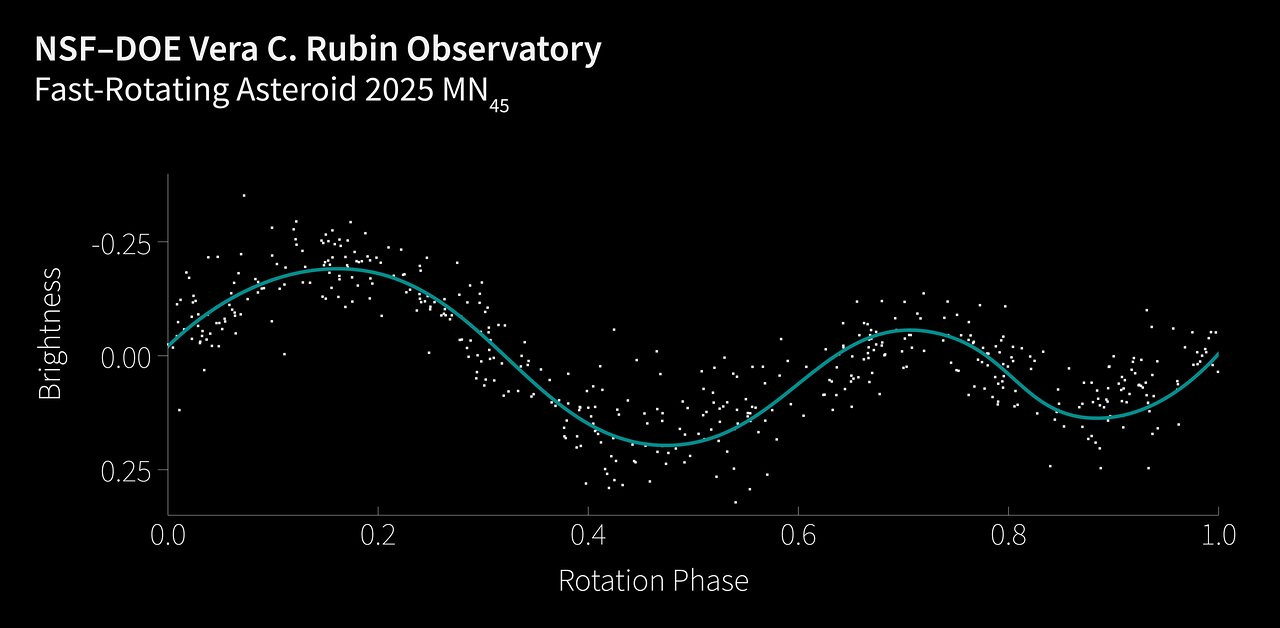
This detailed sky monitoring enables astronomers to analyze brightness changes over time to determine rotation rates. In the case of 2025 MN45, these brightness fluctuations revealed its rapid rotation, offering valuable insight into its structure and dynamics.
“As this study demonstrates, even in early commissioning, Rubin is successfully allowing us to study a population of relatively small, very rapidly rotating main-belt asteroids that hadn’t been reachable before,” explained Greenstreet in a statement from the University of Washington.
Rethinking the Asteroid Belt Composition
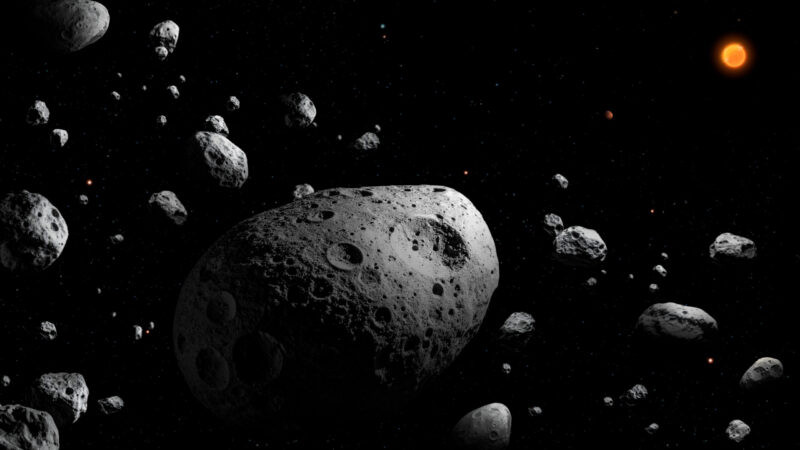
The emergence of 2025 MN45 challenges existing perspectives on the asteroid belt that lies between Mars and Jupiter. Historically, these asteroids were assumed to be predominantly “rubble piles,” fragments loosely bound by gravity. However, the presence of a rapidly spinning, solid asteroid implies that some may have a much denser, rock-solid interior.
Greenstreet suggests many additional fast-rotating space rocks could exist within the belt. Investigating these bodies could shed light on their origins and the solar system’s evolutionary path. They might be remnants of larger parent asteroids fragmented through collision events, influencing the current asteroid distribution.
“These are exciting results but there’s much more to come,” stated co-author Mario Jurić, a UW professor of astronomy. “In the next two years, Rubin will discover a thousand times as many asteroids as were presented here. Rubin’s data will open the window into what’s out there in our solar system, and how it all came to be.”
Moving forward, the Vera C. Rubin Observatory is poised to reveal numerous similar objects, enhancing our grasp of the solar system’s origins and structure.
- Categories:
- Space







0 comments
Sign in to Comment