
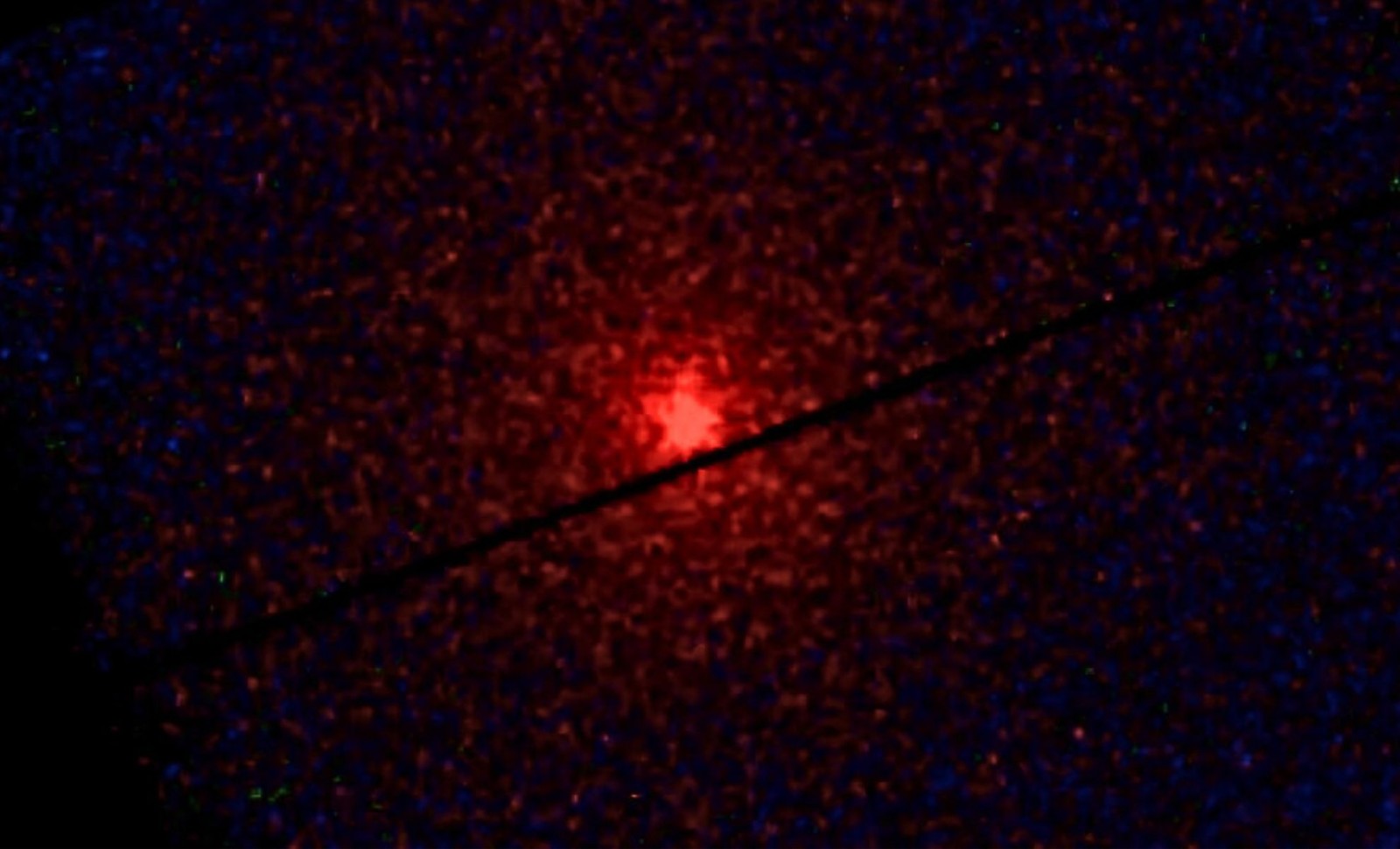
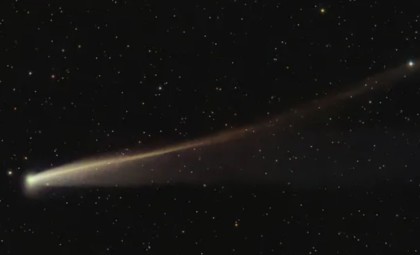
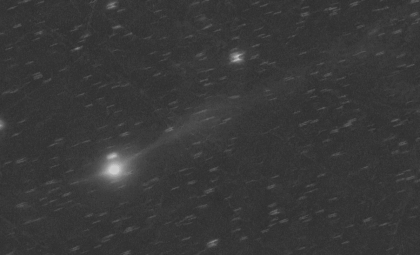
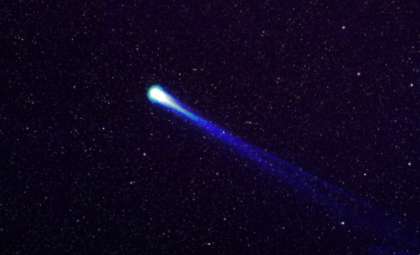
An extraordinary luminous trail stretching over 400,000 kilometers has been detected emanating from a visiting interstellar comet—the very first of its kind to produce observable X-ray radiation. This groundbreaking discovery resulted from joint efforts by two premier X-ray space observatories, offering fresh insights into distant cosmic objects originating around other stars.
Identified as 3I/ATLAS, this comet is only the third confirmed interstellar traveler ever documented, and uniquely displays pronounced interaction with the solar wind in the form of a strong X-ray emission. Scientists now have an unprecedented way to examine elusive gases—like hydrogen and nitrogen—usually undetectable through conventional observation techniques.
Unlike the silent passage of 1I/ʻOumuamua, which showed no visible tail, 3I/ATLAS demonstrates pronounced activity and radiation, enabling detailed analysis before the comet vanishes into the void.

X-Ray Observations Reveal Vast Energy Emission Spanning Lunar Distance
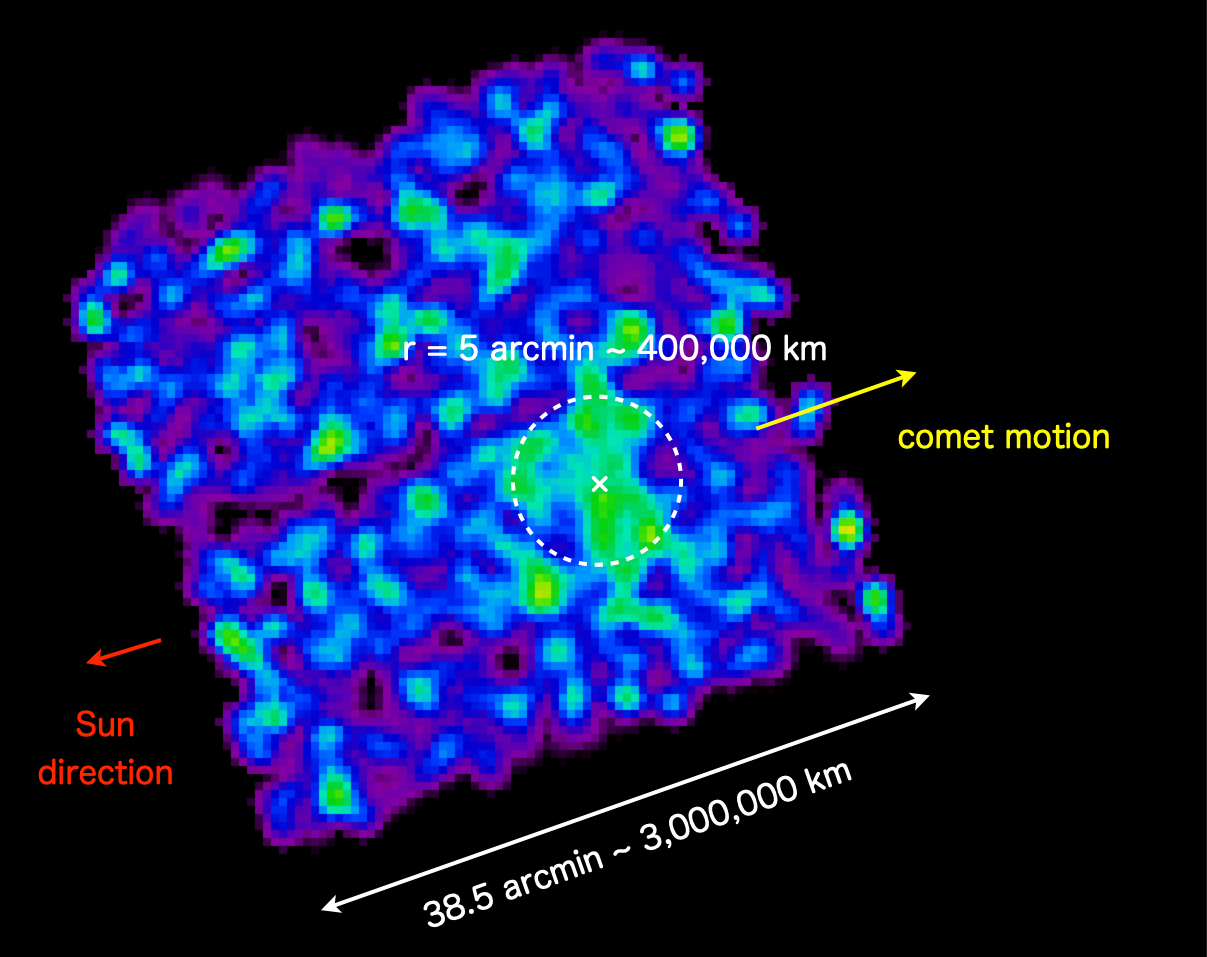
From November 26 to 28, Japan’s XRISM (X-Ray Imaging and Spectroscopy Mission), collaborating with NASA and ESA, conducted over 17 hours of observation using its Xtend soft X-ray imager. This effort uncovered a remarkable halo of X-ray light extending roughly 250,000 miles, comparable to the Earth-Moon gap.
The X-ray glow arises not from the comet’s core, but from charge exchange—an interaction where solar wind ions impact neutral gases emitted by the comet’s nucleus, stripping electrons and releasing X-ray photons over a wide area.
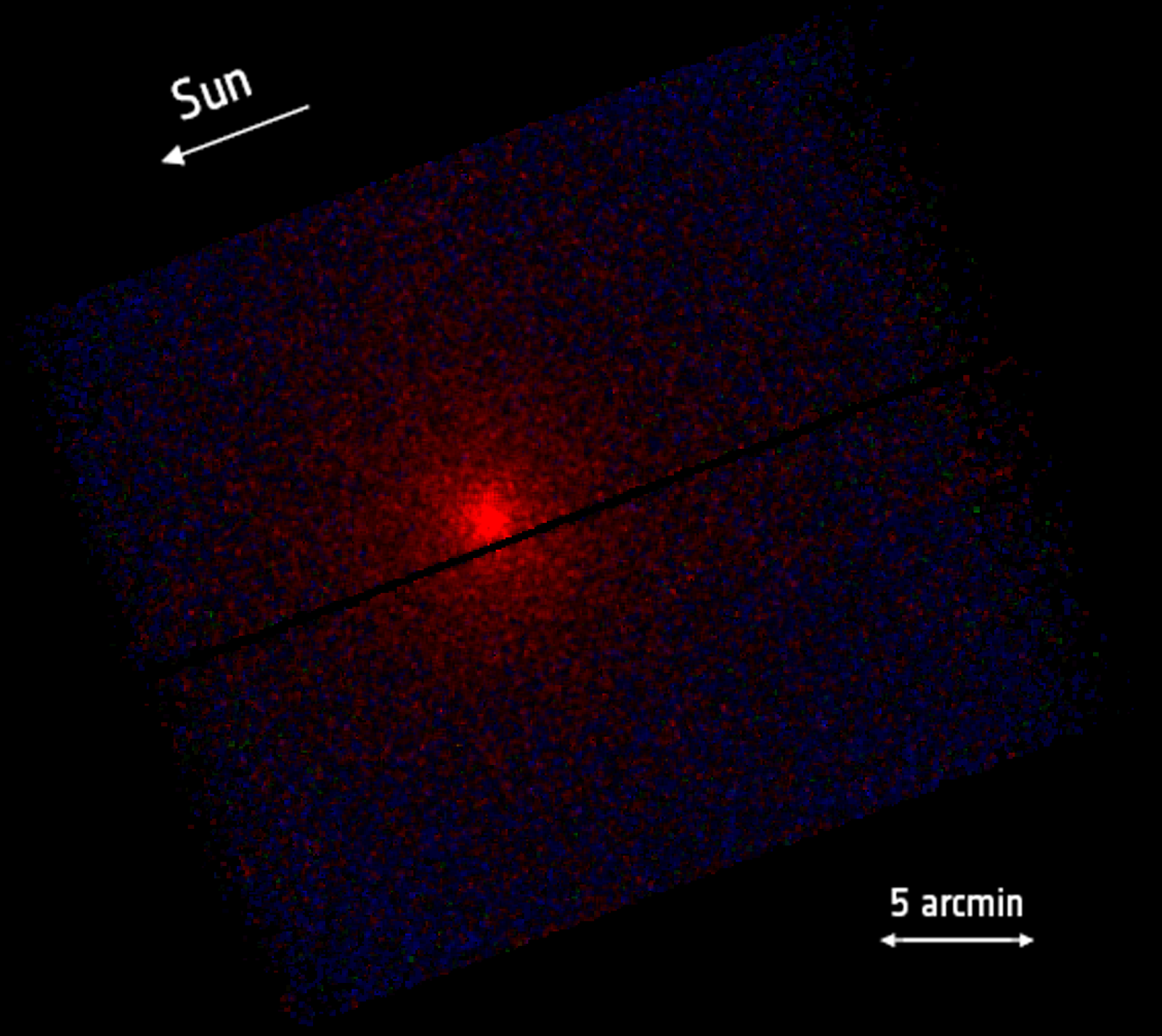
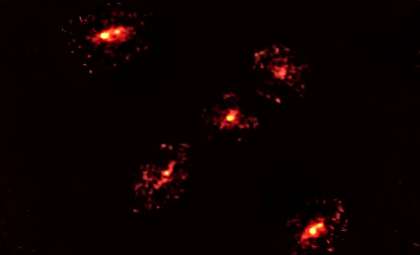
On December 3, ESA’s XMM-Newton observatory performed a 20-hour campaign employing its EPIC-pn camera, the observatory’s most sensitive X-ray detector. The resulting data revealed an intense red glow around the nucleus, surrounded by softer gradients marking regions of lower energy, effectively visualizing the solar wind’s influence on the comet’s gaseous envelope.
These X-ray signatures trace elements such as carbon, oxygen, and nitrogen. Unlike visible or infrared telescopes, they also detect molecular hydrogen and atomic nitrogen, often invisible in other bands. ESA experts highlighted how this information captures gases nearly undetectable by optical and ultraviolet instruments.
Using X-Rays to Explore Extraterrestrial Chemistry
Prior findings from the James Webb Space Telescope and NASA’s SPHEREx mission had identified typical cometary components like carbon monoxide, carbon dioxide, and water vapor. However, the new X-ray data from XRISM and XMM-Newton adds a crucial dimension—exposing lighter, highly volatile gases that conventional instruments miss.
This advancement is key to discerning how comets from beyond our solar system might vary chemically from those native to our planetary neighborhood. Some speculated that 1I/ʻOumuamua contained rare ices like pure molecular hydrogen, but its lack of a visible tail left such hypotheses unproven.
Now, 3I/ATLAS offers a concrete example. Its active coma and extensive X-ray halo indicate a complex and evolving mixture of materials. These observations may reveal whether this interstellar visitor resembles familiar solar system comets or belongs to a more primordial type of celestial object.
Spectral analysis from XRISM also reveals distinct patterns of carbon, nitrogen, and oxygen, helping scientists map their distribution in the comet’s gaseous envelope and investigate their interaction with intense solar radiation. This unlocks a window into stellar chemistry occurring within our own solar environment.
Interstellar Visitors Are More Intricate Than Previously Imagined
Discovered in 2023, comet 3I/ATLAS was confirmed as an interstellar intruder by its hyperbolic orbital path demonstrating it’s not gravitationally tethered to the Sun. This trajectory classifies it as a one-off visitor, distinct from comets sourced within the Oort Cloud or Kuiper Belt.
Whereas earlier interstellar objects like ʻOumuamua and 2I/Borisov sparked interest, they posed observational obstacles. ʻOumuamua lacked a visible coma or outgassing signs, and Borisov’s brief passage restricted detailed study. In contrast, 3I/ATLAS is bright, active, and observable, granting astronomers an extended opportunity to scrutinize materials formed around a distant star.
This visibility permits multi-wavelength collaboration. X-ray instruments can be combined with infrared and radio telescopes to construct comprehensive three-dimensional models of the comet’s architecture, chemical makeup, and interaction with solar wind forces and radiation.
A Rare Opportunity to Examine a Star System Visitor
3I/ATLAS is scheduled for its nearest Earth approach on December 19 before it resumes its journey into interstellar space. No spacecraft currently has the capability to intercept it, and its rapid velocity means it won’t be observable again. This urgency compels observatories globally to maximize data acquisition immediately across the electromagnetic spectrum.
Researchers are synthesizing information from X-ray, visible, and infrared observatories, aiming to unravel the comet’s thermal properties, gas flow dynamics, and solar wind interactions. These analyses will form a foundational reference for the study of future interstellar visitors.
The ongoing observation campaign for 3I/ATLAS represents an exceptional chance to investigate the formative components of planetary systems beyond our own. Through X-ray astronomy—still an emerging tool in planetary science—scientists have unlocked a powerful technique to explore phenomena hidden beyond ordinary light’s reach.
- Categories:
- Space







0 comments
Sign in to Comment