
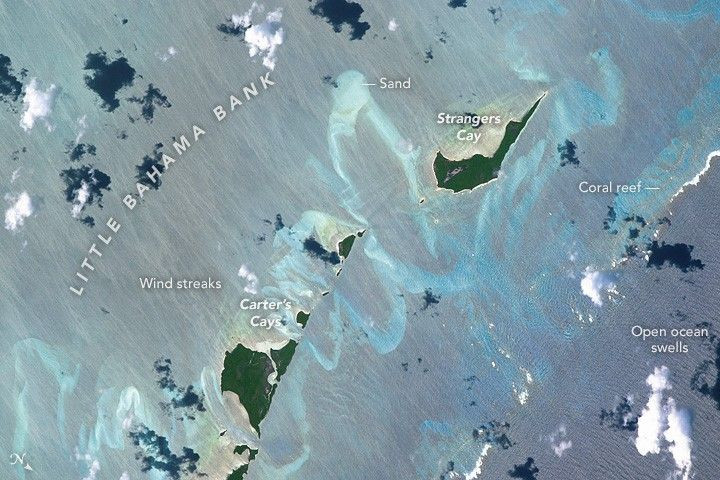
An awe-inspiring photo taken from the International Space Station (ISS) shows the waters near the Bahamas featuring radiant, spiraling sandbanks that resemble glowing underwater auroras. Snapped on October 20, 2016, this remarkable image provides a rare glimpse into the shallow oceanic zones where sand, water, and sunlight interact beautifully.
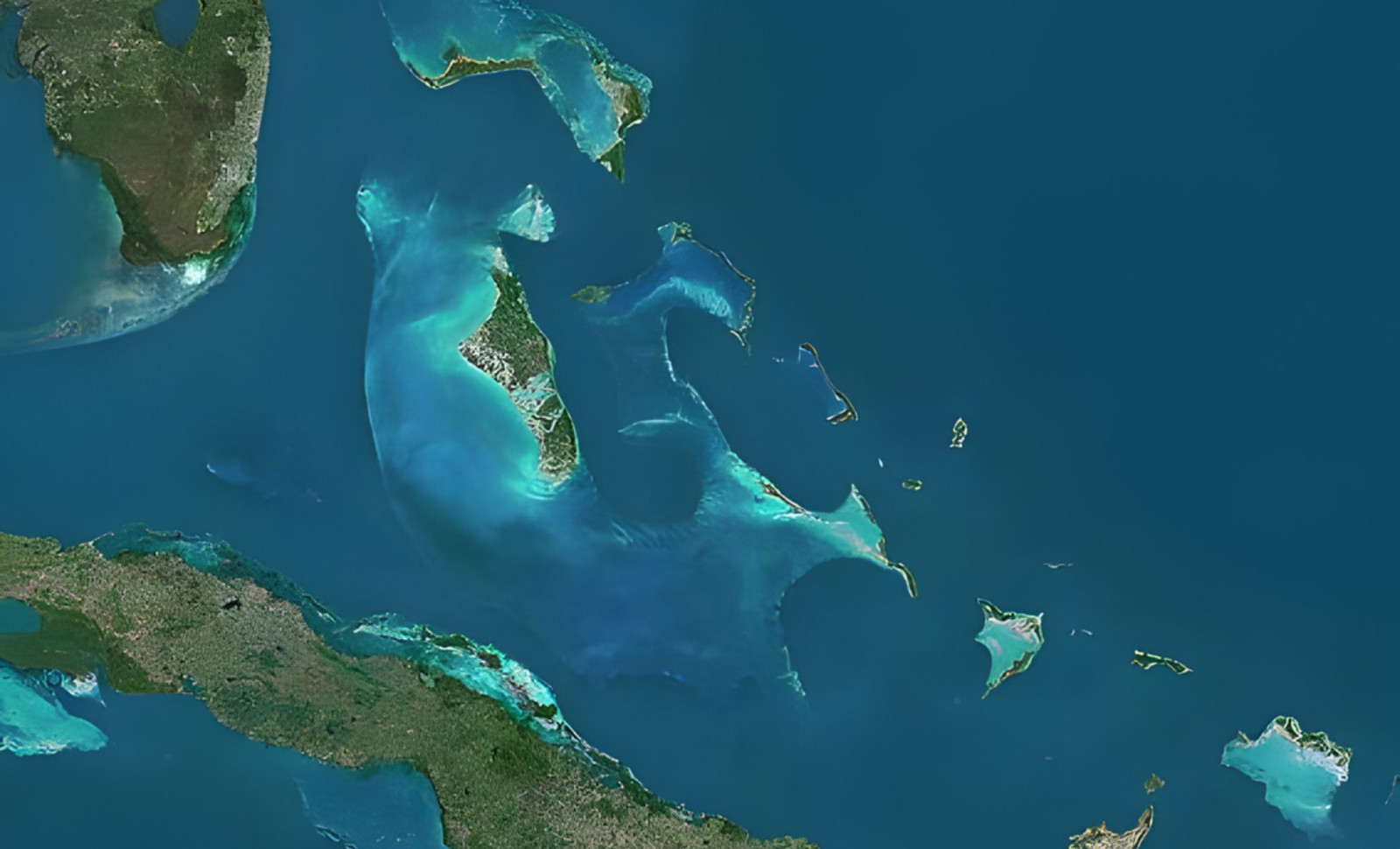
The sand formations encircle two small islands, Carter’s Cays and Strangers Cay, situated at the northern edge of the Bahamas. From space, these sandbanks appear to radiate light, an effect created by the shallow water and sunlight reflecting off the surface.
How Ocean Currents Mold Sandbanks and Coral Reefs
NASA's Earth Observatory explains that these sandbank shapes are carved by long-term ocean current activity. The swirling patterns result from years, perhaps centuries, of sand accumulation continuously reshaped by flowing water.

“The largest sand feature (a U-shape at image center) lies opposite the widest break in the coral reef—where the tidal flow is strongest. A gap in the line of breakers shows the opening,” stated the NASA’s statement.
The coral reef visible at the lower right corner of the photo has developed over thousands of years, gradually forming a natural barrier. Besides sheltering the nearby islands, the reef supports rich marine biodiversity. The waves breaking along its edge highlight the powerful natural forces shaping this environment.
The Optical Effect Behind the Glow
One of the most mesmerizing qualities of the photo is the glowing appearance of the sandbanks, which resemble the Northern Lights or bioluminescent ribbons beneath water. However, this glow is not due to true light emission from the sand.
Instead, it's an optical illusion arising from the shallow water depth and sunlight reflecting off the ocean floor. Certain areas have sandbanks just about 2 meters (6.5 feet) under the water, allowing light to scatter and create this stunning shimmer.
While the sand’s enchanting glow is captivating, it’s essential to recognize it results from the combined effects of light, water, and sand. These sandbanks illustrate the delicate and intricate forces at work in nature.
The Bahama Banks are the submerged carbonate platforms that make up much of the Bahama Archipelago. The term applies to the Little Bahama Bank of Grand Bahama Island and Great Abaco, which are the largest of the platforms, and the Cay Sal Bank north of Cuba. pic.twitter.com/COa1Gcp9vQ
— 🇧🇸GREAT ALPHA AND OMEGA🫦💍 AMBRISTER-ROLLE (@AAAmbrister1988) June 17, 2023
Ocean Wave Patterns Beyond the Reef
According to Earth Observatory, deeper waters outside the reef generate conventional wave formations, which appear darker and more intense when compared to the calmer patterns near the islands. This sharp depth gradient supports unique ecosystems, benefiting both the sandbanks and diverse marine life.
“Regular patterns of swells appear in the deeper water (lower right), while the quieter, shallow water in the center—protected by the reef—was streaked by a brisk northeast wind on the day the photo was taken.”
Beyond the reef, ocean dynamics shift significantly, creating varied current flows that reshape the surface. The contrast between tranquil waters near the islands and the rougher seas further away underlines the reef’s crucial role in maintaining local environmental balance.
- Categories:
- News

0 comments
Sign in to Comment