
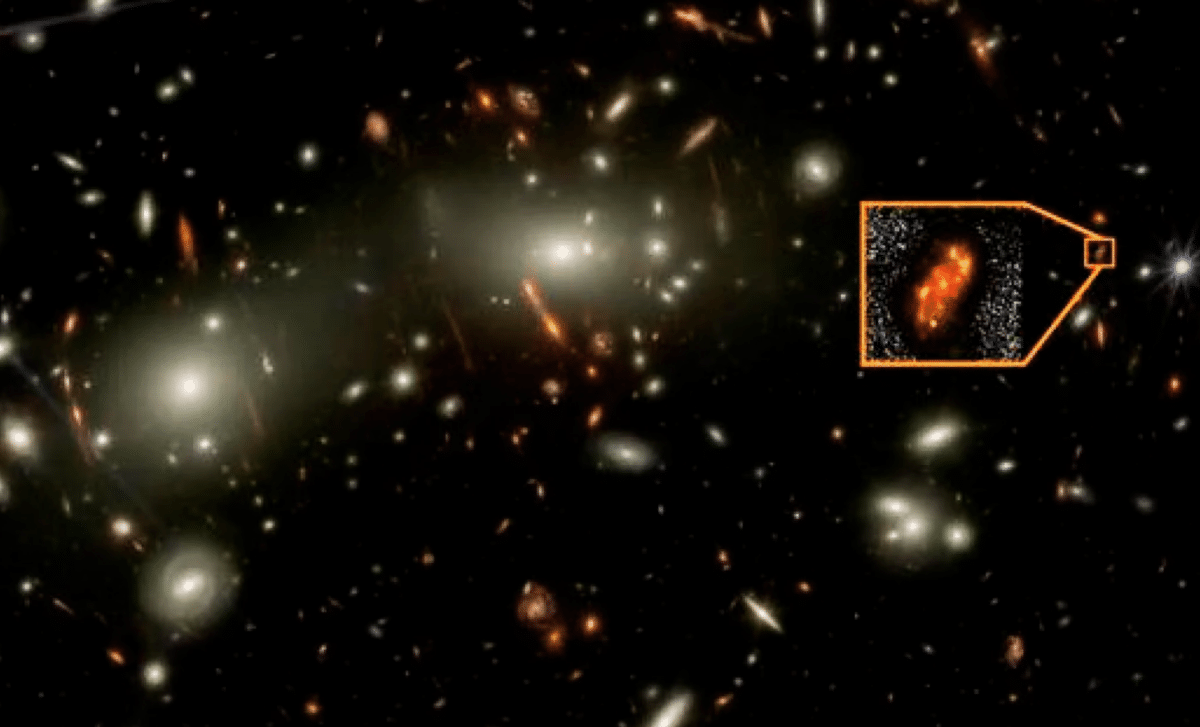
Astronomers have uncovered a well-defined spiral galaxy named Alaknanda, offering fresh perspectives on how galaxies formed in the universe’s infancy. Captured by NASA’s James Webb Space Telescope, this discovery challenges earlier beliefs about the chaotic nature of young galaxies. The findings, featured in Astronomy & Astrophysics, provide intriguing evidence of rapid and orderly galaxy assembly shortly after the Big Bang.
Alaknanda: Exploring Galactic Evolution in the Early Cosmos
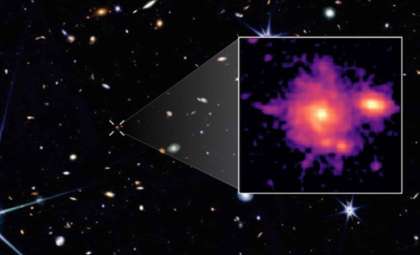
The newly identified Alaknanda galaxy, detected by astronomers employing the James Webb Space Telescope, stretches nearly 12 billion light-years away. This places its formation at a time when the universe was only about 1.5 billion years old. Previously, it was thought that young galaxies appeared turbulent and irregular, lacking the organized spiral patterns visible in mature galaxies, such as our Milky Way. The observation of Alaknanda’s precise shape is prompting researchers to revisit and revise these long-held assumptions.
The peer-reviewed research, accessible through the Astronomy & Astrophysics journal, introduces a compelling argument that galaxies could form with remarkable speed and structure. Contrary to earlier simulations suggesting gradual and disorderly development, Alaknanda's architecture implies that galaxy formation mechanisms may be far more effective than previously considered.

Rethinking Galactic Timelines: Early Emergence of Spiral Arms
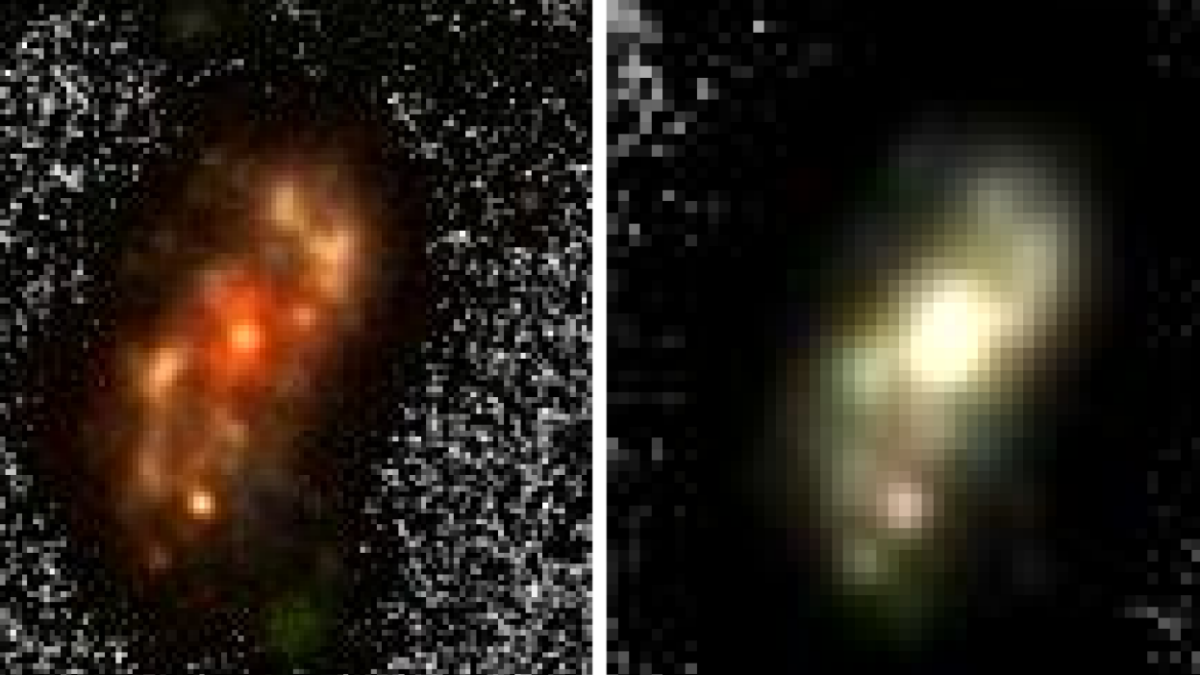
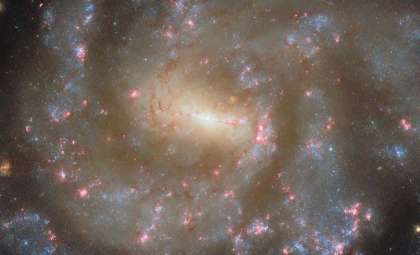
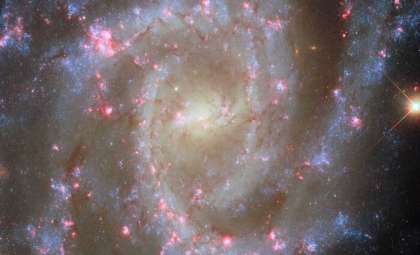
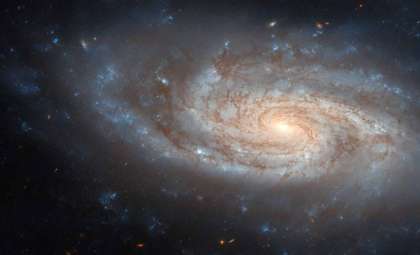
Alaknanda astounds with its clearly defined spiral arms, structures thought to appear much later. Extending about 32,000 light-years, this galaxy’s disk rotates gracefully, demonstrating that complex configurations existed when the universe was relatively young. The detailed image shows a smooth, symmetric design akin to a cosmic pinwheel, defying earlier expectations of early galactic chaos.
Lead researcher Rashi Jain underscored the significance of these observations:
“The physical processes driving galaxy formation — gas accretion, disk settling, and possibly the development of spiral density waves — can operate far more efficiently than current models predict. It’s forcing us to rethink our theoretical framework.”
This discovery indicates that primordial cosmic conditions might have enabled galaxies to organize rapidly, compelling scientists to reevaluate existing evolutionary models.
Harnessing Gravitational Lensing to Unveil Alaknanda
A critical factor in observing Alaknanda was the use of gravitational lensing, where the gravity of a massive galaxy cluster bends light from distant objects, amplifying their appearance. This natural magnification allowed the James Webb Space Telescope to capture exceptional detail, unveiling the galaxy’s spiral layout and star formation processes with unprecedented clarity.
Gravitational lensing acts like an astronomical zoom lens, permitting in-depth study of distant galaxies. In Alaknanda’s case, it helped highlight bright clumps where new stars ignite along the spiral arms, formed by dense gas regions collapsing under gravity. This clarity was key to understanding how such a sophisticated spiral structure developed so early.
Unexpected Star Formation Rates in Alaknanda
Despite its enormous distance, astronomers successfully determined that the stars within Alaknanda are remarkably young. Utilizing observations across 21 different wavelengths from ultraviolet to infrared, they found the stellar population to be approximately 200 million years old. This implies an intense burst of star formation shortly after the galaxy’s birth, a rarity for such an early epoch.
This accelerated star creation phase challenges the traditional picture of slow, steady growth in early galaxies. In fact, Alaknanda is producing roughly 63 new stars annually, vastly exceeding the current rate observed in the Milky Way. These findings suggest the galaxy remains dynamically active, with ongoing star births contributing to the evolution of its spiral shape.
- Categories:
- News




0 comments
Sign in to Comment