

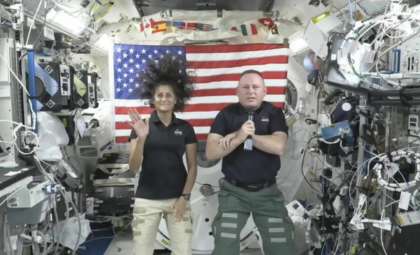
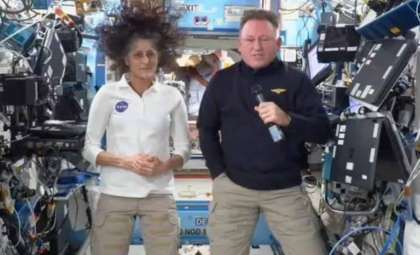
Initially planning a brief mission aboard the International Space Station (ISS), two NASA astronauts have now been orbiting Earth for almost eight months because of continuous spacecraft issues. Test pilots Williams and Butch Wilmore, assigned to Boeing’s Starliner capsule, completed their first joint spacewalk on Thursday—a venture filled with technical hurdles, groundbreaking accomplishments, and an unclear timeline for their eventual return.
Unexpected Longevity in Space
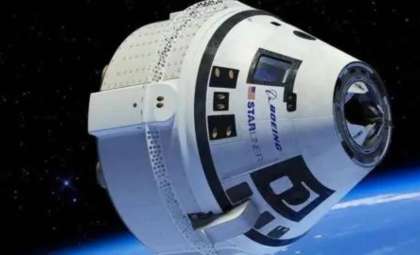
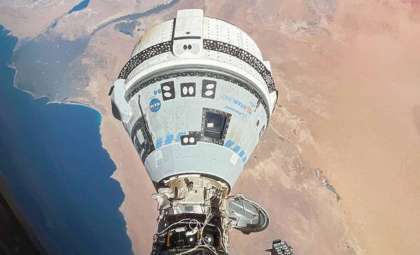
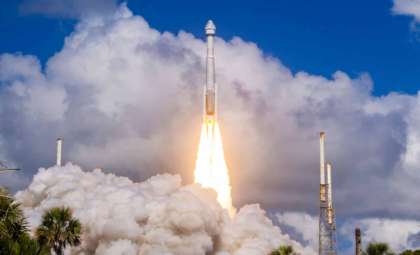
Williams and Wilmore launched last June on Boeing’s Starliner, embarking on a short test designed to certify the vehicle for upcoming crewed missions. Nonetheless, propulsion failures and helium leaks triggered a halt by NASA for additional evaluations. This led to an unforeseen situation where the astronauts remained aboard the ISS awaiting a safe means of returning to Earth.
What was supposed to be a brief stint has now expanded into an unplanned ten-month stay due to subsequent postponements in launching their relief crew via a SpaceX Crew Dragon. NASA has announced the astronauts' return is unlikely before late March or early April, prolonging their mission far beyond initial expectations.

Challenging Spacewalk Amid Uncertainty
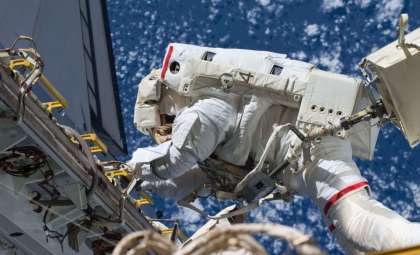
Despite the unclear schedule for heading home, Williams and Wilmore ventured outside the ISS for a near four-hour spacewalk that proved more demanding than anticipated. The primary goal was to remove a faulty antenna and take microbial samples from the station’s exterior surfaces.
The spacewalk encountered difficulties. Both astronauts had trouble detaching the broken antenna but eventually succeeded after prolonged effort. Operating about 260 miles (420 km) above Earth, they were cautioned by Mission Control to watch for debris from the antenna as it was being removed.
For Wilmore, a retired Navy captain with previous ISS experience, this was his first spacewalk on this mission. Williams had already completed a spacewalk two weeks before.
Setting A New Benchmark for Female Spacewalk Duration
What began as routine maintenance turned into a significant achievement for Suni Williams. By completing her ninth spacewalk, she surpassed the former female astronaut record for accumulated spacewalking time. The prior record holder, Peggy Whitson, had totaled 60 hours and 21 minutes over ten spacewalks. Williams’ recent extravehicular activity has now placed her at the forefront of spacewalking history.
Even with the physical demands of multiple spacewalks and the prolonged mission duration, both astronauts maintain good health. NASA applauds their endurance and highlights how their extended time aboard the ISS yields valuable insights into the effects of long-term space living—crucial information for future missions venturing to places like Mars.
Boeing’s Starliner Issues and Dependence on SpaceX
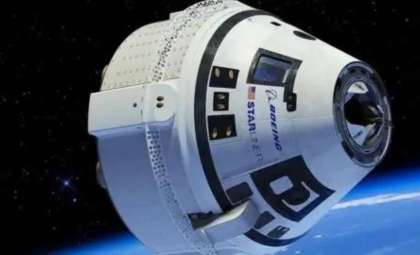
The prolonged mission stems mainly from persistent problems with Boeing’s Starliner, whose future remains uncertain. Conceived as a competitor to SpaceX’s Crew Dragon, Starliner has faced multiple delays, technical setbacks, and unexpected mission changes. After a June launch, propulsion troubles forced NASA to unprecedentedly return the capsule empty-handed, leaving the astronauts stranded aboard the ISS.
With Starliner grounded, NASA depends on SpaceX to bring these astronauts back. Yet, Crew Dragon’s schedule has also encountered setbacks tied to crew rotation and launch timing. The replacements are anticipated to arrive in March or April, extending Williams and Wilmore’s stay to about ten months.
Looking Ahead for The Astronaut Duo
Currently, Williams and Wilmore continue to support the ISS through maintenance and scientific experiments. Their upcoming key event will be meeting their successors, enabling their eventual journey home aboard a SpaceX Crew Dragon capsule.
NASA remains optimistic about a smooth return, though this delay underscores the complexities of juggling multiple space transport systems. This scenario also casts doubt on Boeing’s readiness to provide dependable crew vehicles as NASA intensifies efforts toward deep-space goals like Artemis lunar missions and prospective Mars travel.
Until then, the two astronauts continue their extended mission, exemplifying the determination, flexibility, and stamina vital for advancing human space exploration boundaries.
- Categories:
- Space




0 comments
Sign in to Comment