
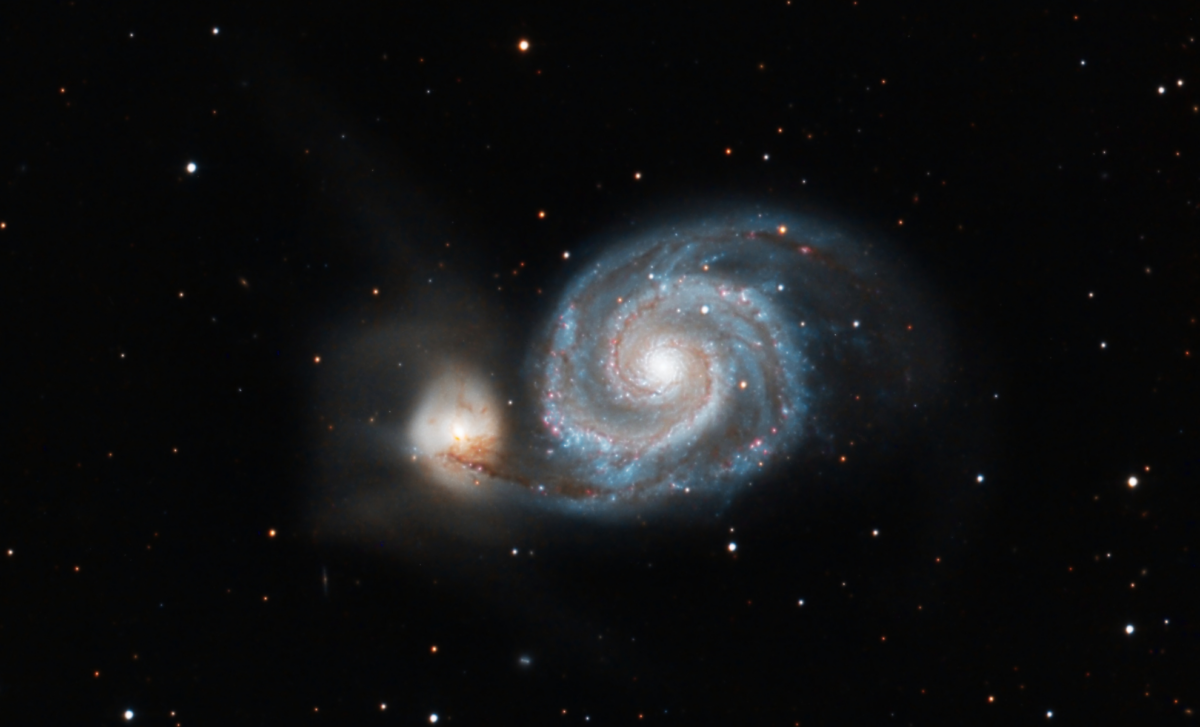
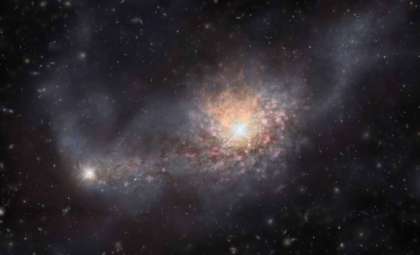
A new investigation by astronomers has revealed an unusual double nucleus within the nearby galaxy NGC 4486B, situated near the core of the Virgo Cluster. This discovery, shared on the arXiv preprint platform, offers fresh clues about the late phases of supermassive black hole (SMBH) mergers, crucial events influencing galaxy formation and evolution.
Unveiling the Complex Core Structure of NGC 4486B
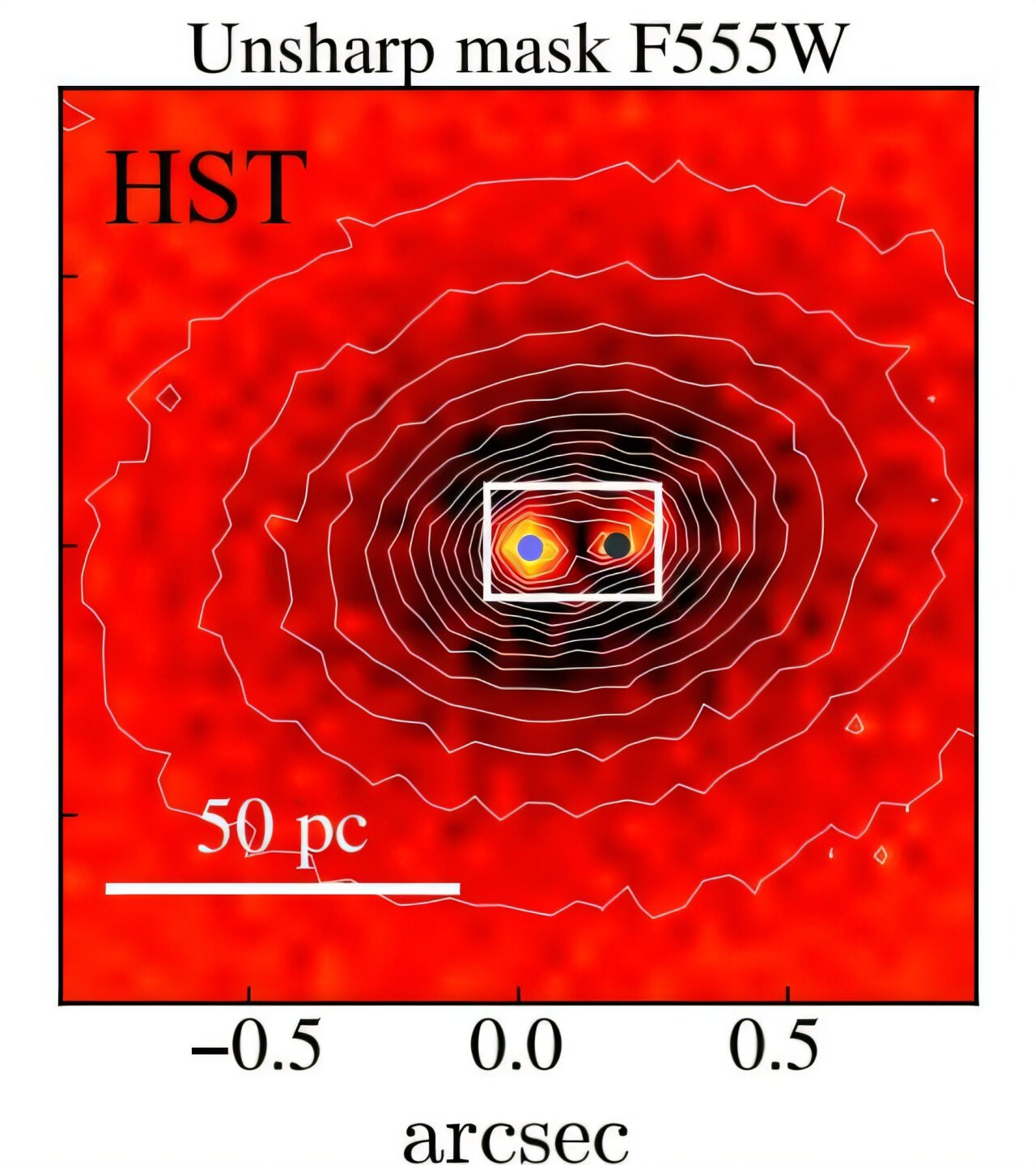
By employing sophisticated photometric and kinematic data, the team closely examined the central region of NGC 4486B, identifying two prominent luminous areas. These observations point to the presence of two compact stellar clusters, which may each be linked to remnants of merging SMBHs.
“In this work, we investigate the photometric and kinematic signatures of the double nucleus in NGC 4486B,” the researchers wrote in the paper.
Add Cosmo Herald as a Preferred Source

Detailed analyses uncovered subtle variations in the stellar motions and luminosity near the galactic core, indicative of gravitational effects from a recently combined black hole duo.
This phenomenon of dual nuclei is seldom seen in nearby galaxies. Once regarded as a stable and mature elliptical galaxy, NGC 4486B now reveals traces of a recent energetic cosmic merger, potentially challenging current perspectives on black hole pairings in aged galactic environments.
Evidence for a Recent Merge of Supermassive Black Holes
Findings suggest that the supermassive black holes at the galaxy’s center merged relatively recently on astronomical timescales. Despite NGC 4486B’s advanced age and closeness to the colossal M87 within Virgo, the observations imply incomplete dynamical settling, preserving signs of this dramatic event.
“Thus, although NGC 4486B is an old, relaxed galaxy near the Virgo cluster center, its SMBH appears to have merged only recently, making its nucleus a rare nearby laboratory for studying post-merger SMBH dynamics,” the authors of the paper concluded.
This discovery places NGC 4486B among a select group of galaxies where scientists can directly investigate the aftermath of black hole mergers—an event typically masked by distance, dust, or elapsed time. Its proximity presents a unique chance to enhance models related to gravitational wave emission and the behavior of stars following such mergers.
Insights Into Galaxy Development Gained From NGC 4486B
The finding highlights the ongoing influence of black hole activity even within galaxies that appear inactive. Each merger between supermassive black holes unleashes vast energy capable of reshaping stellar orbits and modifying the galaxy’s core structure.
Tracking the distinct signs left by these events enables researchers to verify longstanding theories connecting the growth of black holes with galactic collisions. The arXiv preprint server paper proposes that NGC 4486B could become a vital nearby reference point for detailed examination, bridging observational data and theoretical models.
A Unique Window Into Galactic Collision Processes
The implications extend beyond just one galaxy; detecting a double nucleus in NGC 4486B offers valuable evidence for understanding how galaxies, such as the Milky Way, might evolve after their central black holes coalesce. It also supports expectations that future instruments like LISA may soon capture gravitational waves emitted by similar nearby systems.
As survey techniques and simulations improve, NGC 4486B continues to serve as a vivid example that even galaxies with seemingly calm appearances can conceal the dramatic consequences of past cosmic mergers, illustrating the dynamic evolution of the universe.
- Categories:
- Astronomy



0 comments
Sign in to Comment