
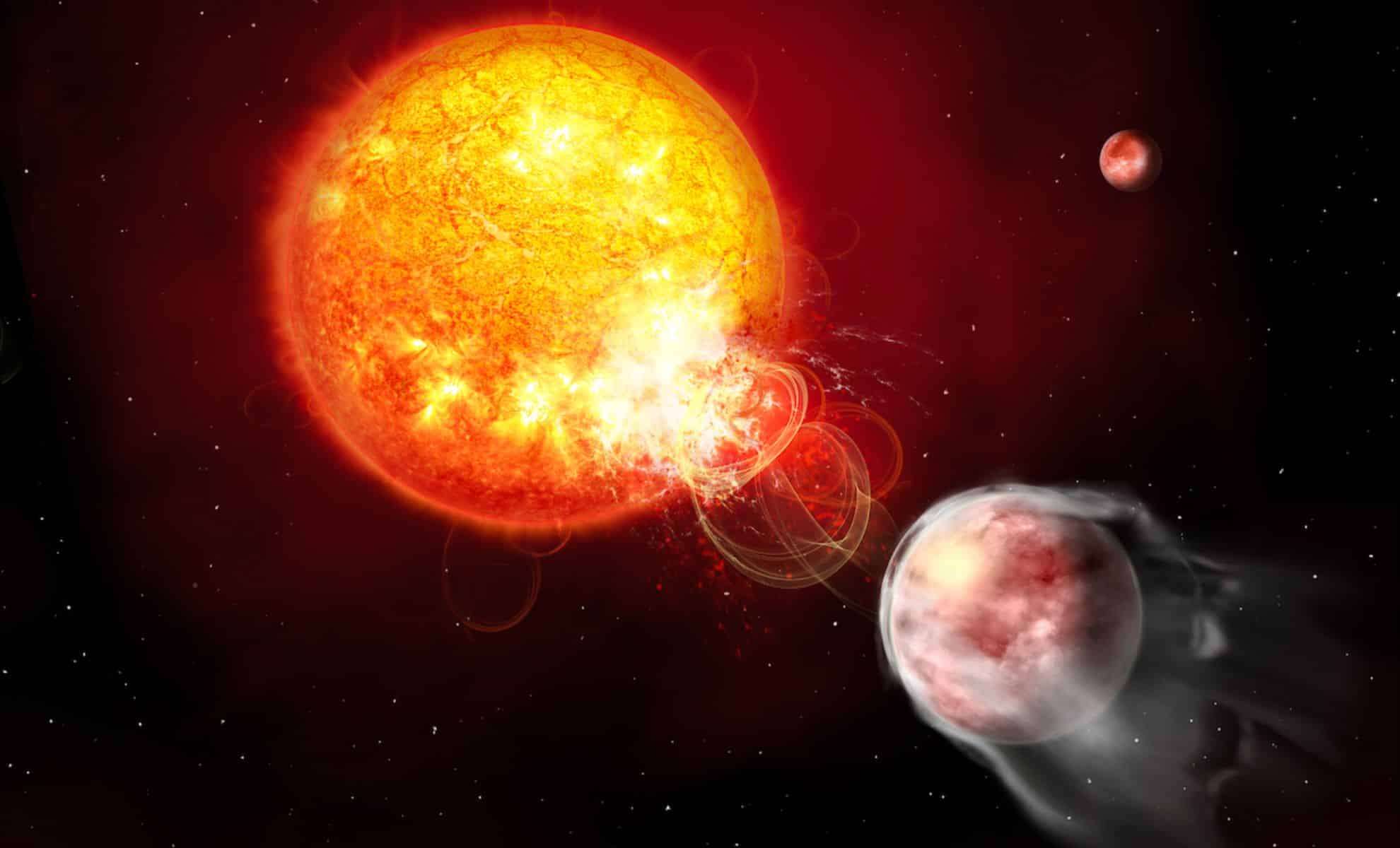
New research has unveiled a striking interaction between a distant planet and its host star that challenges existing ideas about exoplanetary development. Led by astronomer Ekaterina Ilin from the Netherlands, the study published in Nature on July 2, 2025, focuses on HIP 67522 b, a gas giant roughly 400 light-years away. This exoplanet orbits its star every seven days and is so near that it influences powerful stellar flares. These frequent flares and the accompanying radiation are causing the planet's atmosphere to expand beyond typical proportions for its mass, shedding light on how some planets might erode and evolve into smaller, dense worlds like hot Neptunes or sub-Neptunes.
An Unusual Star-Planet Relationship
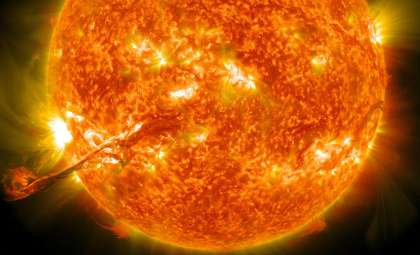
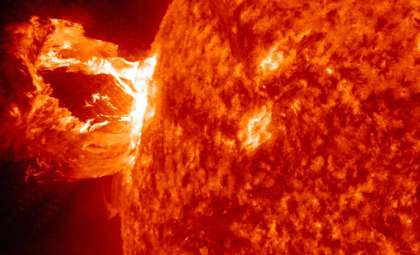
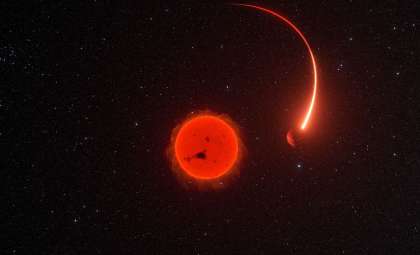
HIP 67522 b orbits unusually close to its star, leading to intense flare activity. Unlike Earth, which is buffered by its atmosphere and greater distance from the Sun, this exoplanet is directly exposed to energetic bursts from its star’s surface. The magnetic interaction between the planet and star intensifies these flare events, making them occur more frequently.
This magnetic bond means the planet endures about six times the radiation it would otherwise receive. Such a severe radiation environment could gradually strip away the atmosphere of HIP 67522 b, potentially reducing its size and transforming its classification from a gas giant to a smaller type of planet.

Atmospheric Expansion and Future Decline
The flares’ impact on HIP 67522 b’s atmosphere is profound. Although the planet’s mass equals just around 5% of Jupiter’s, its atmosphere has swollen to a size comparable to Jupiter itself due to intense stellar heating. Nevertheless, this inflated atmosphere is temporary. Persistent exposure to the star’s flares and radiation will likely erode the planet’s gaseous envelope over millions of years, shrinking it into a hot Neptune or sub-Neptune category—planet types frequently observed elsewhere in our galaxy but absent in our own solar system.
This atmospheric loss will alter the planet’s density and composition, potentially changing its ability to hold onto any remaining gases. Scientists estimate this transformation could occur within 100 million years, emphasizing how stellar radiation drives dramatic shifts in planetary evolution.
Tracking the Phenomenon: Observations and Techniques
Exploring interactions between planets and stars hundreds of light-years away is a complex endeavor. Fortunately, space telescopes like NASA’s TESS (Transiting Exoplanet Survey Satellite) and the European CHEOPS (CHaracterising ExoPlanets Satellite) played vital roles in gathering data over five years. By continuously monitoring HIP 67522 and its planet, these instruments captured both the planet’s transit across the star’s disk and the accompanying flare activity.
The transit method detects the minute dimming of starlight when a planet crosses in front of its star, revealing details about the planet’s size and orbit. In this study, it also recorded sudden increases in brightness caused by stellar flares. Correlating these flare bursts with the planet’s position demonstrated the strong connection between the planet’s magnetic field and the star’s intense activity. The insights gained highlight the fundamental impact this relationship has on the planet’s atmospheric fate.
- Categories:
- News



0 comments
Sign in to Comment