
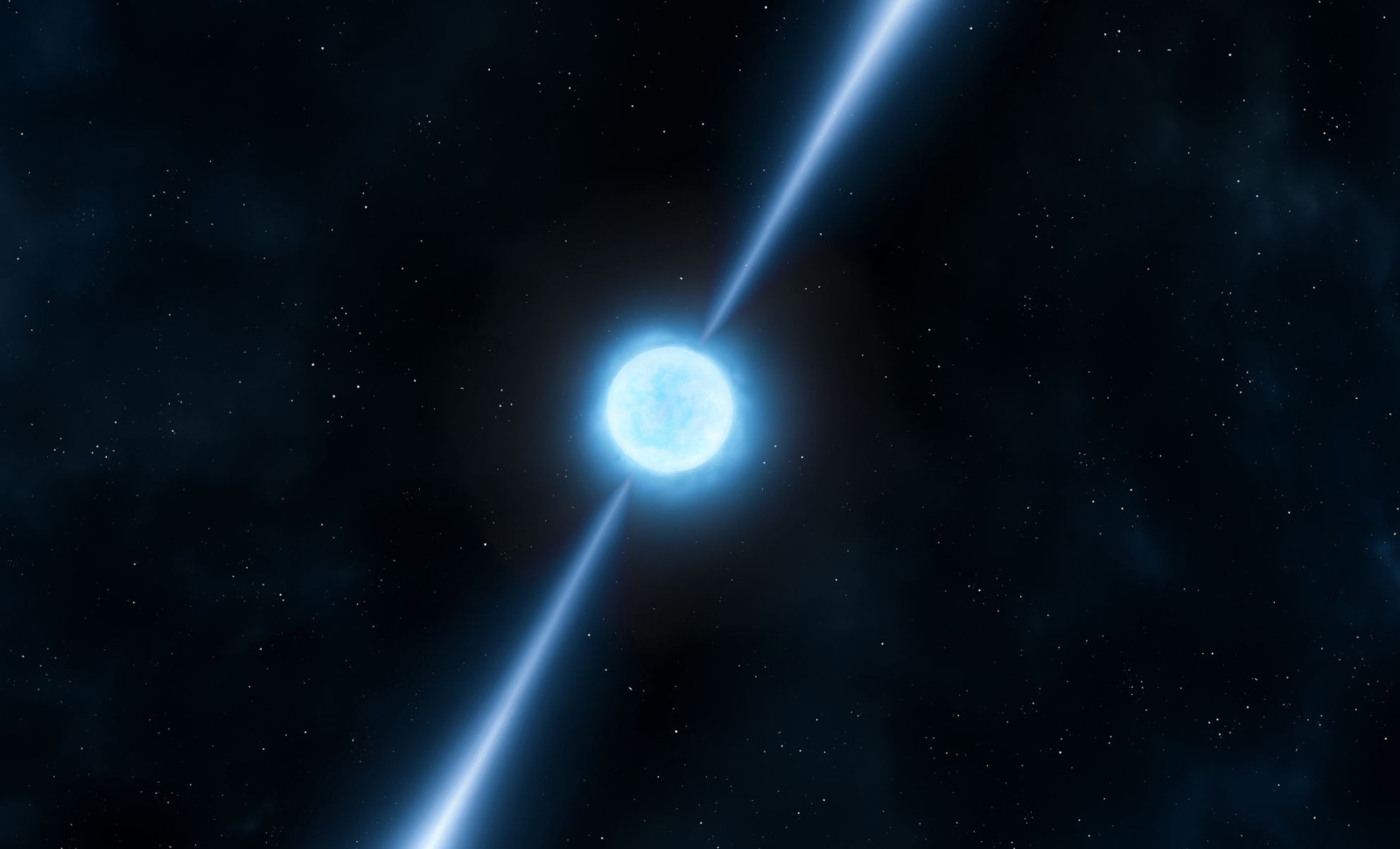
After decades of silence, astronomers have finally detected faint radio emissions from a neutron star previously thought to be radio quiet. Known as 1E 1207.4-5209, this star belongs to a rare group called central compact objects (CCOs)—neutron stars located at the core of supernova remnants that rarely emit detectable radio signals.
Utilizing South Africa’s powerful MeerKAT radio telescope, a research team led by Zhang Lei from the National Astronomical Observatories of the Chinese Academy of Sciences successfully picked up a weak signal from this elusive star. The findings, published on June 25 in Nature Astronomy, reveal that at least one CCO, once thought to be completely silent, is emitting radio waves, either continuously or having recently begun to do so.
Uncovering a Subtle Signal
A neutron star forms when the core of a massive star collapses following a supernova explosion. These newborn neutron stars usually rotate rapidly and have intense magnetic fields, creating focused radio beams. As these beams sweep across Earth, they produce the characteristic flashing signals of pulsars.

CCOs behave differently. Around a dozen are known, but none had been seen emitting radio waves despite extensive monitoring. Scientists theorized their magnetic fields might be too weak to generate such signals. However, the new MeerKAT observations detected radio pulses from 1E 1207.4-5209 every 424 milliseconds, matching its known rotation period exactly. As detailed in Nature Astronomy, the detected radio signal is extraordinarily faint, which accounts for why it went undetected until now.

This neutron star lies roughly 10,000 light-years away within the Milky Way, at the heart of a supernova remnant created more than 4,100 years ago.
Could a Spin Glitch Explain the Revival?
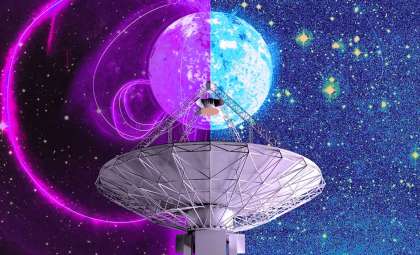
Astronomer Li Di from Tsinghua University affectionately named the object the “Blue Eye Pulsar.” This nickname arises from the combination of vivid X-ray imagery alongside its newly detected radio emission, giving the star an appearance akin to a glowing blue eye.
The neutron star experienced an unusual event in 2015 when X-ray data revealed a sudden change in its spin rate known as a spin glitch. Such glitches occur due to sudden internal rearrangements of material within the neutron star.
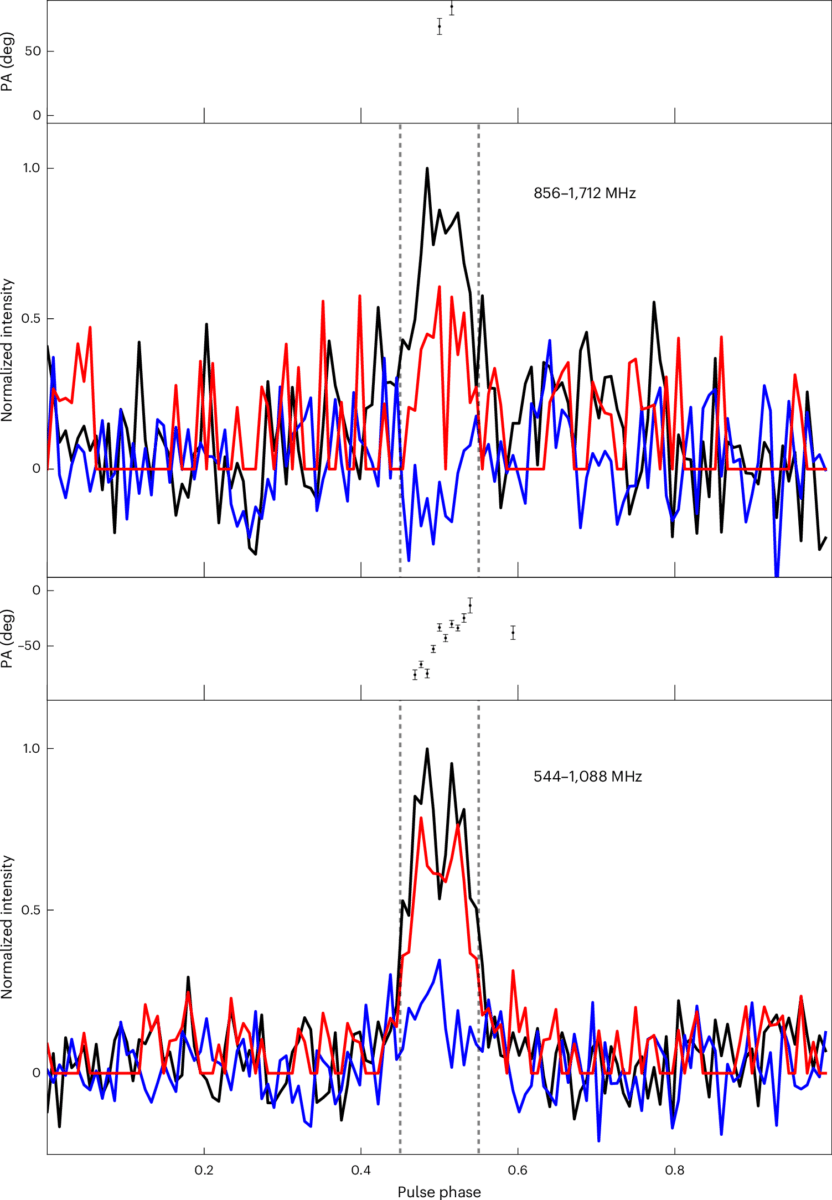
The team suggests that this glitch may have altered or boosted the star’s magnetic field or its orientation, potentially activating or enhancing radio wave emission. Alternatively, it might have simply made a previously too-weak signal detectable by current instruments.
The researchers note that if the neutron star’s spin slows back to its prior rate, the radio signal may weaken or vanish once again. Ongoing observation campaigns will clarify if this fading occurs.
Shedding Light on Missing Pulsar Mysteries
This discovery has profound implications beyond just one neutron star. It hints that many more pulsars within the Milky Way might be hidden due to their faint radio emissions. The findings also raise the possibility that some pulsars previously classified as old could instead be younger sources with exceptionally weak radio signals.
The concept could help explain why some supernova remnants seem devoid of pulsars. For instance, indirect evidence strongly indicates a neutron star resides within the Supernova 1987A remnant in the Large Magellanic Cloud, even though no radio pulses have been detected.
Ultimately, this research proves that at least one central compact object once regarded as radio silent is capable of generating detectable radio waves. For astronomers hunting for hidden neutron stars, this faint signal opens new avenues of exploration with significant ramifications.
- Categories:
- Astronomy









0 comments
Sign in to Comment