
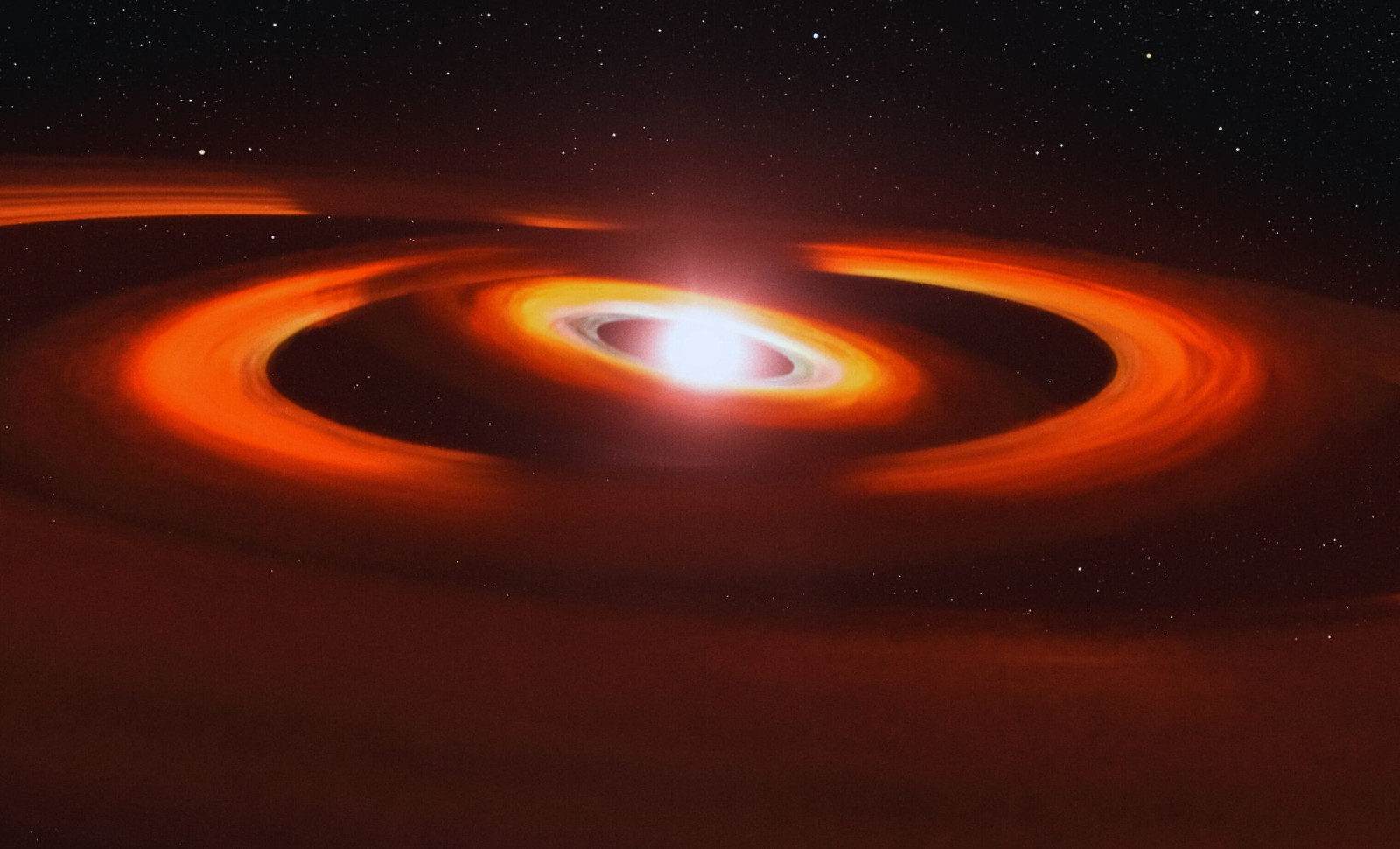
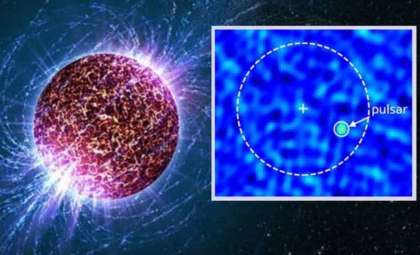
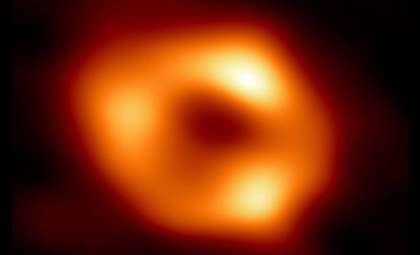
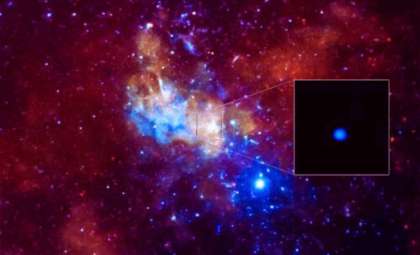
Scientists have detected a rapidly spinning pulsar, rotating every 8.19 milliseconds, in close proximity to Sagittarius A*, the gigantic black hole anchoring the Milky Way. If verified, this pulsar could become a crucial tool for examining Einstein’s General Relativity under some of the universe’s most intense conditions.
This pulsar candidate emerged from the Breakthrough Listen Galactic Center Survey, an initiative seeking pulsars and extraterrestrial communications in the galaxy’s core. Led by Karen I. Perezat Columbia University, the team proposes this discovery might function as an exceptionally precise cosmic timekeeper.
The Role of Pulsars’ Stable Emissions in Cosmic Measurements
Pulsars are compact stellar remnants that emit tightly focused beams of radiation as they rotate. These beams produce highly consistent pulses observable from Earth, earning pulsars the nickname “cosmic clocks.” Millisecond pulsars, spinning faster than typical pulsars, are particularly valuable for high-precision astronomical observations.

Studying pulsars near Sagittarius A* has been challenging due to the chaotic environment around the black hole. The team from Columbia University states that the Breakthrough Listen Galactic Center Survey is among the most sensitive radio explorations done in this tumultuous region, aiming to detect pulsars despite intense disturbances.
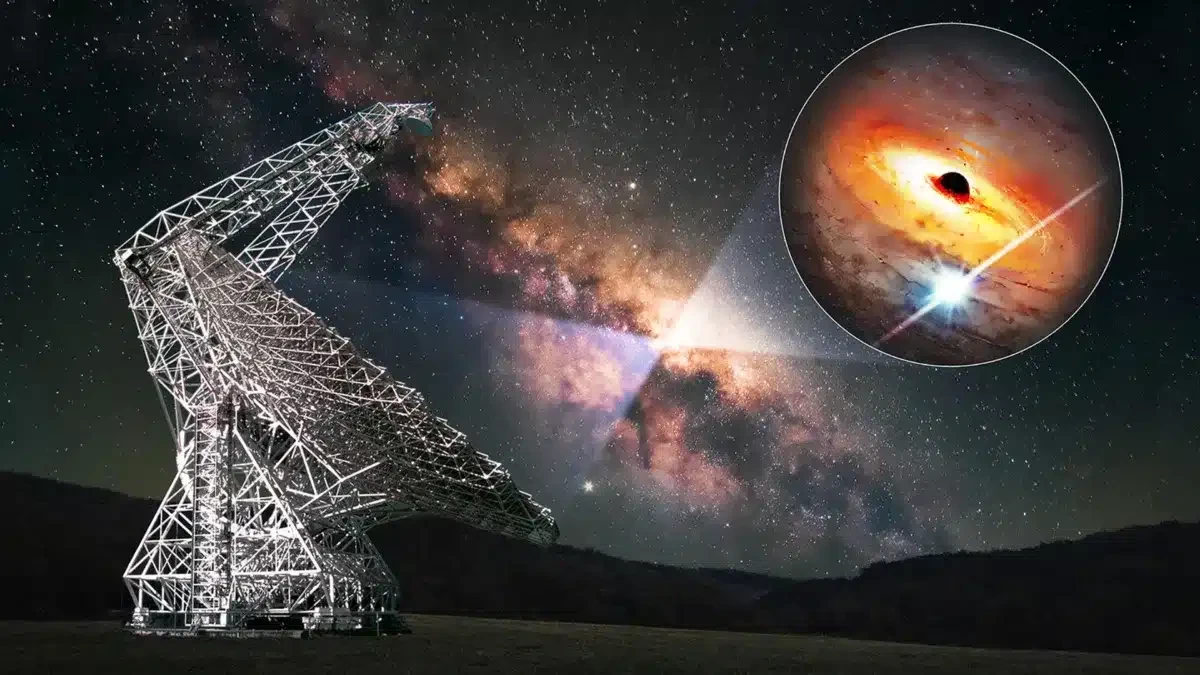
Testing Einstein’s Predictions Near a Supermassive Black Hole
This finding, detailed in The Astrophysical Journal, opens a rare door to assess Einstein’s General Theory of Relativity close to a supermassive black hole. Sagittarius A*, weighing approximately four million Suns, creates immense gravitational effects on its surroundings. Co-author Slavko Bogdanov from Columbia University explains:
“Any external influence on a pulsar, such as the gravitational pull of a massive object, would introduce anomalies in this steady arrival of pulses, which can be measured and modeled.”
Monitoring pulse timings near such a powerful gravitational source could provide fresh understanding of gravity under extreme circumstances. This represents an extraordinary chance to evaluate elements of General Relativity never before accessible in such intense gravitational fields.
Encouraging Global Scientific Collaboration
Recognizing the significance of their discovery, researchers have initiated additional observations to verify the pulsar’s characteristics. To foster worldwide cooperation, the Breakthrough Listen team has made all related data publicly accessible.
This open approach encourages scientists everywhere to independently examine the results and pursue complementary studies. Karen I. Perez, the study’s lead, expressed enthusiasm for the insights future data may bring.
“We’re looking forward to what follow-up observations might reveal about this pulsar candidate,” Perez said. “If confirmed, it could help us better understand both our own Galaxy, and General Relativity as a whole.”
- Categories:
- Astronomy







0 comments
Sign in to Comment