
The cosmos holds innumerable celestial bodies and events, many of which remain unseen by conventional optics. While standard optical telescopes capture only a fraction of cosmic activity, observing the universe through low-frequency radio waves opens a new window to explore the hidden depths of space. A groundbreaking study published in Astronomy & Astrophysics has successfully cataloged 13.7 million celestial sources, marking a significant advancement in this quest.
Ten Years of Global Teamwork and Advances in Radio Surveying
The LOFAR Two-Meter Sky Survey (LoTSS-DR3) is the result of more than ten years of dedication by a multinational group of scientists and engineers. This expansive data collection, built on extensive observing time and rigorous analysis, offers an extraordinary level of detail in viewing the sky at low radio frequencies.
“This data release brings together more than a decade of observations, large-scale data processing and scientific analysis by an international research team,” says Dr. Timothy Shimwell, lead author and astronomer at ASTRON and Leiden University, Netherlands.
Add Cosmo Herald as a Preferred Source

Experts from countries including the Netherlands, Germany, France, and the United Kingdom have contributed to this effort, which centers on the LOFAR network—an array of radio antennas scattered across Europe with separations reaching nearly 2,000 kilometers. This distinctive framework establishes LOFAR as one of the largest and most sensitive radio telescope systems available, resulting in not only a scientific landmark but also a symbol of successful international collaboration addressing the frontiers of astronomy.
The survey’s success was heavily reliant on pioneering approaches for handling the enormous volume of data—18.6 petabytes—and overcoming obstacles such as atmospheric distortions of the ionosphere. These efforts have culminated in exceptionally clear and detailed radio images that characterize today’s LoTSS-DR3 release.
Delving Into Supermassive Black Hole Activities
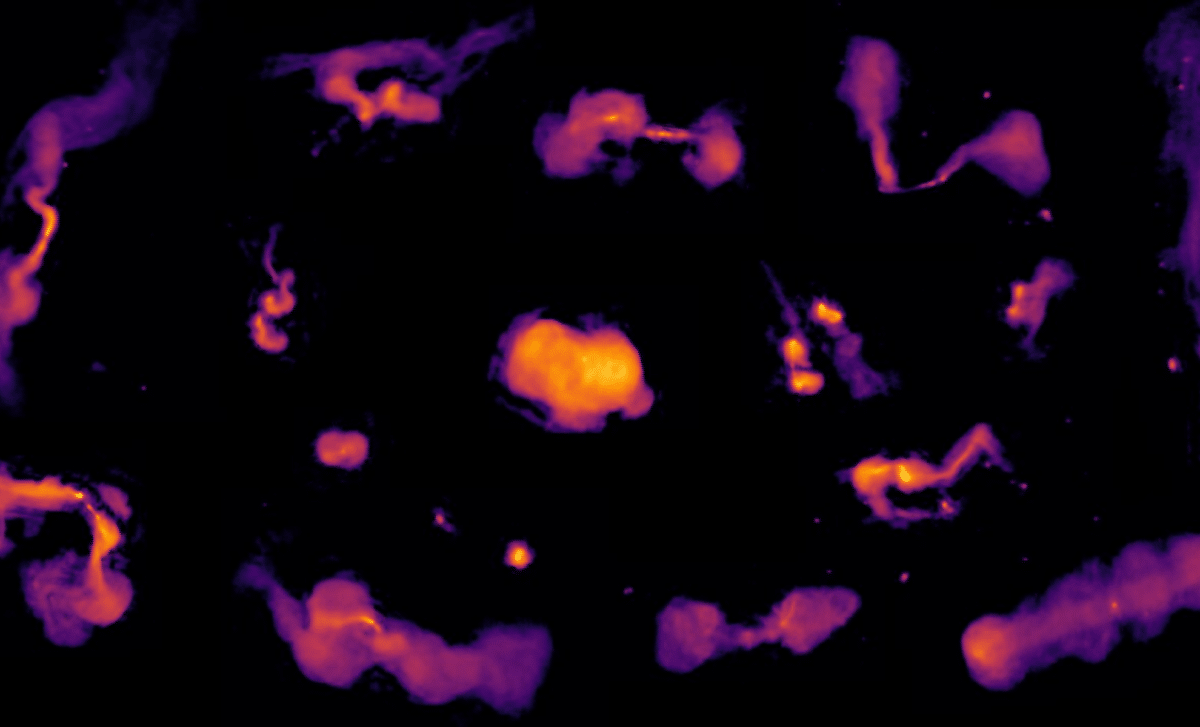
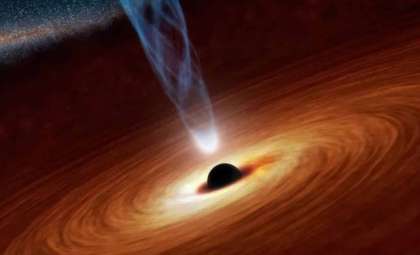
The LoTSS-DR3 survey provides unprecedented insights into supermassive black holes and their expansive radio jets. Residing at the cores of many galaxies, these black holes emit radio waves that extend across millions of light-years, revealing critical information about their properties and developmental phases.
“We can study a diverse population of supermassive black holes and their radio jets at different stages of their evolution, showing how their properties depend not only on the black hole itself, but also on the galaxy and environment in which it resides,” explains Prof. Martin Hardcastle of the University of Hertfordshire, U.K.
The survey’s ability to capture such intricate details of these black holes is allowing scientists to better understand how the surrounding galaxy influences the behavior of these cosmic giants. By observing their jets and emissions, the survey also offers new insights into the mechanics of energy transfer and particle acceleration in these extreme environments, deepening our understanding of high-energy astrophysics.
Findings like these have the potential to reshape existing models of galactic evolution and the growth trajectories of supermassive black holes, offering fresh perspectives on how these colossal entities evolve over billions of years.
Unveiling Rare Cosmic Entities
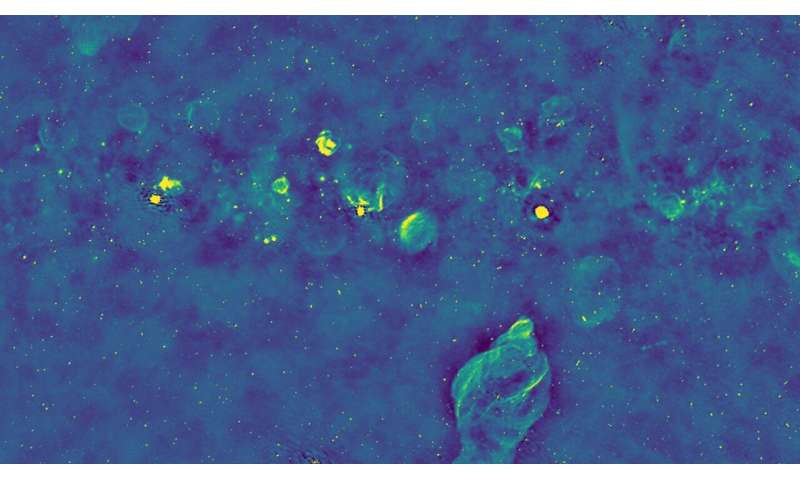
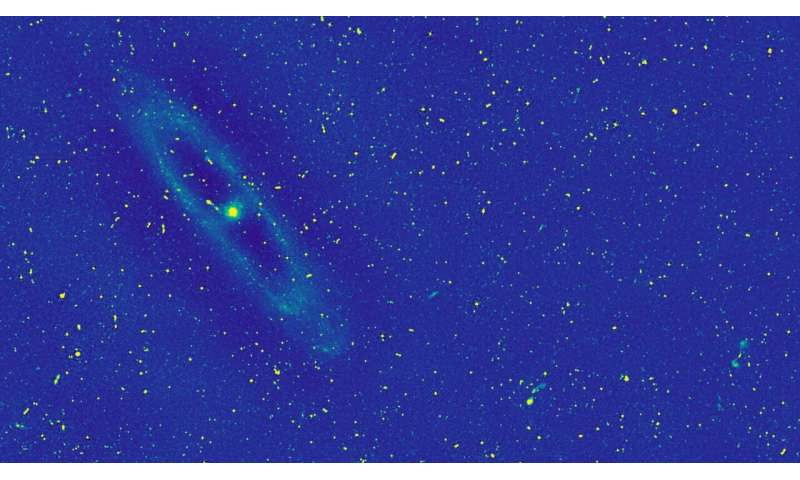
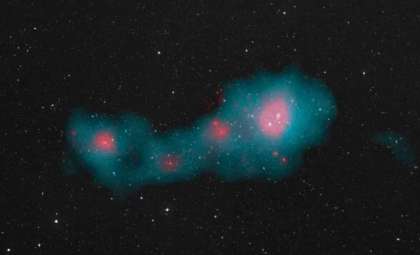
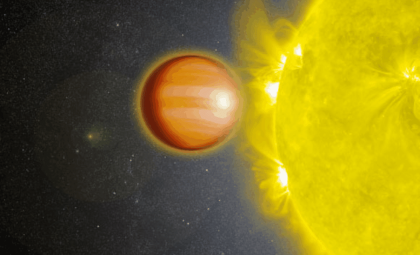
Beyond studying black holes, the LoTSS-DR3 data has exposed several seldom-seen cosmic phenomena, including faint remains of supernovae, colliding clusters of galaxies, and potential radio signals from exoplanet-star interactions. These findings underscore the diversity of cosmic systems detectable through low-frequency radio techniques.
“By studying many galaxy clusters, we can show that giant shocks and turbulence drive particle acceleration and strengthen magnetic fields across millions of light-years, something we now see to be happening far more than previously anticipated,” says Dr. Andrea Botteon of INAF in Bologna, Italy.
Published in Astronomy & Astrophysics, this research highlights the significant role cosmic turbulence has in shaping environments over colossal distances and suggests that particle acceleration incidents are more frequent, paving new paths for exploring cosmic ray physics and behaviors of energetic particles.
These revelations emphasize the critical contribution of the LoTSS-DR3 survey to expanding the frontier of knowledge about the universe’s most energetic and dynamic regions.
Surmounting Technical and Computational Barriers
Handling the huge data outputs from the LOFAR telescope required addressing severe challenges, particularly compensating for distortions caused by Earth's ionosphere. Custom-developed algorithms now allow the team to generate ultra-high-resolution images of the low-frequency radio sky.
“The software challenge was enormous,” says Dr. Cyril Tasse of the Paris Observatory, who led the algorithm development. “It took years to design, refine and optimize the algorithms, but they now allow us to routinely produce extremely sharp and detailed images of the low-frequency radio sky, and hunt for time-variable signals from stars and exoplanets.”
Thanks to these enhancements, beyond improving image clarity, the astronomers have gained the capability to detect fleeting phenomena such as stellar flares and signals from exoplanets, ushering in a new era for observing the cosmos's changing nature across both space and time.
- Categories:
- Astronomy






0 comments
Sign in to Comment