
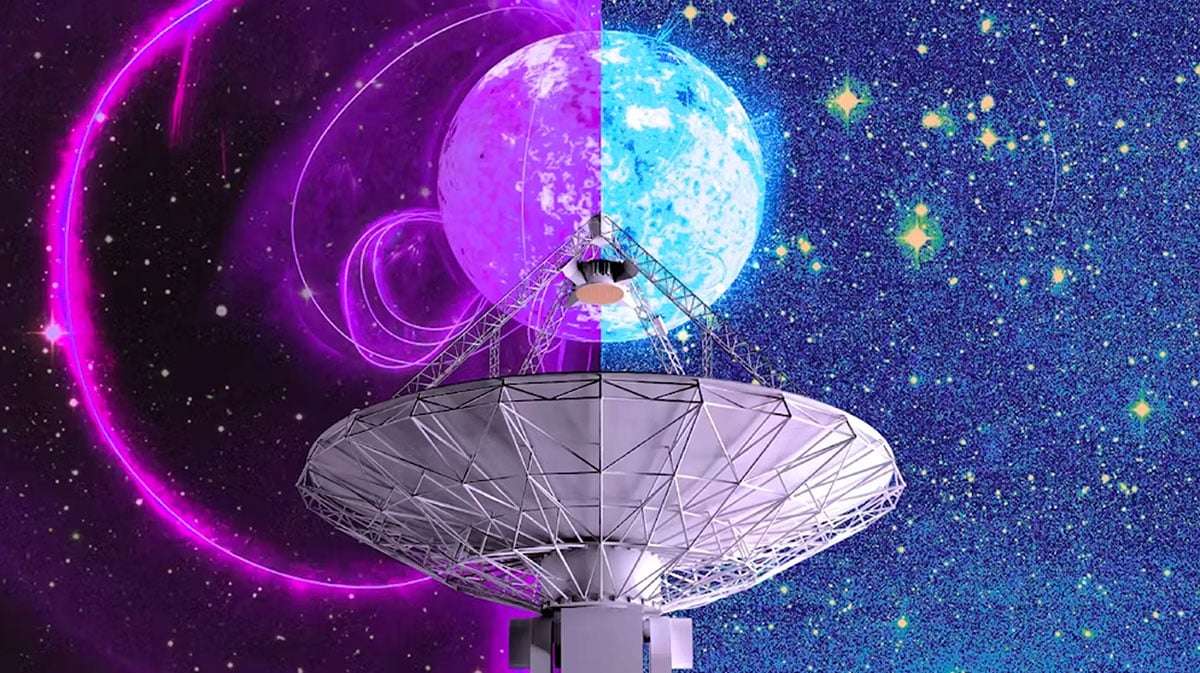
The ASKAP radio telescope located in Australia has uncovered an exceptional signal, officially named ASKAP J1935+2148. This phenomenon is remarkable due to its precision timing, recurring at exact 53.8-minute intervals. What makes it even more puzzling is the presence of three unique emission modes:
- Intense bursts lasting between 10 and 50 seconds featuring linear polarization
- Short-lived weak pulses around 370 milliseconds with circular polarization
- Intervals where no emission is detected at all
Leading researcher Dr. Manisha Caleb highlights the distinctive nature of this finding: “This object's exhibition of three radically different emission states, each with its own unique characteristics, is truly remarkable.” The MeerKAT radio telescope in South Africa was instrumental in verifying that all varied signals arise from the same cosmic source.
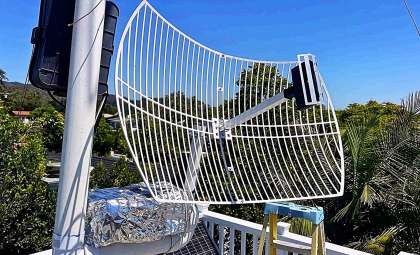
For enthusiasts intrigued by such extraordinary phenomena, consider constructing your very own radio telescope at home to capture signals from across the cosmos and possibly aid in future scientific breakthroughs by visiting this guide.

Revisiting astrophysical assumptions
Scientists are currently debating whether this signal originates from either neutron stars or white dwarfs. Both are stellar remnants but differ considerably in nature. Below is a summary comparing their key features:
Although neutron stars usually spin much faster than the 54-minute interval observed, white dwarfs could match this slower rotation. However, there is currently no known process that explains how white dwarfs could generate such intricate radio emissions.
Investigating theories and future consequences
The astrophysics community has proposed several hypotheses to decode this intriguing radio signal. One idea involves interactions between the magnetic fields of neutron stars and turbulent plasma streams, yet this does not fit well with the unusually slow rotational period detected.
Another captivating theory suggests the existence of a “white dwarf pulsar,” a theoretical entity combining traits of both white dwarfs and pulsars. To date, this type of object remains hypothetical and unconfirmed by observations.
Dr. Caleb emphasizes the broader significance of this finding, which may encourage a reevaluation of our established views of neutron stars and white dwarfs, particularly concerning:
- How these remnants generate radio waves
- Their varied populations within the Milky Way
- Possibility of discovering novel subcategories of stellar remnants
Previous discoveries of repeating radio signals, such as one cycling every 18 minutes, have also defied explanation. The discovery of this 54-minute repeating pulse adds fresh complexity to the discussion.
Next steps in decoding the cosmic mystery
Ongoing and future observations with ASKAP and MeerKAT telescopes will be vital to understanding this unusual emitter. More powerful observatories like the Square Kilometre Array (SKA) and the Very Large Array (VLA) may also be key players in collecting more detailed data to solve this astrophysical puzzle.
While some might speculate about alien origins, the research community stresses that natural astrophysical explanations remain overwhelmingly likely. This discovery shines a light on how much remains unknown about our universe and highlights the exciting potential for discoveries that challenge our fundamental understanding of astrophysics.
As we delve deeper into cosmic research, it becomes increasingly evident: the universe continues to astonish with its complexity and marvels. This hourly radio pulse from space stands as a beacon of the many mysteries yet to be unraveled, inspiring future scientists to pursue the vast enigmas of the cosmos.
- Categories:
- Astronomy










0 comments
Sign in to Comment