
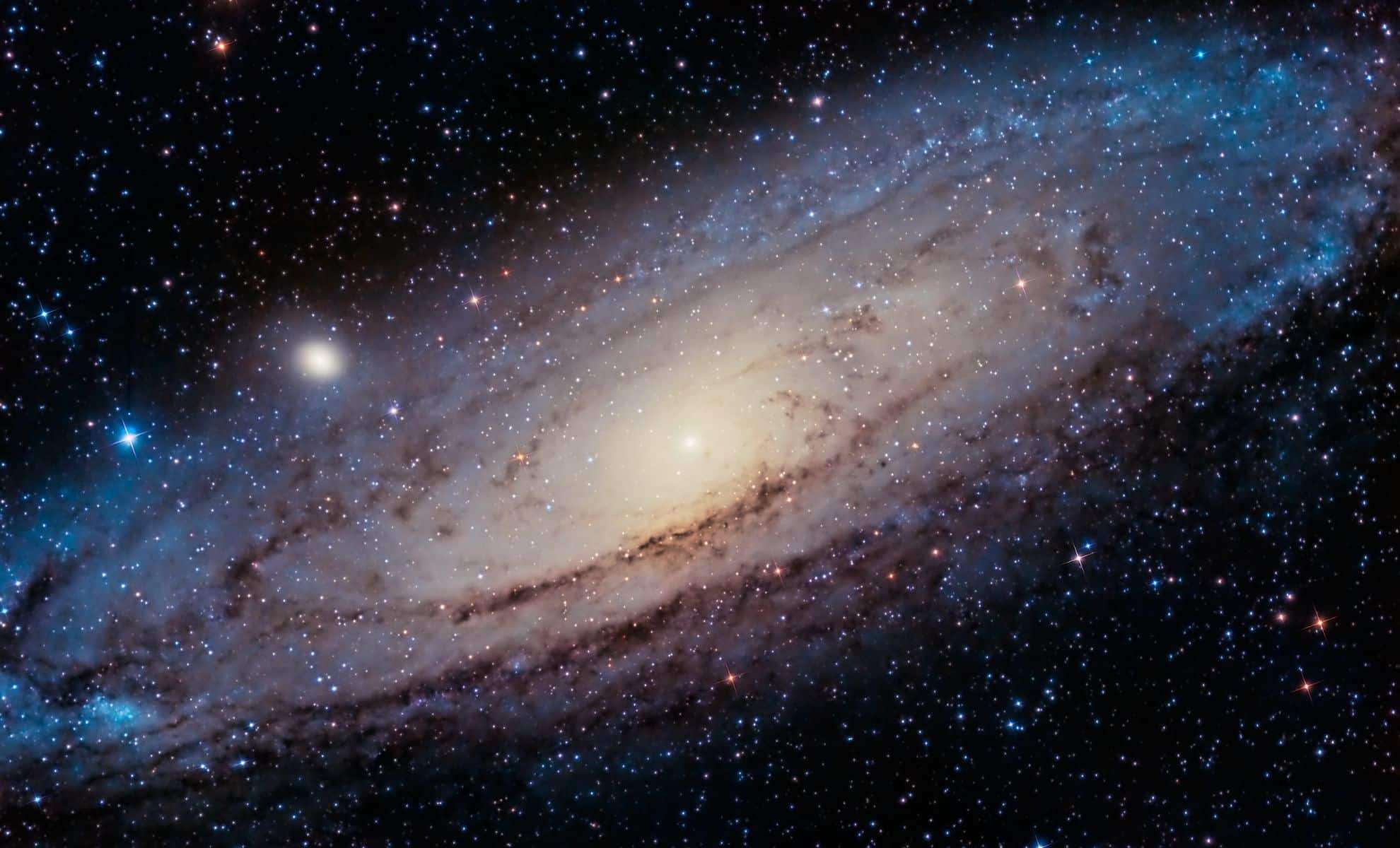
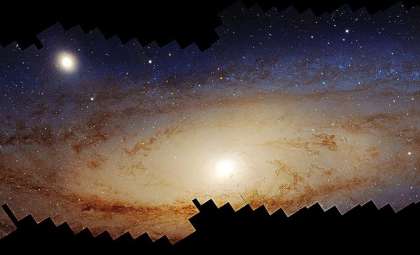
Miguel Claro, an expert astrophotographer and science advocate, has captured an extraordinary image of the Andromeda Galaxy, showcasing the luminous gas clouds enveloping this grand spiral galaxy. The photo was taken at the Dark Sky Alqueva Observatory located in Cumeada, Portugal, highlighting the intricate beauty of M31.
A Five-Year Quest to Revisit Andromeda
Claro’s fascination with the Andromeda Galaxy started in 2020 when he first captured images using a DSLR.
His newest effort was motivated by the earlier discovery of an oxygen-III (OIII) emission arc by Strottner-Drechsler-Sainty and involved a fresh compositional strategy—rotating the framing to direct focus and amplify the galaxy’s core brightness without distorting its natural appearance.

Spanning roughly 220,000 light-years in diameter, Andromeda is the biggest galaxy in the Local Group, which houses our Milky Way, the Triangulum Galaxy, and numerous smaller galaxies. Claro’s image blends scientific content with artistic flair, bringing this massive star system into vivid focus.
Revealing Subtle Galactic Details through Ha-OIII Filtering
The impressive photograph is composed from nearly 80 hours of exposure, utilizing a dual-band filter that detects hydrogen-alpha (Ha) and oxygen-III (OIII) emissions. This approach uncovers the faint ionized hydrogen gas enveloping Andromeda, visible as vibrant hues across the galaxy’s structure.
The intense hydrogen-alpha emissions highlight star-forming areas, while the delicate oxygen-III signals, though too weak to distinctly display the new arc in this image, hint at complex features within the galaxy.
Despite using advanced One Shot Color (OSC) cameras, the OIII arc remained too subtle for the final photo. However, some OIII emission spotted along the galaxy's arms may indicate multiple planetary nebulae are present.
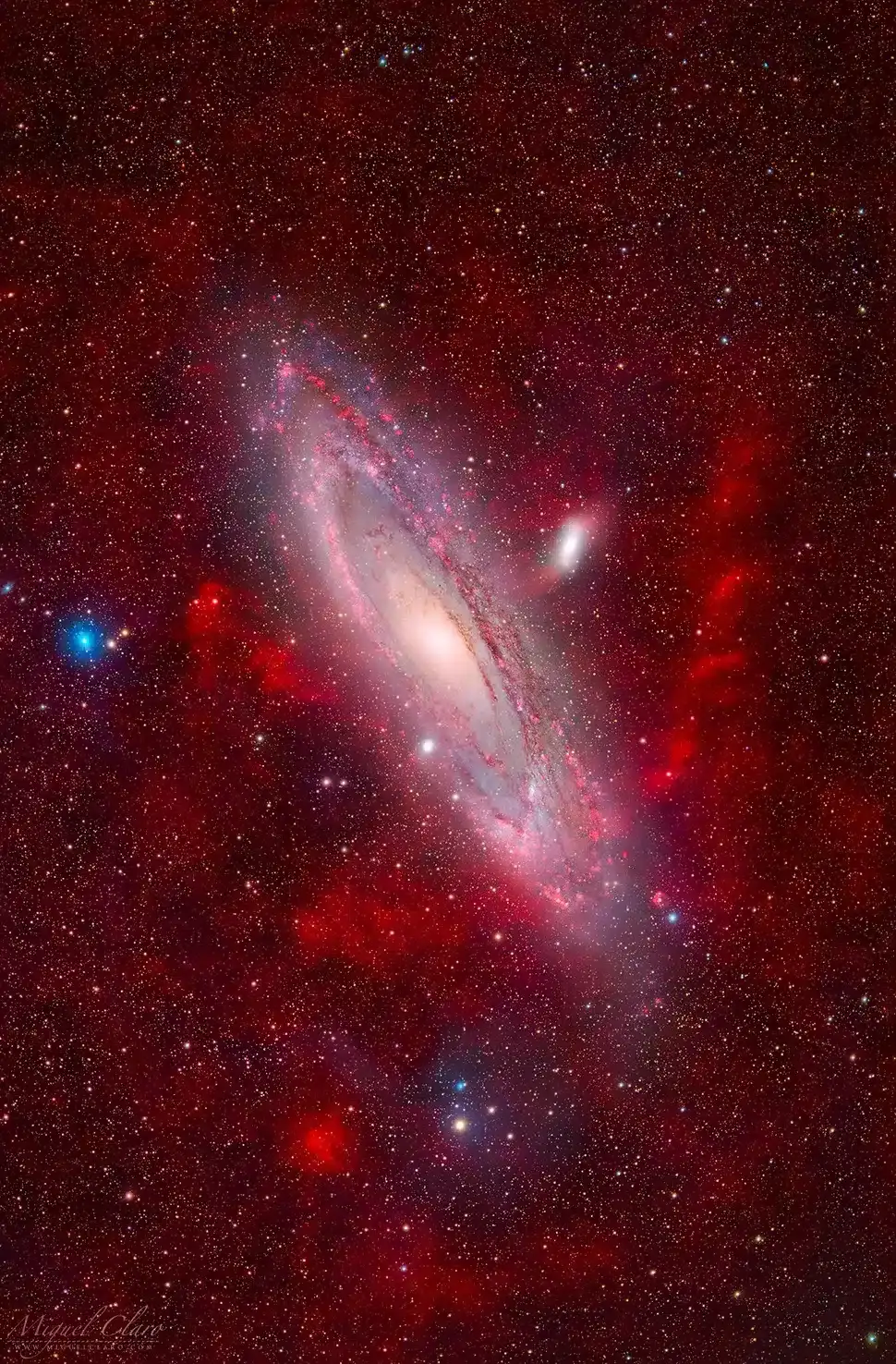
Foreground Glow from the Milky Way
The bright cloud formations seen in the forefront of the image are part of our own Milky Way Galaxy, accompanied by colorful stars that belong to our galactic neighborhood.
The spiral arms of Andromeda usually visible under optical light, reveal a ring-like shape in ultraviolet light. This morphology likely resulted from a collision with the smaller elliptical galaxy M32 more than 200 million years ago.
Claro’s contributions not only highlight the stunning aesthetic of distant galaxies but also support ongoing studies examining the formation and evolution of these cosmic giants.
His roles as a European Southern Observatory Photo Ambassador and a member of The World At Night reflect his dedication to bridging the gap between artistry and astronomical research.
A Celebration of Cosmic Wonders
Captured beneath the exceptional Dark Sky Alqueva Reserve, this image is the culmination of dedication, teamwork, and a sincere passion for sharing the splendor of the universe.
In collaboration with fellow astrophotographer Yann Saint, Claro chose to omit incomplete data sets, delivering a final image that is both scientifically insightful and visually captivating.
- Categories:
- Astronomy






0 comments
Sign in to Comment