
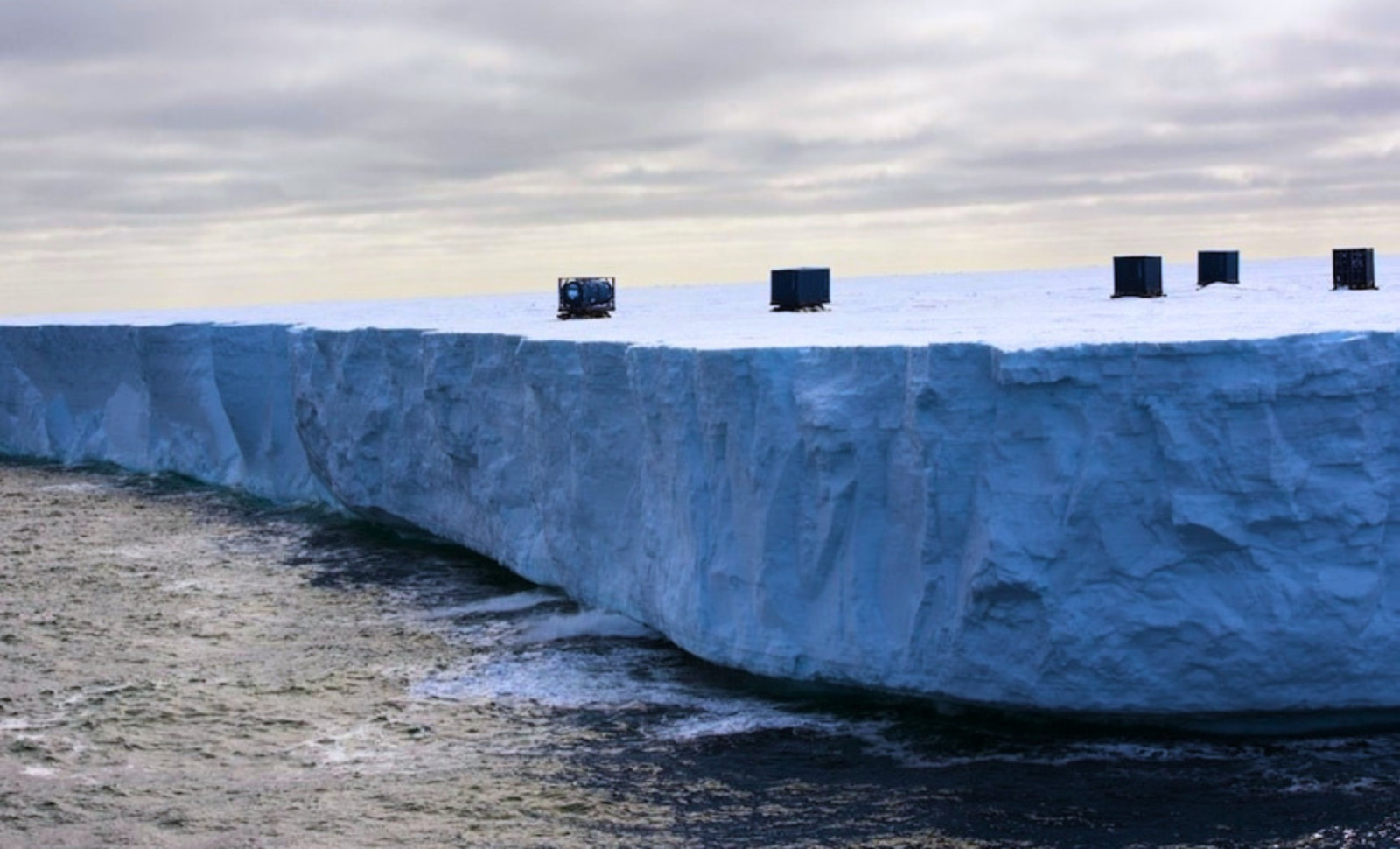
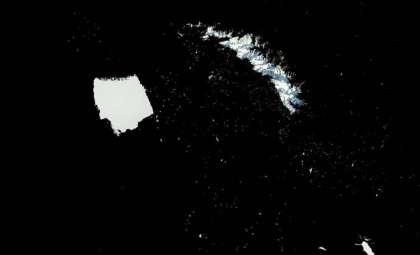
Viewed from above, seven shipping containers resembled tiny specks scattered across a vast white expanse. However, satellite imagery later revealed a far more alarming scenario: several large cargo containers, including one loaded with 9,500 liters of diesel fuel, drifting atop a colossal ice floe near Antarctica.
The event unfolded in mid-January 2026 at Germany’s Neumayer Station III, a research facility situated on an ice shelf about 18 kilometres inland from the Weddell Sea. Station personnel had relocated seven containers a short distance from the shoreline, preparing them for a scheduled removal by ship. At the time, there were no visible signs of cracks or weaknesses in the ice, as reported officially at the Antarctic Treaty Consultative Meeting in Hiroshima, Japan.
That changed dramatically following a relentless week-long storm. German Antarctic authorities and the Alfred Wegener Institute (AWI) issued a report detailing the events.

Extreme Weather, Ice Calving, and an Unexpected Discovery
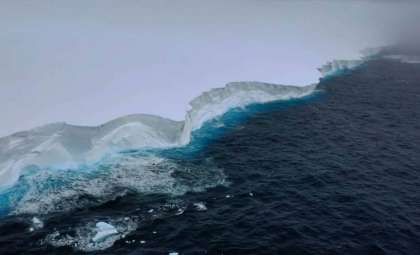
Between January 13 and 20, powerful winds reaching 130 kilometres per hour battered the area. When conditions cleared on January 21, the logistics team inspected the coastline only to find an enormous chunk of the Antarctic ice shelf had recently broken away into the ocean.
“The logistics team discovered that an iceberg measuring around 500 metres by 300 metres had broken off and drifted into the Weddell Sea,” the AWI account confirmed, as also reported by ABC News. “Unfortunately, all of the … containers were on this iceberg.”
These containers held various items including operational supplies and waste scheduled for removal. One contained 9,500 liters of Arctic diesel fuel. Four held non-hazardous trash and domestic goods. Another housed a generator and associated fuel, while the last served as a temporary workers’ shelter.
German authorities considered deploying an aircraft to locate the lost cargo, but the following day crew members aboard the icebreaker RV Polarstern spotted the iceberg and its contents. The vessel immediately halted scientific activities and began moving towards the drifting ice mass, which had traveled approximately 140 kilometres southeast of Neumayer Station’s ice port.
Glaciologists Evaluate the Iceberg Before Recovery Efforts
Prior to any recovery, Polarstern’s glaciology team conducted a thorough survey of the iceberg’s structure. They determined it measured 81 metres in thickness overall, with about 15 metres of the ice protruding above sea level.
This analysis indicated certain areas were sufficiently stable to safely support a small landing party. Helicopter teams commenced evacuating materials from the ice, successfully retrieving nearly one tonne of equipment. This included three drums containing roughly 580 liters of Arctic diesel, along with gas cylinders and batteries, according to records from the RSOE EDIS emergency monitoring system.
However, time was limited. “As the risk of the iceberg breaking apart increased, it was impossible to secure more of the cargo without risking human life,” the report noted. Recovery operations ceased on January 25, leaving the remaining containers behind.
The Iceberg Disintegrates and Diesel Pollutes the Waters
Satellite data captured images of the iceberg for the last time on February 22. It then disappeared from observation systems. The report concluded plainly: “It can be assumed that the iceberg has disintegrated shortly afterwards and that the containers have sunk to the seabed.”
Environmental assessments followed. The four containers holding household waste were deemed to pose “little direct impact on the ecosystem.” In contrast, the diesel container raised serious concerns. Authorities believe the fuel did not remain contained.
“It can be assumed that it was either damaged by the fall into the sea or imploded on its way to the sea floor,” the document explained. “In both cases, the diesel will have leaked out.”
Unlike heavy marine fuels, Arctic diesel is lighter and more volatile, potentially evaporating faster when exposed. Yet, Antarctica’s frigid environment hampers rapid natural degradation, as low temperatures slow microbial breakdown in both seawater and ice.
“It can therefore be assumed that the fuel will remain in the system for a longer period of time,” the report added. It also cautioned that “The actual impacts on the ecosystem depend to a large extent on local conditions and therefore cannot be precisely quantified.”
Germany Accepts Responsibility and Updates Safety Protocols
At the Antarctic Treaty meeting, German officials and the AWI openly acknowledged the mishap. “The German government and the AWI deeply regret the incident and are glad that no-one was injured,” their statement declared.
As a direct consequence, new procedures mandate that containers awaiting pickup must be stationed at least 5,000 metres away from the ice shelf edge, replacing the previous practice of staging cargo only a few hundred meters from the coastline.
The AWI also pledged to conduct more extensive glaciological surveys along the full route from Neumayer Station III to the ice port. These studies aim to assess ice thickness and structural integrity to identify areas susceptible to unexpected calving, even in the absence of surface signs.
This report, presented at the annual Antarctic Treaty Consultative Meeting which concluded in Hiroshima, now serves as a case study illustrating the vulnerabilities of operating research outposts on unstable ice, where severe weather can reshape the coastline and sweep cargo away into the Southern Ocean within days.
- Categories:
- News







0 comments
Sign in to Comment