
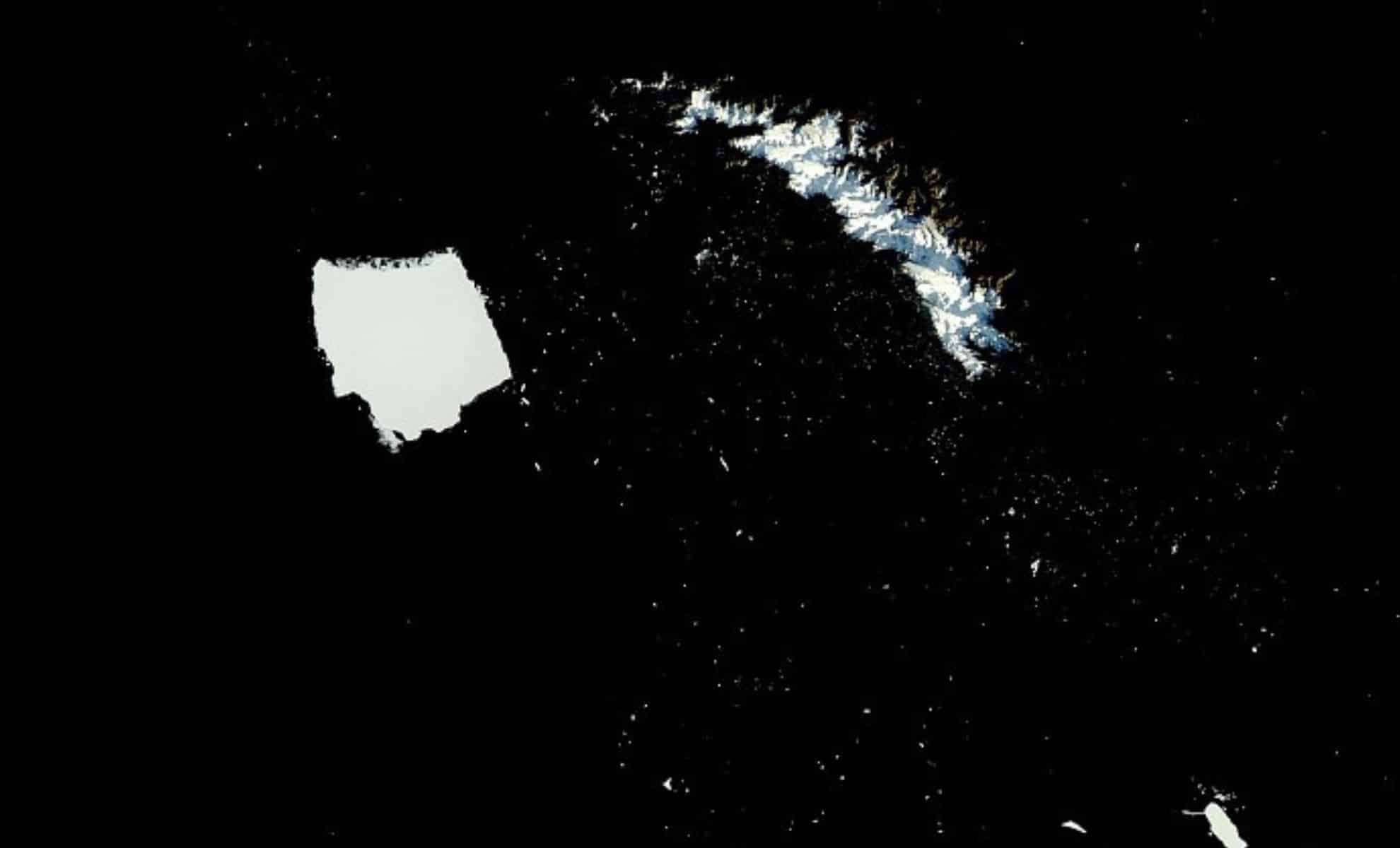
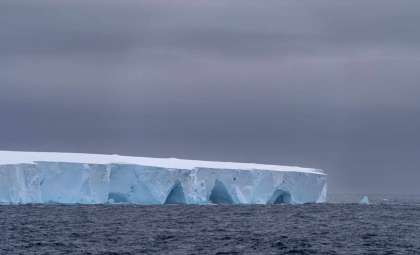
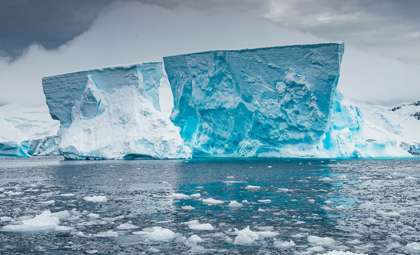
The enormous iceberg known as A-23A, currently the largest floating block of ice worldwide, is gradually fragmenting near South Georgia Island in the South Atlantic Ocean. Although this ice giant covers vast territory, it is steadily diminishing as natural forces erode its once-unbroken perimeter.
Detailed in a NASA Earth Observatory report dated May 3, 2025, satellite data reveal A-23A has been stationary near South Georgia since early March. Despite minimal movement, the iceberg’s dimensions have changed drastically, losing more than 360 square kilometers of ice — roughly double the size of Washington, D.C. — within two months.
The Stationary Titan Undergoing Decline
Unlike many drifting icebergs, A-23A remains anchored, presumably stuck on a shallow underwater platform around South Georgia Island. These underwater formations frequently trap Antarctic icebergs traveling toward warmer waters. Having separated from the Filchner Ice Shelf in 1986, the iceberg has floated in Southern Ocean waters for almost 40 years, yet signs indicate its final stages may have begun.

“The berg’s underside is most likely lodged on a shallow underwater shelf around South Georgia, known in the past to have snagged several Antarctic icebergs on their northward drift into warmer South Atlantic waters,” wrote Kathryn Hansen in the NASA Earth Observatory article. The current stalling of A-23A aligns with well-documented patterns where large icebergs become temporarily fixed in this region before eventually melting away.
Deterioration at the Edges
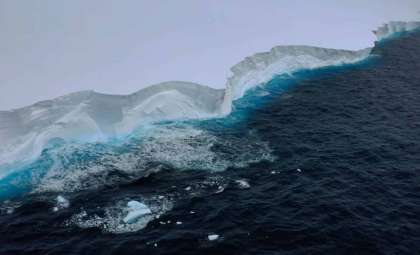
Recent observations from NASA’s MODIS instrument aboard the Aqua satellite have captured signs of edge wasting, a process in which chunks systematically break off from an iceberg’s perimeter. This reduces the overall surface area but retains the iceberg’s general form, distinct from complete fragmentation or collapse.
A-23A exhibits signs of increasing vulnerability, particularly along its northern boundary where a streak of bright ice debris signals recent edge wasting, likely influenced by several days of unusually warm, sunny weather. Positioned near 55°S latitude, the iceberg now lies far from the cold waters that helped sustain it, making it more susceptible to rapid melting.
Fragmentation and Maritime Hazards
While the main iceberg shrinks, it is accompanied by thousands of smaller ice chunks, some exceeding a kilometer in size. These smaller pieces, invisible from afar, pose a significant hazard to vessels navigating the region. Notably, a large fragment labeled A-23C separated from the southern end in mid-April and received official naming by the U.S. National Ice Center (USNIC).
This continual breaking apart underlines the iceberg’s dynamic decay. Fragmentation happened during A-23A’s earlier passages, including a recent journey through the Drake Passage in 2024, but the recent increase in calving events suggests the iceberg’s structure may soon collapse entirely.
The Inevitable End of a Polar Giant
The concluding fate of A-23A follows a familiar pattern. Over 90 percent of Antarctic icebergs track a similar path: circulating in the Weddell Gyre, traveling northward past the Antarctic Peninsula, and crossing the Drake Passage into warmer South Atlantic waters where they ultimately disintegrate. Although A-23A has endured longer than most, its demise now seems imminent.
As A-23A continues to fragment in place, it provides scientists and remote sensing specialists a valuable live example of large iceberg decay amid global warming. The area near South Georgia, dotted with drifting ice debris, represents a visually stunning yet ominous scene — a testament to the collapse of historic ice formations and the ongoing transformation of polar environments.
- Categories:
- News








0 comments
Sign in to Comment