
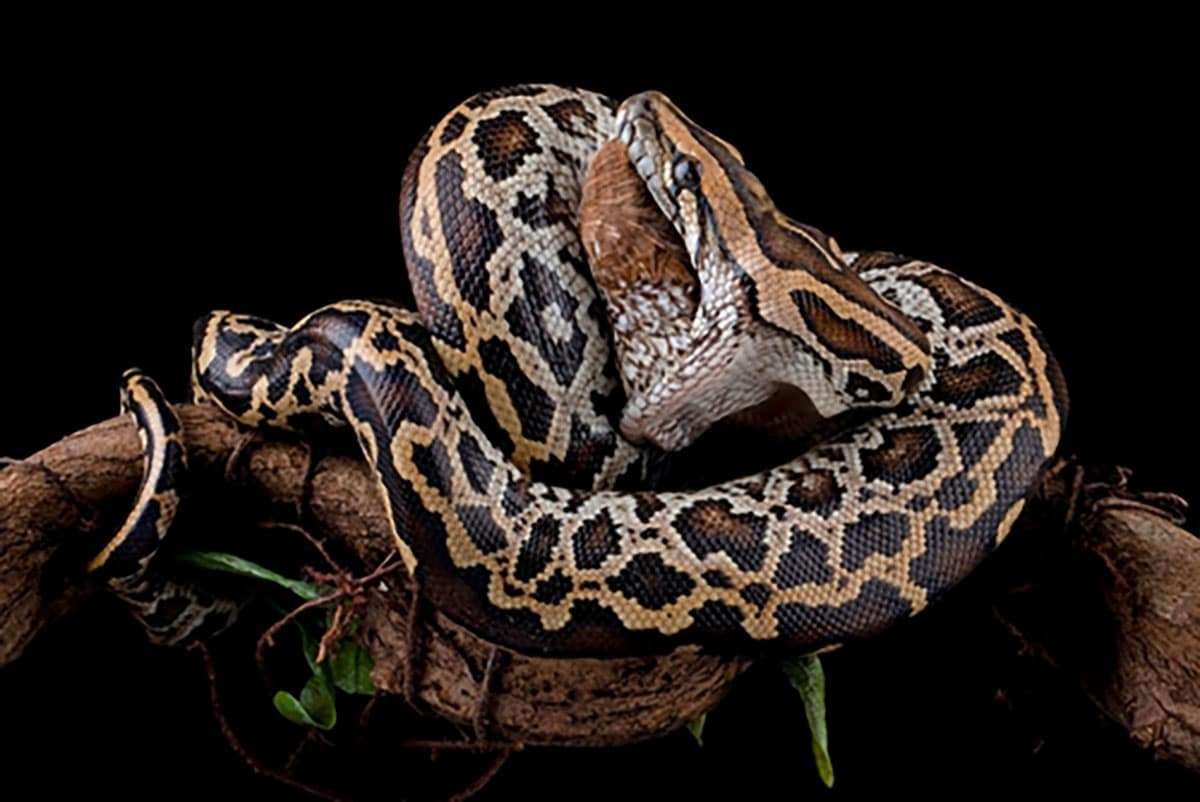
The Burmese python, renowned for its formidable strength and notable length, is usually overshadowed by the larger reticulated python. Nonetheless, a remarkable event has challenged this perception. A 3.04-meter Burmese python successfully subdued and ingested a reticulated python, a species generally acknowledged as one of the largest snakes worldwide.
This observation represents the first ever recorded instance of a Burmese python preying on a reticulated python. Historically, the opposite predation pattern has been documented. This singular occurrence has intrigued scientists, prompting deeper examination of competitive and predatory interactions between these giant serpents.
Although unusual, such predator-prey role reversals occasionally occur in nature. For example, tourists have stumbled upon new species previously unknown to science during their travels, showcasing the endless surprises in the natural world.

Clash of the Titans: Anatomy of the Encounter
The clash between these two giant snakes unfolded in a manner that has captivated and puzzled researchers. Published in 2024 within the journal “Reptiles and Amphibians,” the detailed breakdown of the event reveals that the Burmese python launched its attack by seizing the tail of the reticulated python and promptly coiling tightly around it.
In a fierce struggle, the reticulated python attempted a counter-wrap to defend itself, but the grip of the Burmese python was unwavering. The entire confrontation, from the initial strike to the full swallowing, lasted around two hours. This prolonged engagement highlights the immense resilience and power of both snakes involved in this extraordinary encounter.
To provide context about their physical traits, consider the comparison below:
Trait Burmese Python Reticulated Python Typical Length 3-5 meters 4-6 meters Largest Recorded Size 5.79 meters 9.75 meters Common Diet Mammals, birds Mammals, birds, reptiles Natural Range Southeast Asia Southeast Asia
Ecological Context and Shared Habitats
The Bandarban region of Bangladesh provides a habitat where both Burmese and reticulated pythons coexist. This overlapping range increases the chances of encounters and resource competition between these dominant snakes. Their environments encompass:
- Thick forested areas
- Farming landscapes
- Residential gardens on city outskirts
- Wetlands and riverbanks
Because they share the same ecological niche, these pythons often compete for similar food resources, mainly small and medium-sized mammals, birds, and reptiles. This dietary overlap raises the likelihood of aggressive confrontations.
Although such intense predatory interactions are infrequent, they emphasize the fragile equilibrium of natural ecosystems. Understanding how these dynamics affect local wildlife and biodiversity is an area of ongoing research. Scientists aim to determine whether these incidents are isolated or hint at broader environmental changes.
Environmental shifts can sometimes trigger unusual animal behaviors. An example is the discovery of a rare Doomsday Fish in California that raised concerns about impending natural catastrophes, illustrating how wildlife can signal ecological transformations.
Conservation Insights and Future Research Directions
This unprecedented observation has opened new research opportunities to better understand the behavior and ecological roles of large constrictor species. Investigations are focusing on:
- Competition between different python species
- Feeding habits and prey selection
- Its ramifications on ecosystem balance
- Effective conservation approaches for overlapping snake populations
Documenting this rare predation event reminds us of the intricacy and unpredictability inherent in nature. It highlights the necessity for ongoing study and observation of these remarkable reptiles in their natural surroundings. Gaining such insights enables conservationists to craft strategies that protect biodiversity and sustain ecological harmony where these powerful predators intersect.
The natural world continues to reveal unexpected phenomena, even among familiar species. From Henry, the oldest crocodile ever recorded, to this astonishing python predation case, nature's marvels fuel scientific curiosity and discovery.
Source : https://journals.ku.edu/reptilesandamphibians/article/view/21418
- Categories:
- Evolution
















0 comments
Sign in to Comment