
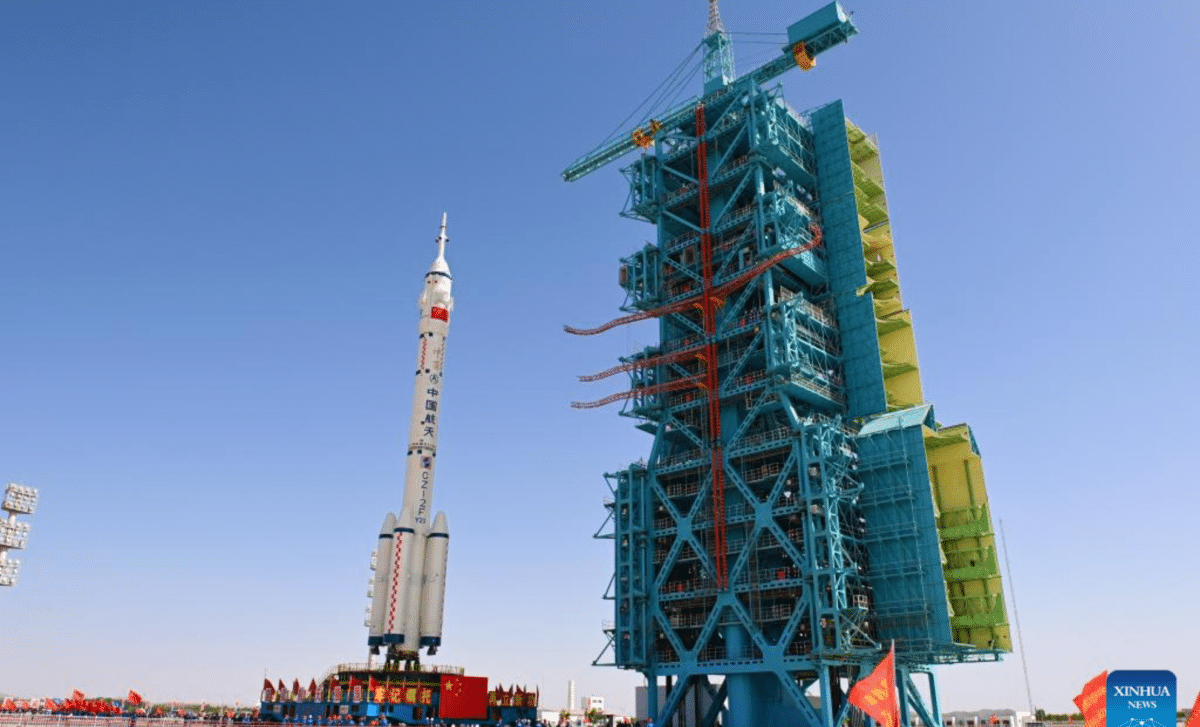
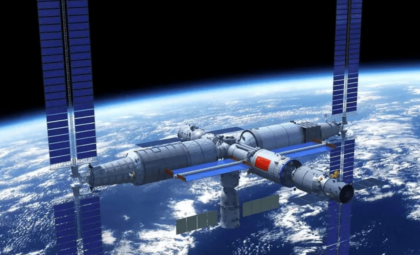
On May 24, China is poised to achieve a milestone with the launch of its Shenzhou 23 mission to the Tiangong space station. This mission may include an astronaut remaining in orbit for a full year — the longest spaceflight undertaken by China. The launch follows a month-long postponement and underscores China’s expanding role in human space exploration.
A Major Step Forward in China's Space Journey
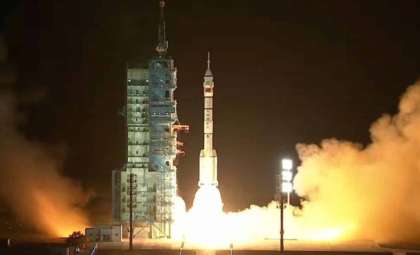
Riding aboard the Long March 2F rocket, a towering 62-meter vehicle, the Shenzhou 23 crew was transported nearly 1.5 kilometers to the launch pad at the Jiuquan Satellite Launch Center located in the Gobi Desert. Comprehensive rehearsals confirmed that all equipment and systems are operating smoothly. Scheduled to lift off at 11:08 a.m. Eastern Daylight Time (11:08 p.m. local time), the mission will ferry three astronauts for a half-year mission aboard Tiangong, with one astronaut potentially embarking on an exceptional year-long stay in orbit.
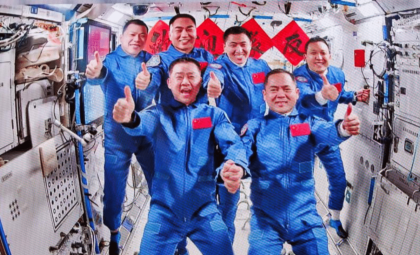
The team, announced the day before launch, features Zhu Yangzhu as the mission commander, alongside Zhang Zhiyuan and Lai Ka-ying, the first astronaut from Hong Kong to journey into space. This mission coincides with the recent docking of the Tianzhou 10 cargo spacecraft, which delivered close to seven tons of supplies to Tiangong on May 11, ensuring continuity in station operations and crew transitions.

China’s Landmark Year-Long Space Endeavor
The defining feature of the Shenzhou 23 mission is China’s initial foray into a year-long human spaceflight, placing it among the ranks of Russia and the U.S. in enduring orbital missions. This effort ties to the forthcoming Shenzhou 24 mission, which will include a Pakistani astronaut for a brief visit and will assume a Shenzhou 23 crew seat for the return journey to Earth. Consequently, one astronaut will remain aboard Tiangong for an entire year, establishing a new endurance benchmark for China’s human space endeavors.
This extended mission will provide critical insights into the effects of long-term exposure to microgravity on humans and will test life-support technologies for prolonged space habitation. The lessons learned could influence future missions to the Moon or prolonged stays on larger orbital habitats.
Ensuring Safe Crew Handover and Emergency Plans
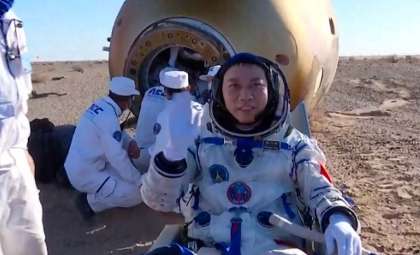
The Shenzhou 23 launch culminates the longest spaceflight by the Shenzhou 21 team so far. In response to a possible debris strike on the Shenzhou 20 craft, the unmanned Shenzhou 22 mission operated as a contingency lifeboat to safeguard the crew, who are scheduled to return to Earth on May 29.
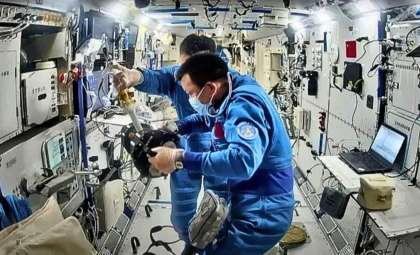
This careful orchestration highlights China’s commitment to safety and redundancy in human missions. The transition between crews of Shenzhou 21 and Shenzhou 23 ensures uninterrupted station operation, with ongoing scientific research and maintenance continuing smoothly.
Shenzhou Missions Paving the Way for Expansion
Since the inaugural crewed Tiangong mission with Shenzhou 12 in June 2021, China has completed 11 manned flights, steadily enhancing its spaceflight capabilities. Earlier missions focused primarily on assembling the station’s three modules, finalized by the end of 2022. Uncrewed flights like Shenzhou 22 have played critical roles in contingency and supply operations, demonstrating the program’s flexibility.
As reported by Space.com, these achievements illustrate China's expanding ambitions in space exploration, preparing for international cooperation, extended missions, and more intricate orbital activities. Shenzhou 23 signals a shift towards sustained scientific experiments aboard a functional orbital platform.
Scientific Advancements and Global Cooperation
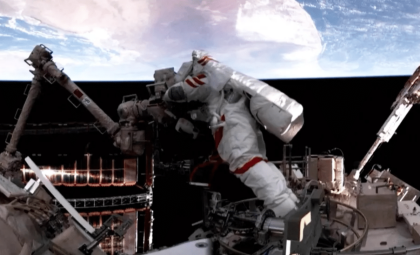
The Shenzhou 23 mission also sets the foundation for Tiangong’s first international crew visit, reinforcing China’s dedication to collaborative space endeavors. Continuous crew presence will enhance scientific work, enabling prolonged microgravity research including materials science, biological experiments, and trials of new technologies.
This ongoing commitment reflects China’s strategic aims in space, focusing on autonomy, resilience, and innovation in orbital missions. The coming year will test the outer limits of long-duration spaceflight within China's growing human space program.
- Categories:
- Space



0 comments
Sign in to Comment