
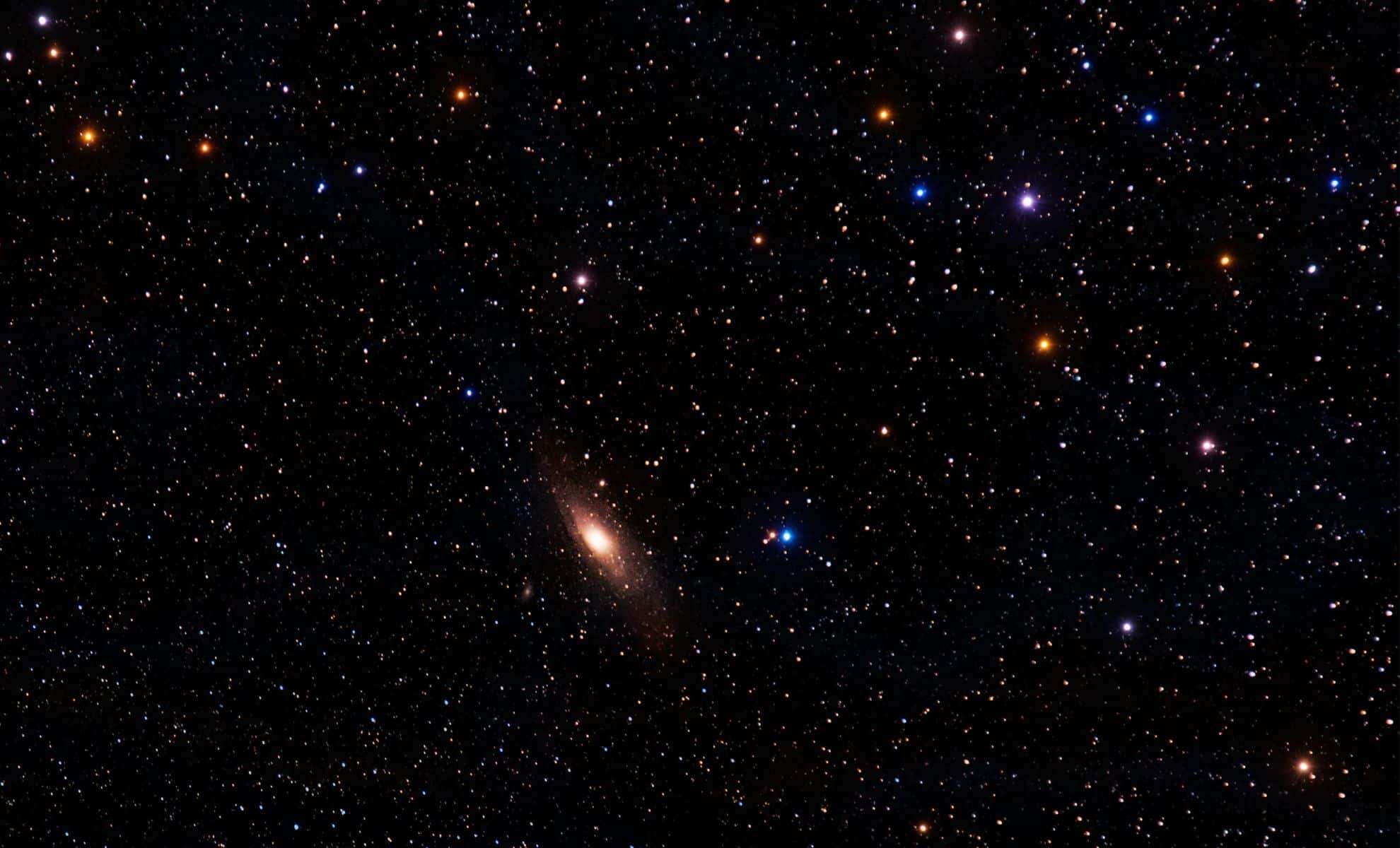
As astronomical exploration expands, the demand for swift and accurate classification of vast celestial datasets intensifies. A novel AI system developed by Chinese scientists is set to revolutionize the processing of astronomical survey data. Demonstrating the capability to swiftly analyze millions of celestial bodies, this technology could reveal previously undiscovered cosmic structures. A recent publication in The Astrophysical Journal reports that this AI model has already categorized more than 27 million stars, galaxies, and quasars by efficiently combining diverse survey datasets.
What makes this innovation notable isn’t just its rapid performance but also its impressive precision. The research team, led by specialists at Yunnan Observatories, addressed the complex task of identifying celestial bodies that often resemble tiny points of light in the sky. Traditional classification, typically done via spectroscopy, can be laborious and slow. In contrast, this AI dramatically accelerates data processing, a crucial advancement given the forecast of astronomical surveys observing billions of objects.
Using a Dual-Input Strategy for Enhanced Classification
The neural network-based AI utilizes a combined approach, incorporating both morphological characteristics—which relate to an object's shape and appearance—and spectral energy distribution (SED), which examines brightness variations across wavelengths. This dual data integration sets the model apart from earlier systems that depended on only one data type. By leveraging both, the AI distinguishes stars, galaxies, and quasars more effectively, as highlighted in the study: “This MNN successfully leverages both morphological and SED information to enable efficient and robust classification of stars, quasars, and galaxies in large photometric surveys.”

Distinguishing between similar-looking cosmic entities has long been a difficulty for astronomers. Stars and galaxies often manifest as minute luminous dots, making reliance solely on morphology prone to errors. Meanwhile, while SED analysis enhances identification through light emission patterns, it can struggle with faint or remote sources. By integrating these two methods, the AI overcomes these hurdles, providing a more dependable classification tool for upcoming sky surveys.
Advancing Our Understanding of Astronomical Survey Data
Beyond classification speed, this AI marks a significant leap in processing data from major astronomical surveys. Having analyzed over 27 million cosmic objects across approximately 1,350 square degrees of the sky, the system was evaluated using datasets such as the Sloan Digital Sky Survey and the Kilo-Degree Survey, yielding outstanding results. In tests, it achieved a 99.7% accuracy rate in classifying stars using Gaia mission data and equally high precision in identifying galaxies and quasars from the GAMA survey.
The capacity to handle huge data volumes rapidly sets the stage for future astronomical discoveries. As datasets expand, researchers require sophisticated tools to uncover elusive objects and cosmic events that might otherwise remain unnoticed, potentially unlocking new insights into the universe’s origin and evolution.
Refining and Correcting Astronomical Records
One remarkable benefit of this AI is its aptitude for revisiting and improving past astronomical catalogs. During validation, it detected misclassifications in previous databases, such as stars mistakenly identified that were actually galaxies. The AI's correct reassignment of these objects demonstrates its ability to enhance not only future surveys but also existing astronomical records, improving their reliability and consistency.
This enhanced refinement capability positions the AI as a valuable tool for reexamining older datasets with increased accuracy, which has important implications for the historical study of cosmic development and the integrity of astronomical research.
- Categories:
- News










0 comments
Sign in to Comment