
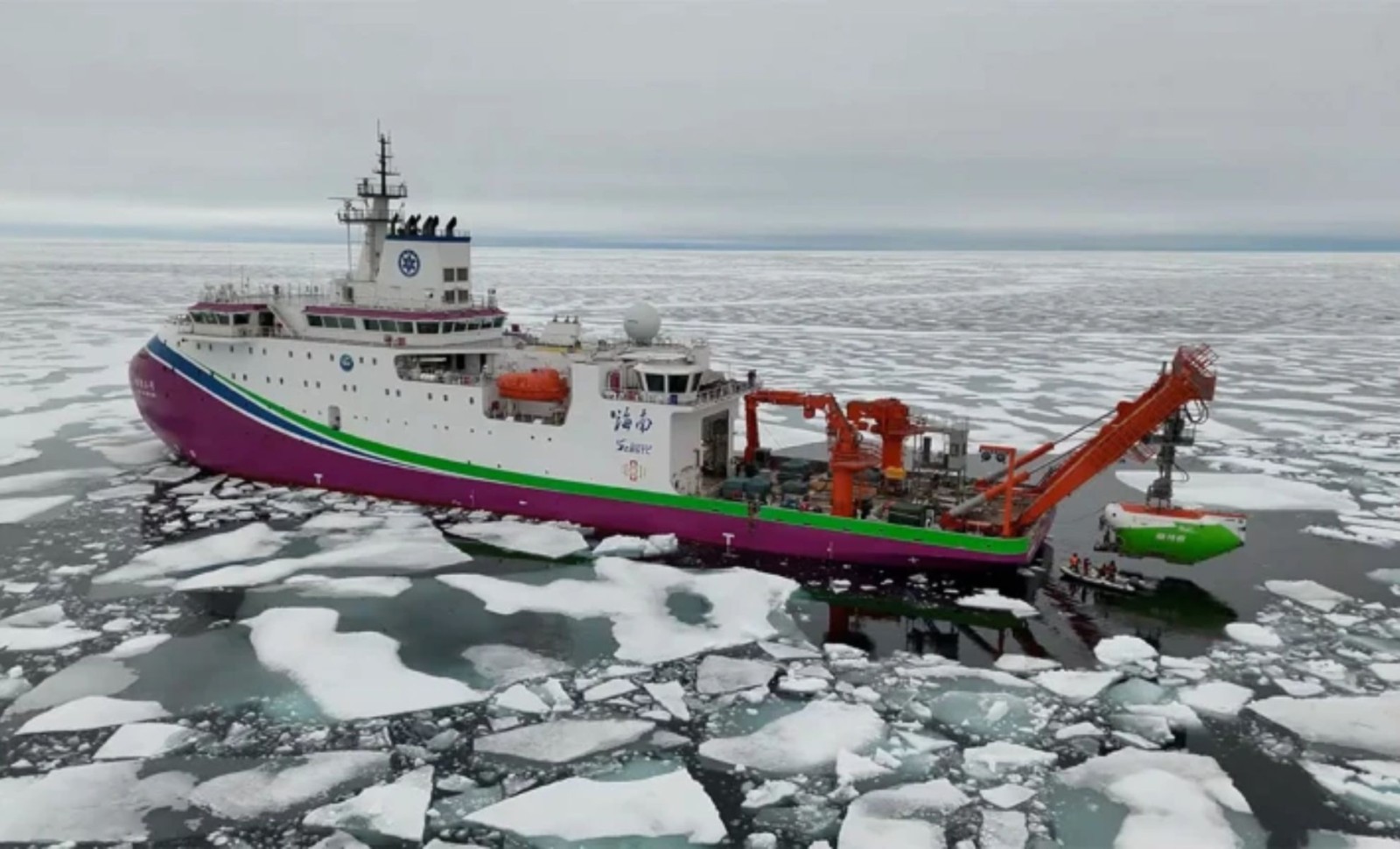
Scientists from China have conducted the inaugural crewed investigation of the eastern segment of the Gakkel Ridge, a submerged volcanic range concealed beneath the Arctic Ocean’s icy expanse. Deploying the Fendouzhe submersible, the team completed an impressive tally of over 40 dives in this exceptionally remote realm, exploring depths exceeding 5,200 meters.
Before this expedition, no manned missions had ventured into this part of the Arctic seafloor. The eastern Gakkel Ridge, cloaked by thick ice sheets, represents one of Earth's final uncharted underwater geological zones. The research breakthrough is expected to enrich knowledge about deep-sea lifeforms and the dynamics of ultra-slow tectonic spreading in oceanic crust formation.
Coordinated by the Chinese Academy of Sciences alongside the Ministry of Natural Resources, the project utilized the Fendouzhe submersible escorted by a polar icebreaker to navigate frozen, precarious Arctic waters. According to Nature, this marked the first time any crewed delivery has reached this remote ridge sector, previously only approached by brief Russian expeditions lacking direct sampling or observation.

Delving into Arctic Mysteries Beneath Ice
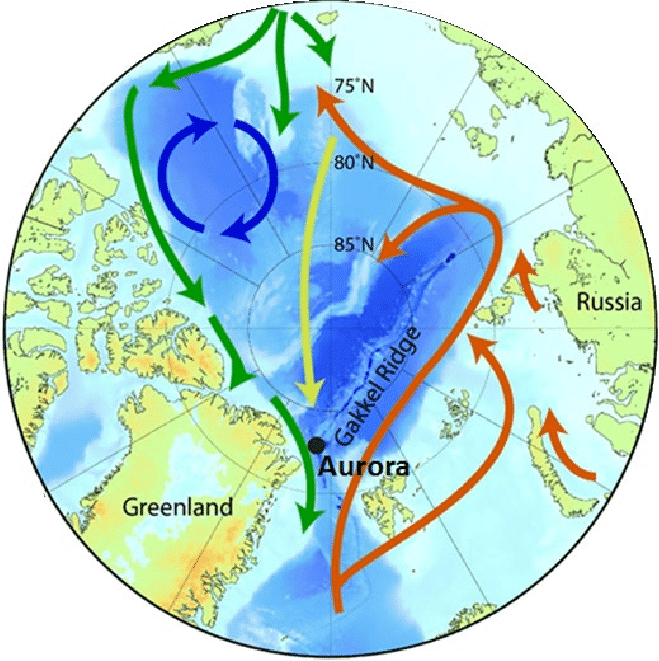
Stretching between Greenland and Siberia, the Gakkel Ridge lies beneath a permanent Arctic sea ice shield. It forms a segment of the global mid-ocean ridge network, the planet’s cradle for generating fresh oceanic crust. Unlike other ridges, it spreads at an extremely slow pace—slower than fingernail growth—but possesses enough geothermal activity to sustain unique geological phenomena.
The expedition’s main focus was the previously unvisited eastern sector of the ridge, which had resisted study due to extreme inaccessibility. Expedition leader Xiaoxia Huang described this as filling a crucial gap in Arctic geology.
“This was the last unexplored segment,” she remarked. The crew collected rock cores, seawater samples, and specimens of deep-sea life from depths reaching 5,277 meters.
These specimens will be subjected to extensive analyses at Chinese scientific institutes, with an aim to reveal the chemical fingerprint of the environment as well as any evidence of unique biological adaptations to these extreme depths.
Searching for Signs of Alien-like Life
The report in Nature highlights a primary objective of the mission: detecting hydrothermal vents—underwater fissures that emit heated, mineral-rich fluids. These vents host vibrant ecosystems energized not by sunlight but by chemical reactions. Similar vents were found on the western side of the ridge during a US–German survey in 2001 and have since been recognized for their extraordinary biodiversity.
Although definitive evidence is pending, initial data hint that hydrothermal activity could exist along the eastern Gakkel Ridge as well. Confirmation would underscore the possibility of life thriving in isolated, sunless environments, a concept that plays a vital role in the search for extraterrestrial life. Such habitats might mirror conditions on icy satellites like Jupiter’s moon Europa, where liquid oceans persist beneath frozen surfaces.
Advancements in Extreme Deep-Sea Exploration
The expedition’s progress depended on cutting-edge technology and meticulous planning. The Fendouzhe submersible, which previously explored the depths of the Mariana Trench, was specially modified for the harsh Arctic conditions—a challenge few occupied submersibles have faced due to moving ice hazards and limits on surface support.
Christopher German, a marine geochemist at the Woods Hole Oceanographic Institution, emphasized the significance of reaching such an isolated locale.
“It’s so hard to get there that anything anybody does is almost guaranteed to be exciting and different and new,” he said.
Elmar Albers, marine geoscientist at Germany’s Alfred Wegener Institute, concurred, highlighting that this Chinese endeavor “is poised to yield significant new insights” into some of Earth’s harshest underwater environments.
Though harsh and remote, the Arctic’s eastern Gakkel Ridge is now within scientific reach, opening unprecedented avenues to study life and geology under extreme conditions.
- Categories:
- Science






0 comments
Sign in to Comment