
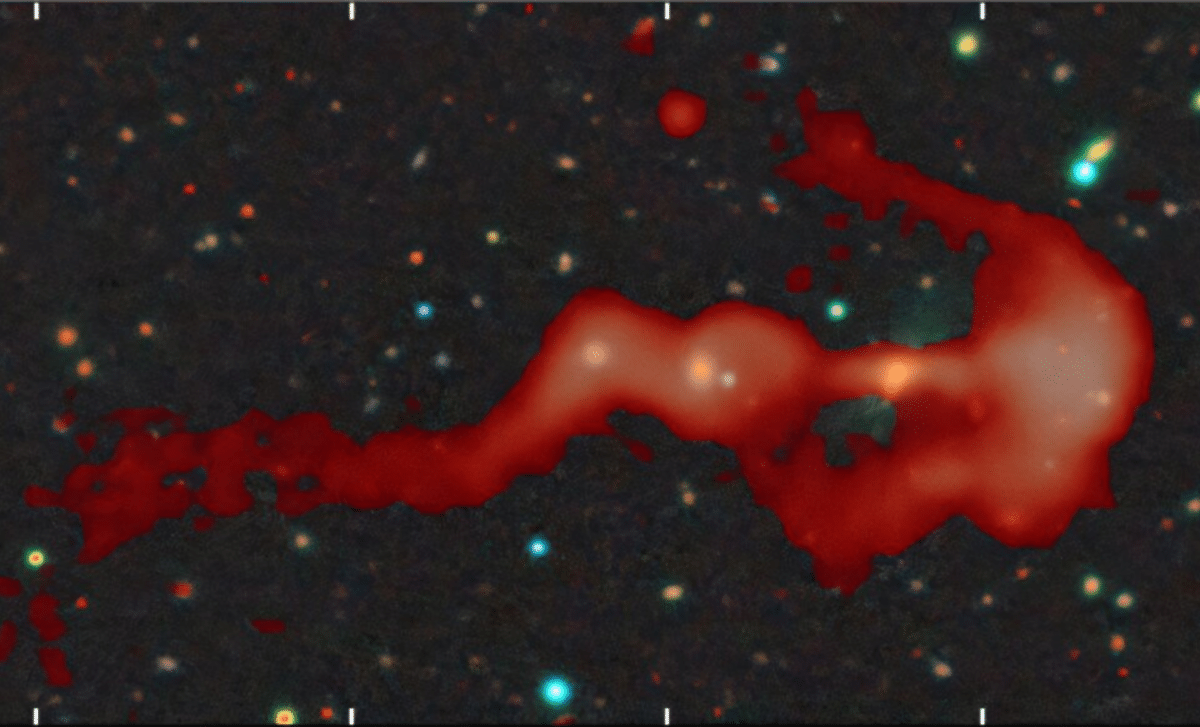
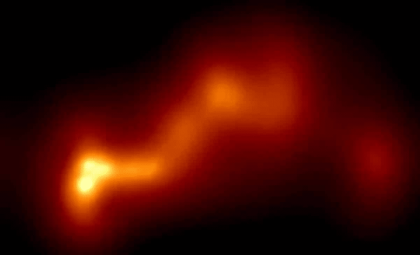
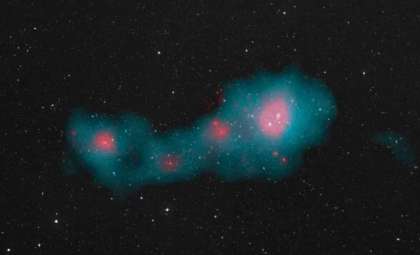
A newly identified radio galaxy exhibiting a distinctive bow-and-arrow formation is granting astronomers an extraordinary glimpse into a rarely detected cosmic event. Designated RAD-BAARG, this enormous structure stretches nearly 1.8 million light-years and likely serves as one of the clearest known examples of a vast bow shock produced as a galaxy speeds supersonically through a cluster's environment. The findings, published in the Monthly Notices of the Royal Astronomical Society, offer fresh insights into how galaxies interact with the expansive gas reservoirs present between galaxy clusters.
Unearthing a Hidden Gem from One of the Deepest Radio Surveys
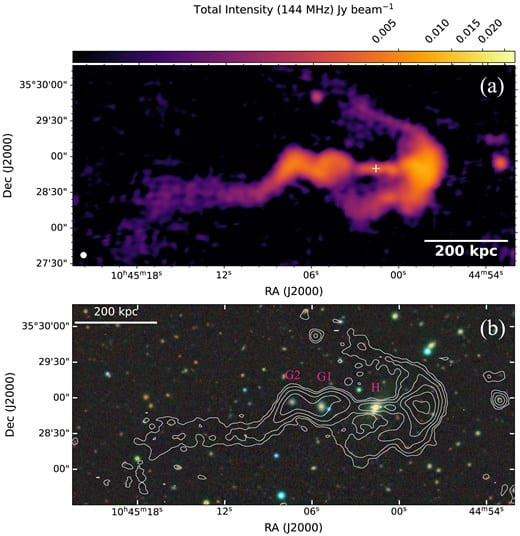
This extraordinary galaxy was discovered using data from the Low-Frequency Array (LOFAR), a highly sensitive network of radio telescopes. Members of the RAD@home Astronomy Collaboratory, an Indian-based citizen science community, identified the peculiar galaxy while scrutinizing the LOFAR Two-Metre Sky Survey (LoTSS) data. Contrary to typical radio galaxies that often showcase balanced jets shooting out from a central black hole, RAD-BAARG reveals a dramatically asymmetric and distorted morphology.
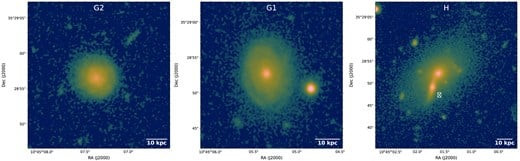
On one side, a slender jet feeds into a wide, sector-shaped region connected to a colossal arc nearly 560 kiloparsecs long, while the opposing side twists into an anomalous S-shaped curve before trailing off into an extended tail. This remarkable form immediately challenged existing radio galaxy models. Further analyses indicated that the galaxy's jets, influenced by immense environmental forces spanning hundreds of thousands of light-years, were collectively shaping this unique configuration.

Capturing a Giant Bow Shock in the Cosmic Expanse
Scientists propose that the galaxy’s extraordinary configuration may be tracing a massive bow shock formed as the host galaxy surges through ambient gas en route to a nearby cluster environment. Similar to how a supersonic aircraft produces a shockwave ahead of it, this phenomenon arises when an object moves faster than the local sound speed through surrounding gases. Within galaxy clusters, this medium is an extremely hot, diffuse gas called the intracluster medium. Detecting such bow shocks is notoriously challenging due to the gas’s faint radiation, but in the case of RAD-BAARG, plasma energized by the galaxy’s jets appears to illuminate the shock front, revealing it at low radio frequencies.
Principal investigator and RAD@home Astronomy Collaboratory founder, Dr. Ananda Hota, highlighted the galaxy’s unusual traits: “In my 25 years of study, I haven’t seen a radio galaxy with such an extraordinary structure. This shape likely manifests evidence of an interaction between relativistic plasma and an extensive shock wave generated as the galaxy plunges into the cluster environment.” If verified, this observation would offer one of the most detailed radio-frequency views of a bow shock linked to an infalling galaxy.
What Sets This Radio Galaxy Apart for Researchers
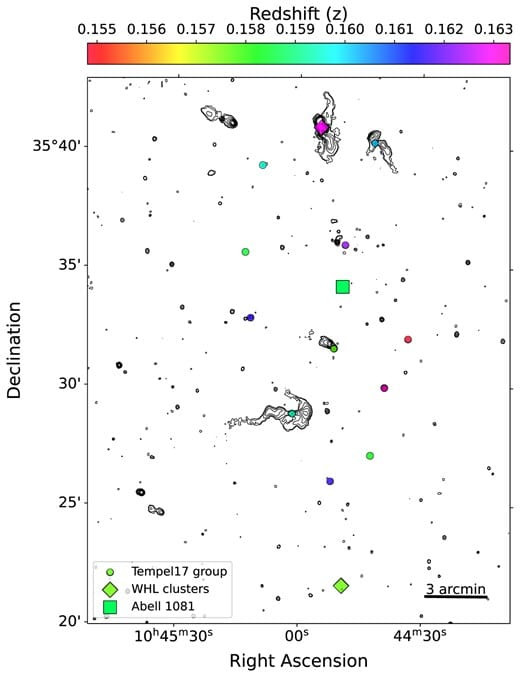
The published study in Monthly Notices of the Royal Astronomical Society reveals an environment far more intricate than initially predicted. The host galaxy resides within a complex region encompassing multiple cluster-scale systems, where gas dynamics, large-scale motions, and shock compressions can all impact how radio jets evolve. These environments are critical in shaping galaxy formation and redistributing energy throughout galaxy clusters.
Shedding light on these processes is a significant challenge in contemporary astrophysics, as feedback from active galaxies influences star formation, gas cooling, and the evolutionary path of cosmic structures. With its distinctive radio morphology, RAD-BAARG acts as a rare natural laboratory that captures these forces in action. The detailed features seen in radio wavelengths provide essential information on how jets behave when encountering massive environmental impacts, offering scientists valuable data to validate theoretical simulations.
LOFAR and Upcoming Facilities to Illuminate Many More Such Objects
This discovery also showcases the growing capabilities of modern radio astronomy. Advanced instruments today can detect faint, diffuse emissions undetectable by older telescopes. Co-lead author Dr. Pratik Dabhade from the National Centre for Nuclear Research in Poland praised LOFAR’s contribution, stating, “LOFAR lets us observe this faint, low-surface-brightness emission in stunning detail. With LoTSS DR3 and the forthcoming Square Kilometer Array Observatory (SKAO), we anticipate uncovering numerous other radio galaxies that reveal hidden jet-environment interactions.”
The upcoming Square Kilometer Array Observatory, currently under development, promises to be the most sensitive radio telescope ever made. Its advanced detection ability could expose extensive numbers of such shock-related systems, shedding light on how common these phenomena are and transforming our comprehension of galactic interactions over billions of years.
How a Citizen Scientist Sparked a Game-Changing Discovery
What makes this finding especially notable is its origin. Citizen scientist Pranim Limbo, participating in the RAD@home initiative, was the first to spot the remarkable structure while examining radio survey images. This underscores the vital role that public-engaged scientific projects can play in advancing front-line astronomy, even when contributors operate far from major research centers. Astronomers suggest that the galaxy might not be a unique anomaly but the initial example of a broader category of cosmic objects influenced by large-scale shock dynamics. Another lead researcher, Dr. Shubhrangshu Ghosh from SRM University Sikkim, emphasized the discovery's importance.
“The reported observation reveals the first direct imaging of characteristic arc-shape morphology in radio frequency in regard to supersonically infalling radio-galaxy (most likely) onto a cluster medium—a spectacular textbook example of a large bow shock.” He added, “Discovery of more such sources and their study during the SKAO era will provide much deeper insight about jet-ambient medium interaction and consequent feedback processes.”
- Categories:
- Astronomy




0 comments
Sign in to Comment