
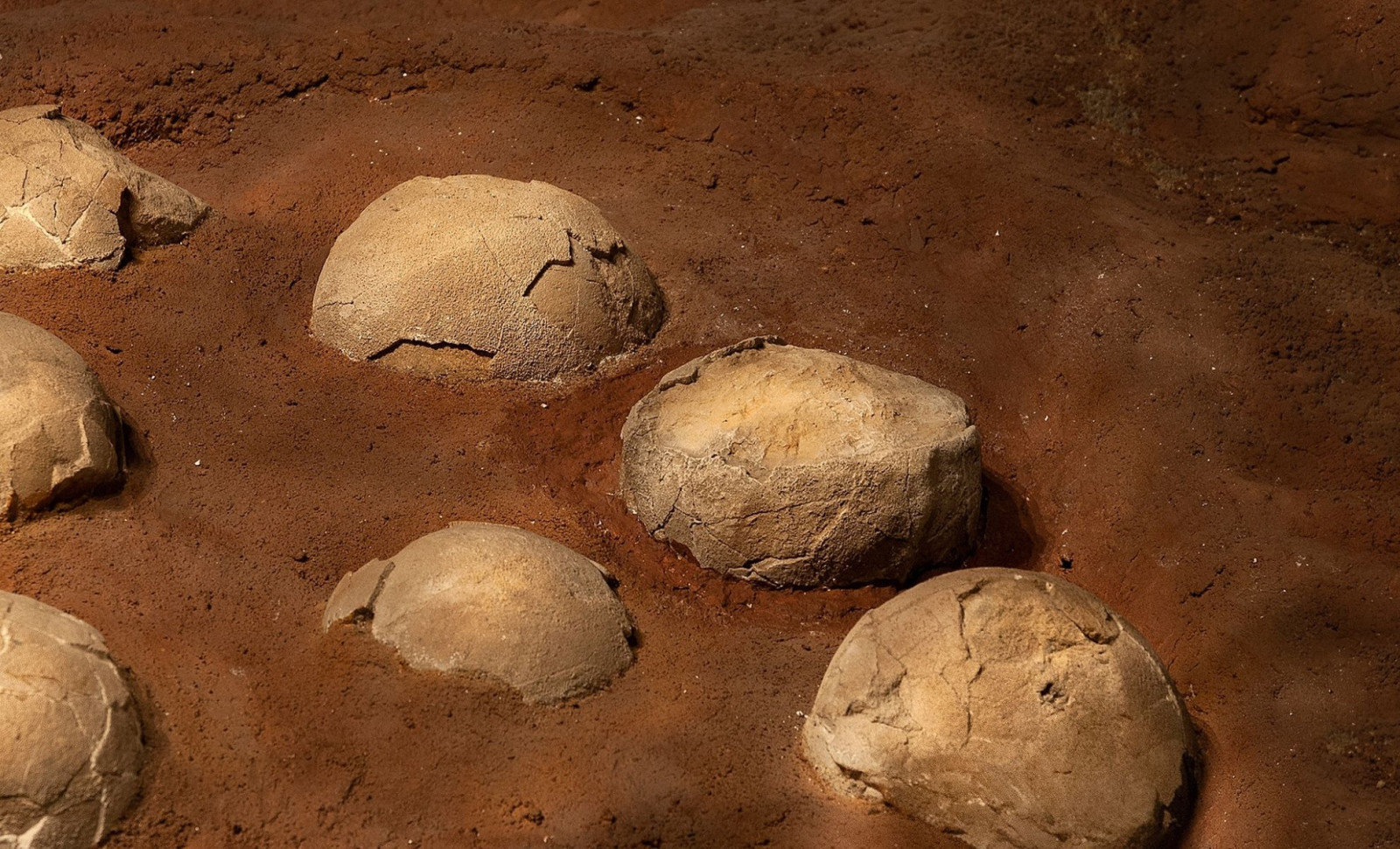
Fossilized dinosaur eggshells offer a promising new approach for pinpointing the burial age of the sediments and fossils they are found within. According to a recent paper published in Nature Communications Earth & Environment, uranium-lead isotopic dating of these eggshells yields age estimates that closely correlate with independent dating methods of the surrounding strata. This marks a significant advance for paleontologists.
Determining the exact age of dinosaur fossils has been a persistent challenge. While sedimentary layers correspond to specific time periods, accurately dating these deposits and their fossil contents has often proven inconsistent and difficult.
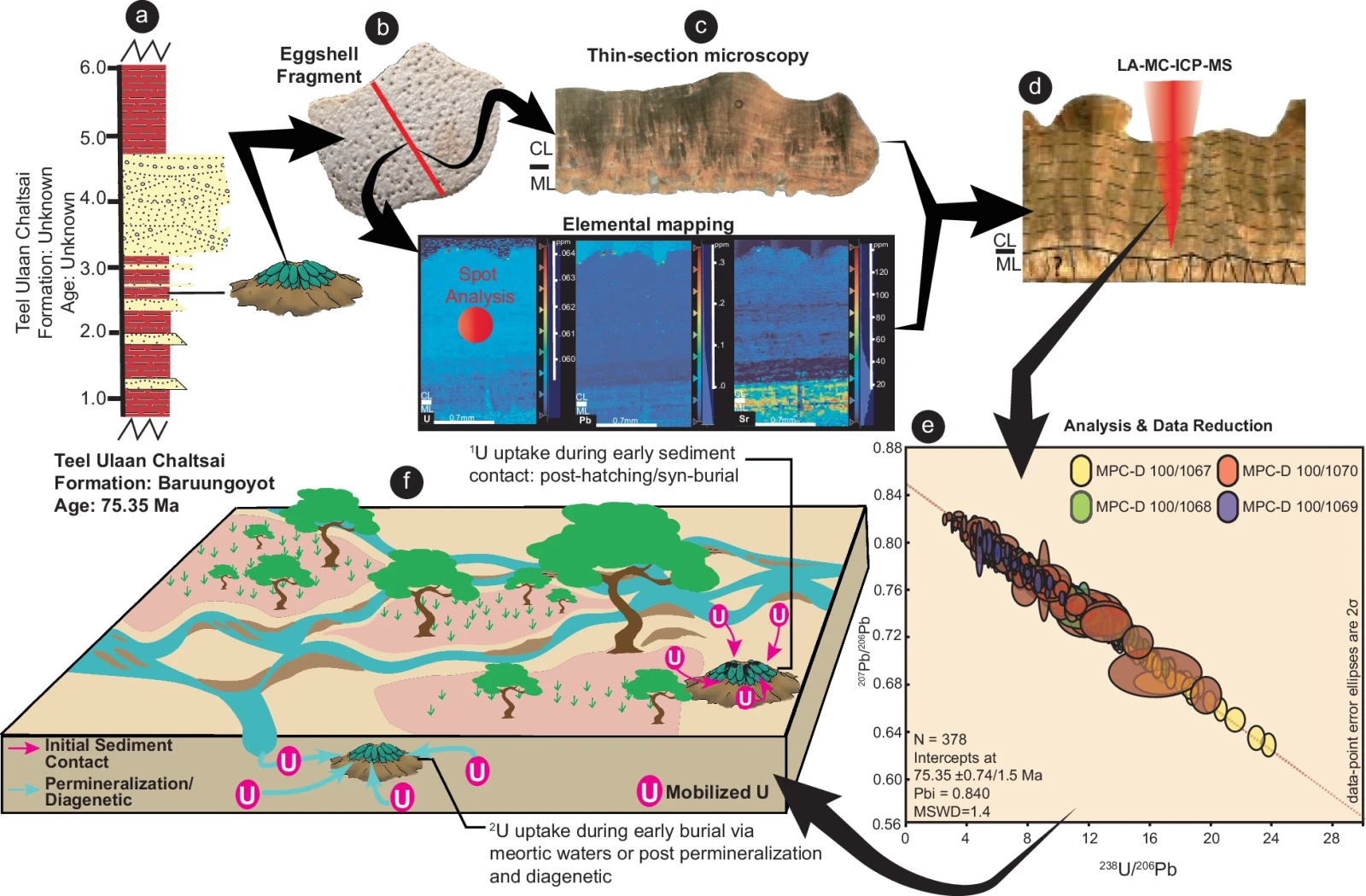
The latest study shifts the focus from fossilized bones to the mineralized eggshells. Led by paleontologist Ryan Tucker of Stellenbosch University, researchers explored whether the microscopic arrangement of eggshell calcium carbonate preserves isotopic data sufficiently well to function as a reliable geochronological tool.

Eggshell Microstructure Preserves Burial Timelines
Vertebrate eggs with calcified shells have existed for hundreds of millions of years, even though the first dinosaur eggs were soft-shelled as noted in prior discoveries. Later fossilized eggshells are particularly valuable because their crystalline makeup encodes a detailed history of geological processes. The arrangement of calcium carbonate crystals captures a record of diagenesis, the suite of chemical and physical alterations sediments undergo as they lithify into rock.
Events such as fluid percolation, sediment pressure, and microfracture development leave recognizable evidence within the shell’s structure. The team explains that these markers help researchers gauge the preservation quality of eggshells before conducting uranium-lead isotopic dating. Essentially, the shells provide insights into their own chemical stability through time.
By calculating the ratio of uranium to lead isotopes, factoring in their known half-lives, scientists can derive the age of a sample. This dating technique is effective for material ranging from roughly one million to about 4.5 billion years old.
Comparing Eggs from Distant Continents
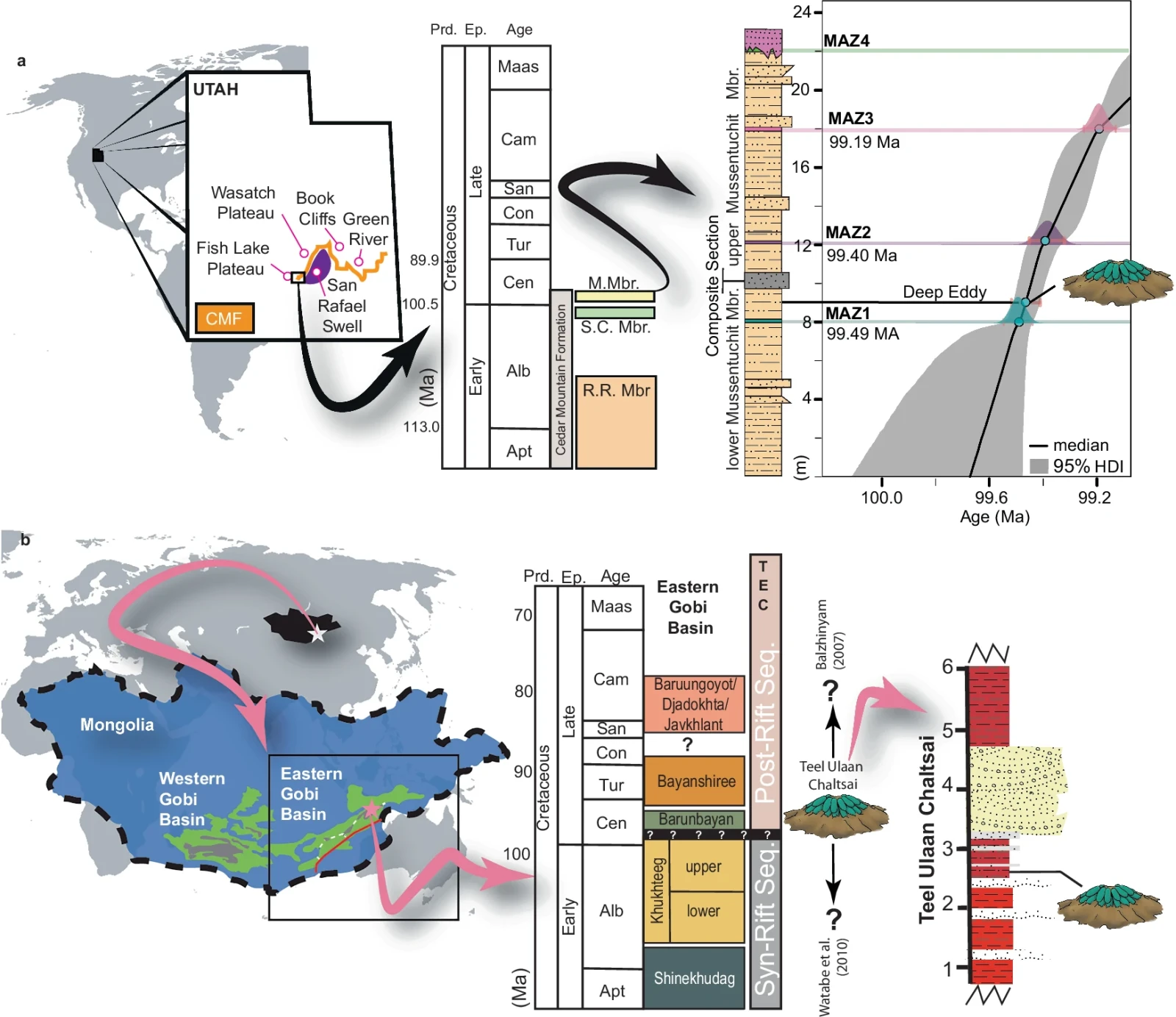
To validate their method, the researchers studied eggshell specimens from two separate Cretaceous formations thousands of miles apart. The first batch was sourced from Utah’s Deep Eddy site within the Cedar Mountain Formation, where volcanic ash layers had previously been zircon-dated. These eggs belong to Macroelongatoolithus carlylei, likely produced by an oviraptorid dinosaur.
The second dataset originated from Mongolia’s Teen Ulaan Chaltsai area in the Eastern Gobi Basin. The eggs here are believed to have been laid by tiny, bird-like theropods called microtroodontids. Their previously estimated ages had a degree of uncertainty.
Results published in Nature Communications Earth & Environment revealed that uranium-lead dating assigned Utah samples an age near 95 million years, consistent with the relative age of surrounding rocks. The Mongolian eggshells also yielded dates closely matching their enclosing sediment layers.
A Cosmic Connection in Fossil Sediments
An intriguing aspect emerged from the Mongolian site: trace element analysis hinted at the presence of meteor dust deposited approximately 99 million years ago, close to when the eggs became fossilized. According to the study, even if the site wasn’t directly impacted by a meteor strike, remnants of meteor debris were likely mixed into the sediments covering the fossils.
This subtle signal serves as a reminder that fossil deposits can preserve evidence of major extraterrestrial events. As Ryan Tucker noted in the publication,
“This study demonstrates that eggshell biocalcite from non-avian dinosaurs, birds, and other egg-laying vertebrates has the potential to serve as a reliable geochronometer in Mesozoic and Cenozoic terrestrial sedimentary basins.”
For fossil sites with uncertain timeframes, answers may come not from the bones, but from fragments of eggshell that once protected ancient developing embryos.
- Categories:
- Science




0 comments
Sign in to Comment