
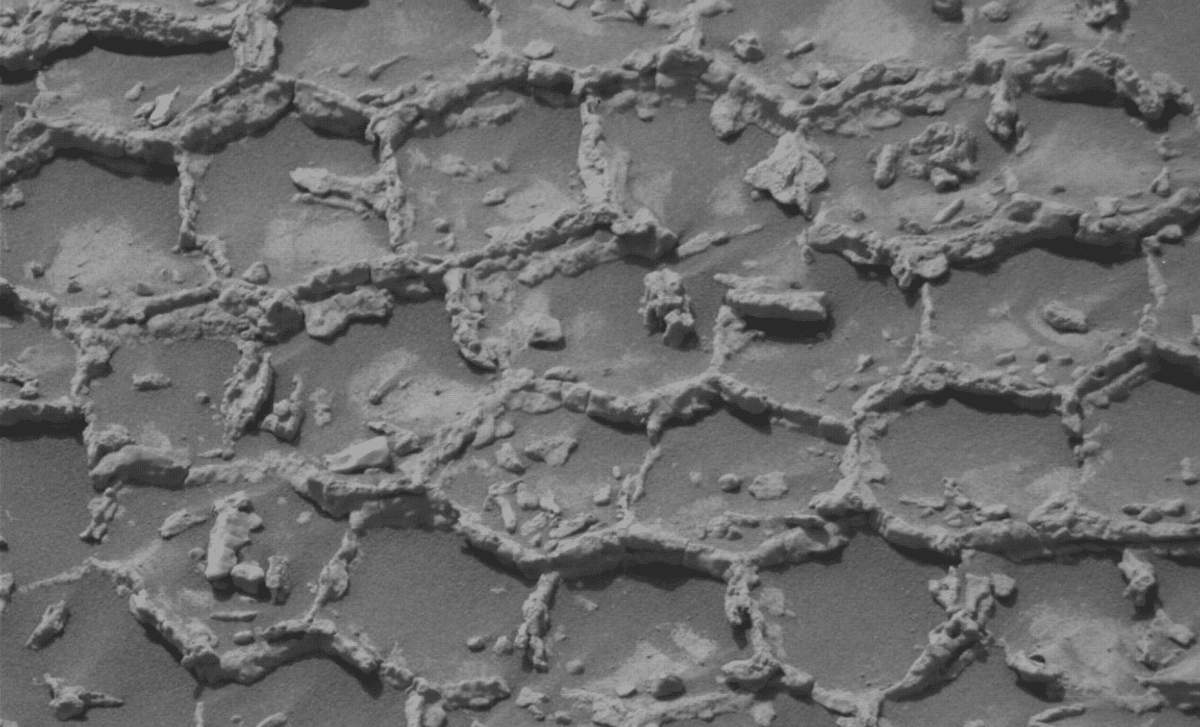
NASA’s Curiosity rover has arrived at a uniquely captivating landscape within Gale Crater, characterized by expansive polygonal ridges interspersed with dark rocks whose origins remain elusive. This recent discovery, detailed in NASA’s latest mission briefing, challenges prior expectations formed from orbital data and opens new avenues for exploring Mars’ intricate geological past.
An Unexpected Terrain Revealed Up Close
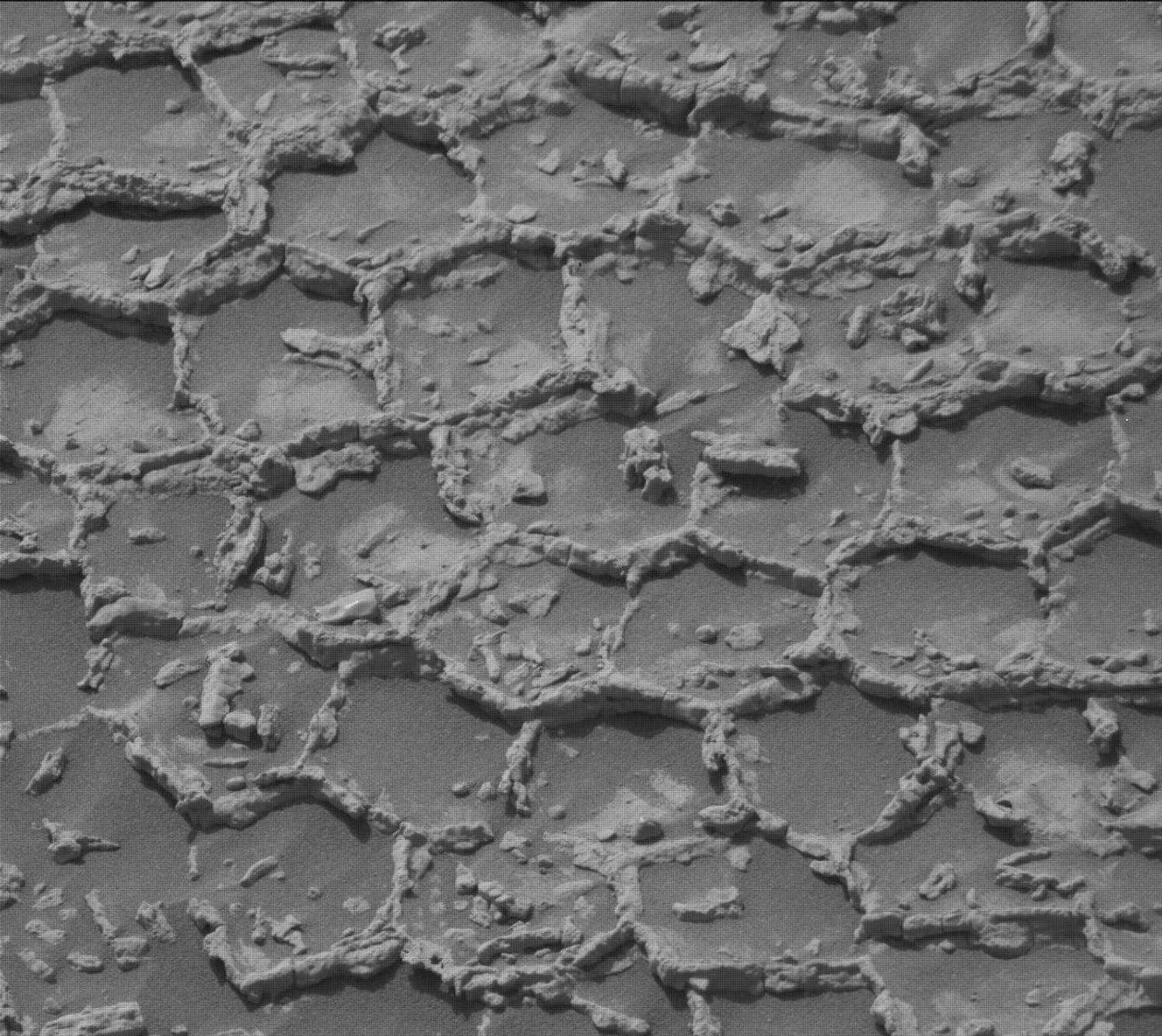
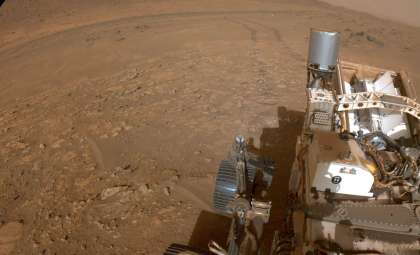
From orbit, this region appeared as a uniform, light-colored surface, but Curiosity’s ground-level exploration unveiled a startlingly complex structure. The rover encountered a vast expanse of raised polygon-shaped ridges, which scientists liken to a giant Martian honeycomb. As Curiosity progressed, these polygonal features showed increasing signs of erosion, allowing researchers to study their formation processes over time. This evolving topography offers important insights into the ancient environmental influences that sculpted this section of Gale Crater.
The surface’s shifting textures also provide a rare opportunity to analyze different erosion phases within one geological unit. Such detailed comparisons are critical for reconstructing the area’s history, revealing how historic water activity, sediment deposition, and climatic changes interplayed through Mars’ long timeline. While polygonal patterns have been documented elsewhere on the planet, finding such an extensive field here enriches scientists’ understanding of Mars’ surface evolution.

Investigating the Source of Unusual Dark Rocks
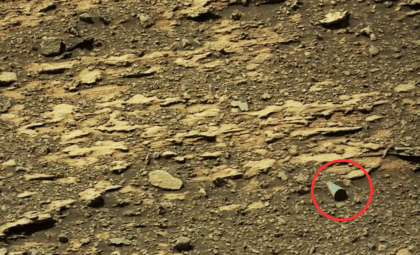
Alongside the polygonal landscape, numerous dark-toned pebbles and cobbles scattered across the site have drawn scientific interest, potentially holding clues to Mars’ geological narrative or even extraterrestrial influences. Senior Research Scientist William Farrand from the Space Science Institute shared in the latest mission update that the team is still determining the origin of these enigmatic rocks.
“Littered about this unit are pebble to cobble-sized dark-toned rocks,” Farrand wrote, among the unresolved questions researchers with the Curiosity team have “is whether these are bits of Mars that ‘floated’ down from higher in the stratigraphy, were ejected from distant impacts outside of Gale crater, or are meteorites from beyond Mars altogether.”
Prior studies of similar dark rocks revealed traces of nickel, an element often linked to meteorites but occasionally present in native Martian formations. This makes every dark cobble discovered an intriguing target for study. By comparing their chemical and mineral patterns with the surrounding bedrock, scientists aim to clarify if these rocks were transported across the planet, blasted in from far-off impacts, or originated as meteorites surviving Mars’ atmospheric entry. Each possibility sheds light on different chapters of Mars’ geological history.
A Multidisciplinary Approach to Exploring the Terrain
To thoroughly analyze the area, Curiosity’s science team organized a series of precise observations employing several of the rover’s advanced instruments. Farrand noted in the Curiosity blog that the recent three-sol mission plan included using the APXS and MAHLI tools to examine a polygon ridge and a dark cobble. The Alpha Particle X-ray Spectrometer (APXS) identifies elemental compositions, while the Mars Hand Lens Imager (MAHLI) provides detailed close-up images of the rock textures impossible to capture from afar.
Additionally, the rover utilized the ChemCam laser to analyze the elemental makeup of polygonal ridges and dark rocks from several meters away. Complementing these were panoramic Mastcam mosaics, observations of nearby mesas, measurements of atmospheric clarity, and searches for dust devils. Integrating these diverse datasets enables the science team to form a holistic view, linking chemical content, morphological features, and environmental conditions into a comprehensive geological narrative.
Upcoming Mission Phases to Deepen Mars Insights
Curiosity’s journey through this remarkable landscape is ongoing. Mission scientists report the rover is gearing up to exit the light-toned polygonal region and venture into a neighboring, darker, and more rugged geological zone observable from orbital images. This transition will afford comparisons between adjacent rock units, possibly representing different environmental epochs or formation conditions on Mars.
Each shift in terrain enhances scientists’ timelines of Gale Crater’s transformation and enriches their understanding of its geological development across billions of years. The discovery of this distinctive polygonal domain and its puzzling dark rocks underscores Mars’ ability to reveal new surprises even after years of thorough exploration. As Curiosity moves forward, its observations continue to paint a more complete picture of the Red Planet’s ancient environment and geological evolution.
- Categories:
- Nasa







0 comments
Sign in to Comment