
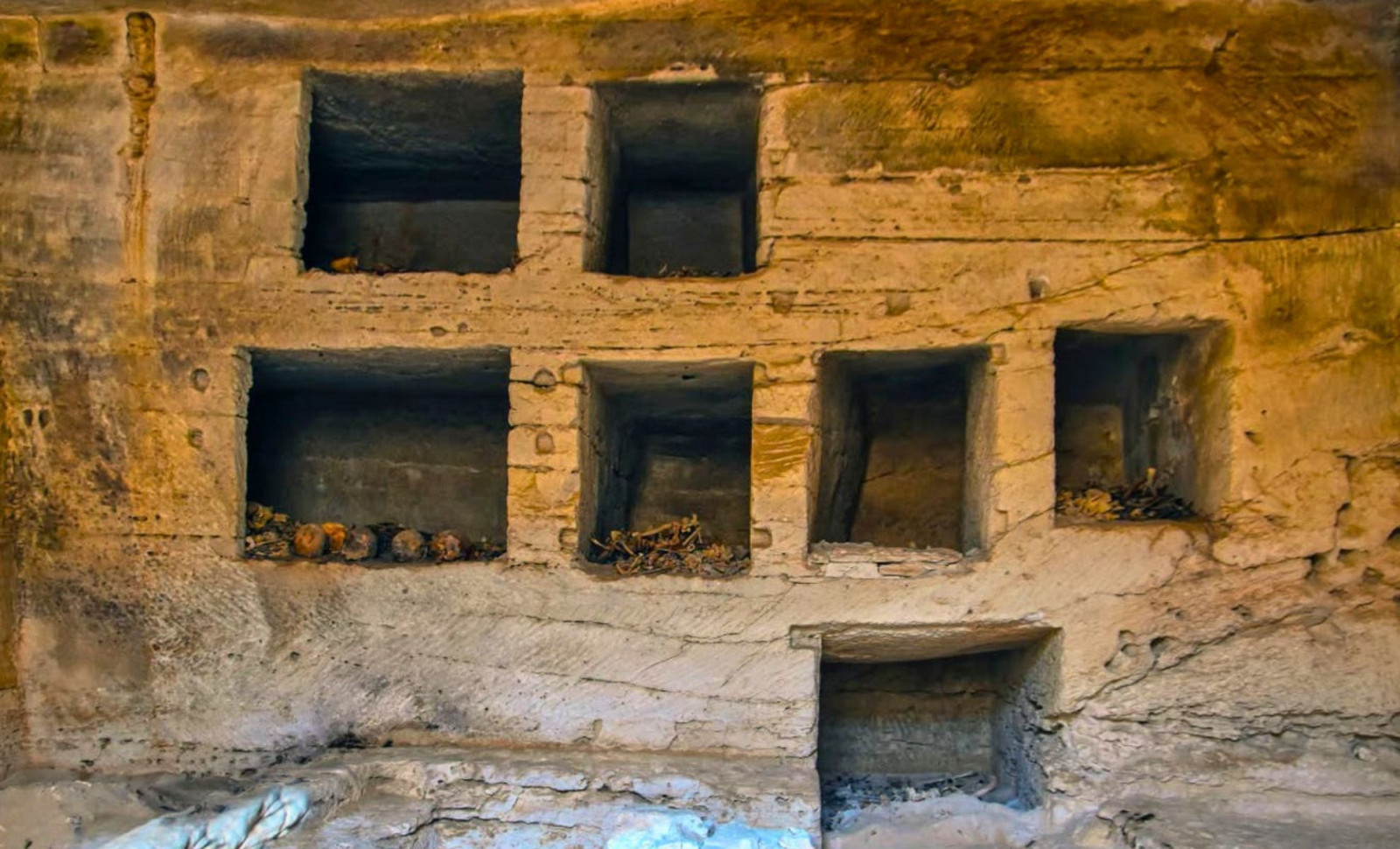
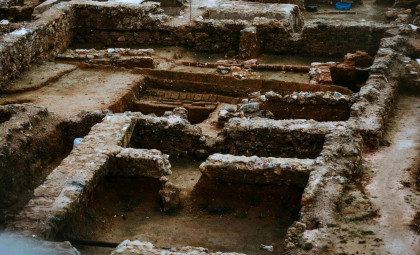
An archaeological team from Egypt has revealed a fully intact Byzantine-period neighborhood at Ain El-Sabil in the Dakhla Oasis, situated deep within Egypt’s Western Desert. Dating back to the fourth century AD, this settlement follows a carefully organized city plan featuring north-south streets intersecting with east-west avenues, creating open plazas and communal areas. At the heart of the site lies a basilica church strategically placed along a key street.
The structures, primarily built from mudbrick, are remarkably preserved, offering a rare, comprehensive view of oasis life during the Byzantine era. Mahmoud Massoud, the excavation leader and Director General of Dakhla Antiquities, remarked that the site showcases the full spectrum of a thriving community, encompassing homes, defensive positions, and religious buildings.
Hisham El Leithy, secretary general of the Supreme Council of Antiquities, hailed the discovery as a major advancement in understanding Egypt’s Western Desert history. He emphasized the find offers critical insights into the social fabric, faith practices, and economic conditions of desert settlements from late antiquity, a period less explored than the Nile Valley region.

Deliberate Urban Design Featuring Residences, Fortifications, and a Basilica
The Ain El-Sabil town plan reveals careful architectural planning rather than accidental expansion. Its grid-like pattern of roads intersects at right angles, providing organized public squares, with the basilica church prominently situated to overlook a principal thoroughfare. This design reflects early intentions for the settlement’s civic and spiritual roles.
Besides the centrally placed basilica, dating back to the mid-fourth century AD, the excavation identified two outer watchtowers and a robust fortified building with thick stone walls. These elements indicate a community focused on security and management of its perimeter.
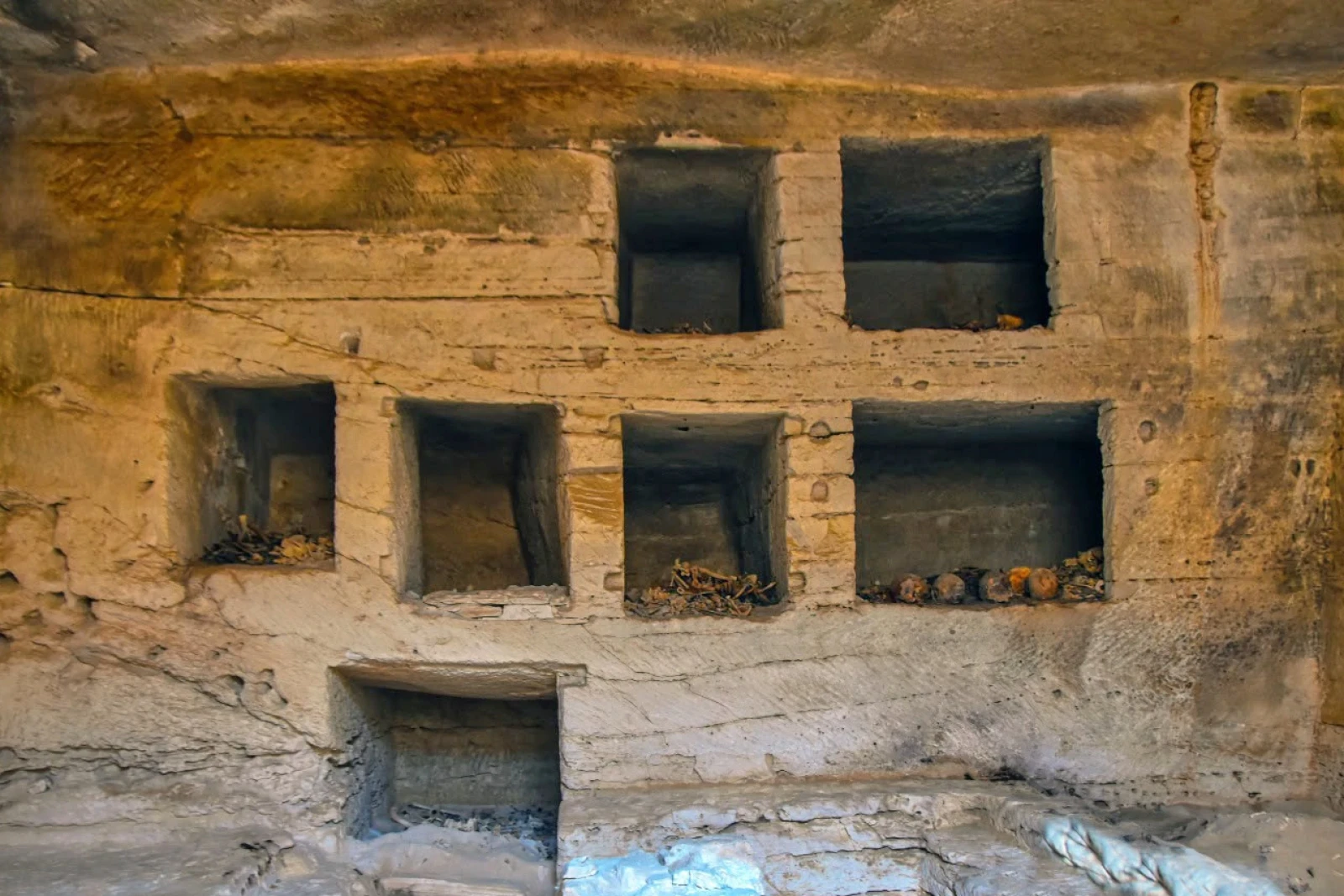
The dwellings uncovered reveal spacious reception rooms and vaulted ceilings, indicating a level of comfort and architectural care. Artifacts such as bread ovens, kitchens, and stone grinders used for food preparation were found in and around these homes. The integration of structured civic planning, religious structures, and well-appointed residences makes the site exceptionally complete as evidence of an ancient desert settlement.
Two notable residences stand out: the house of Tisous, a church deacon, dates to the latter part of the fourth century AD, while Tabibos’s residence, from the early fourth century, possibly served as a house church prior to the basilica’s construction. This points to an established religious life emerging within private homes before public churches were built.
Everyday Objects and Written Records Illuminate Oasis Life
Artifacts from Ain El-Sabil help reconstruct daily experiences in this segment of the Western Desert during late antiquity. Household pottery, oil lamps, storage containers for oils and perfumes, and grain grinding tools were widespread, illustrating the domestic habits of the settlement’s inhabitants during the fourth century.
Among the most valuable discoveries is a collection of nearly 200 inscribed ostraca, shards of pottery used as writing materials. These texts, found in both Coptic and Greek, include business records, personal letters, and daily life details. Diaa Zahran, head of the Islamic, Coptic, and Jewish Antiquities Sector, described this collection as a localized archive that preserves personal names, trade interactions, and economic data rarely documented in other sources from this period.
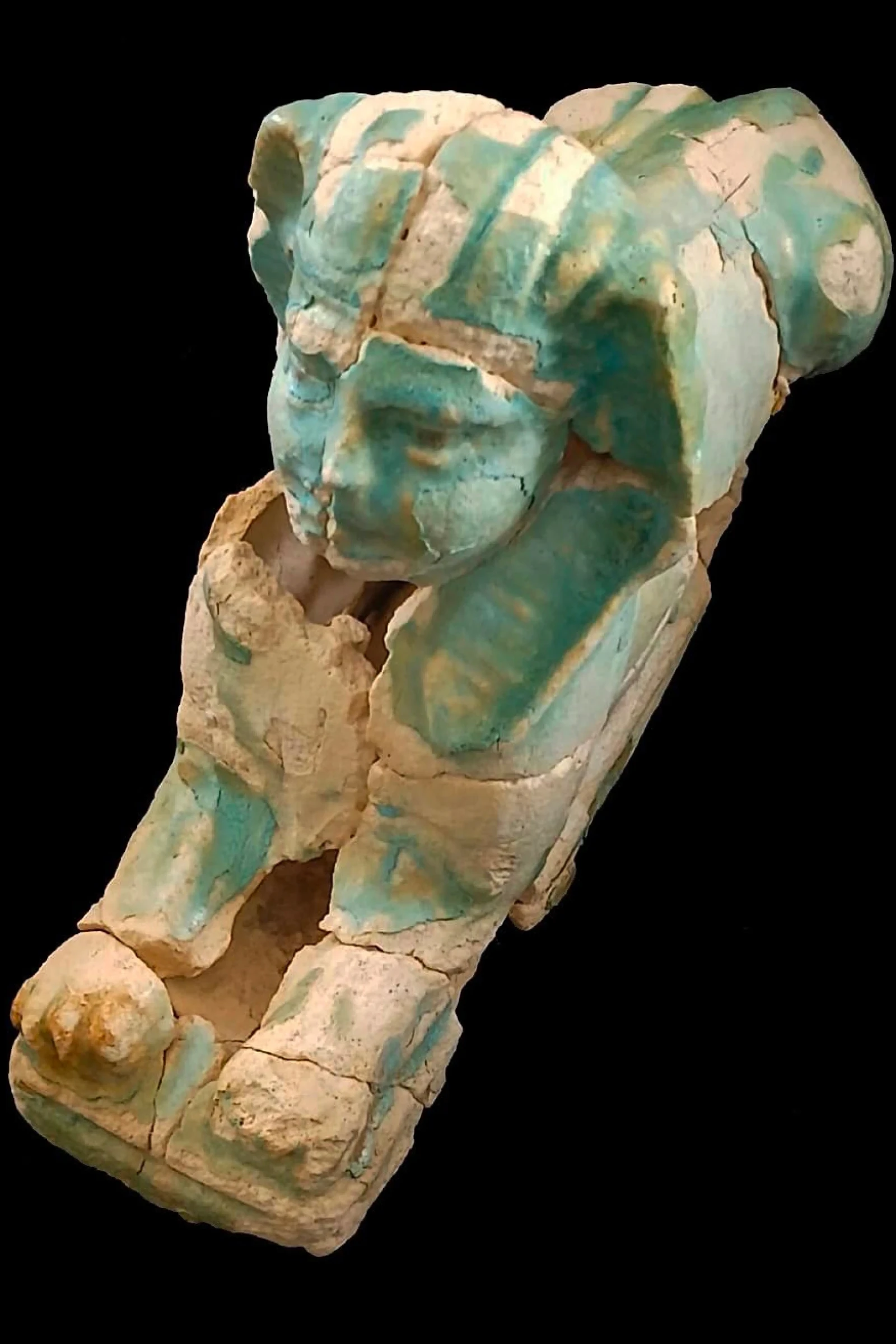
The bilingual nature of the ostraca mirrors the linguistic landscape of Byzantine Egypt, where Greek was the language of administration and commerce, while Coptic served as the vernacular. The co-existence of these languages at this oasis expands understanding of cultural interactions away from Egypt’s major cities.
Coins Reveal Wealth and Economic Ties in the Fourth Century
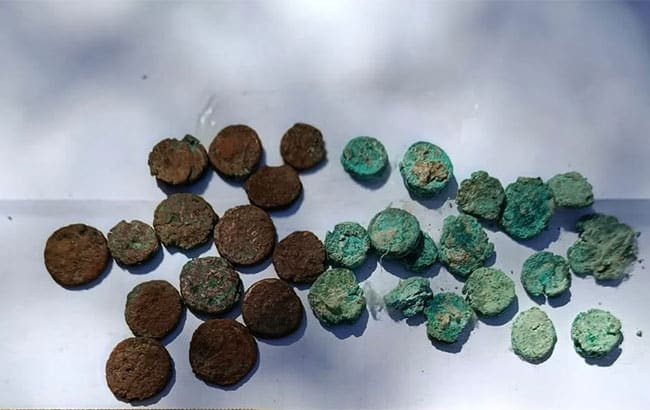
Recovered coins reinforce the settlement’s role as an active and affluent center. Numerous bronze coins depict Byzantine emperors, featuring Latin inscriptions and Christian motifs consistent with official currency used across the eastern Roman Empire in the fourth century. Their abundance suggests Ain El-Sabil was economically connected beyond its desert location.
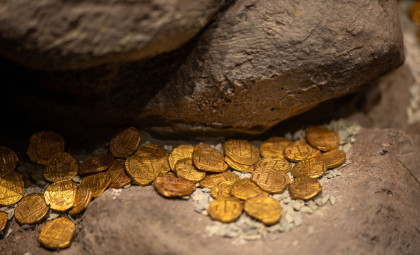
Of particular importance is the discovery of several gold coins from the era of Emperor Constantius II, who ruled the eastern Roman Empire from 337 to 361 AD. As gold coinage represented substantial wealth and was rarely found in everyday homes, these coins signify the settlement’s prosperity and its involvement in imperial trade networks.
Collectively, the bronze and gold currency, bilingual ostraca, containers for oils and perfumes, and grain-processing tools underscore a community engaged in commerce and subsistence. Located along established desert trade routes connecting the Nile Valley with sub-Saharan regions, Ain El-Sabil demonstrates sustained occupation and prosperity through the fourth century.
The integration of planned streets, religious and public buildings, homes, fortifications, written documents, and coinage makes Ain El-Sabil an outstanding and nearly complete example of a Byzantine-era oasis settlement in the heart of Egypt’s Western Desert.
- Categories:
- News






0 comments
Sign in to Comment